
Casa de playa de verano
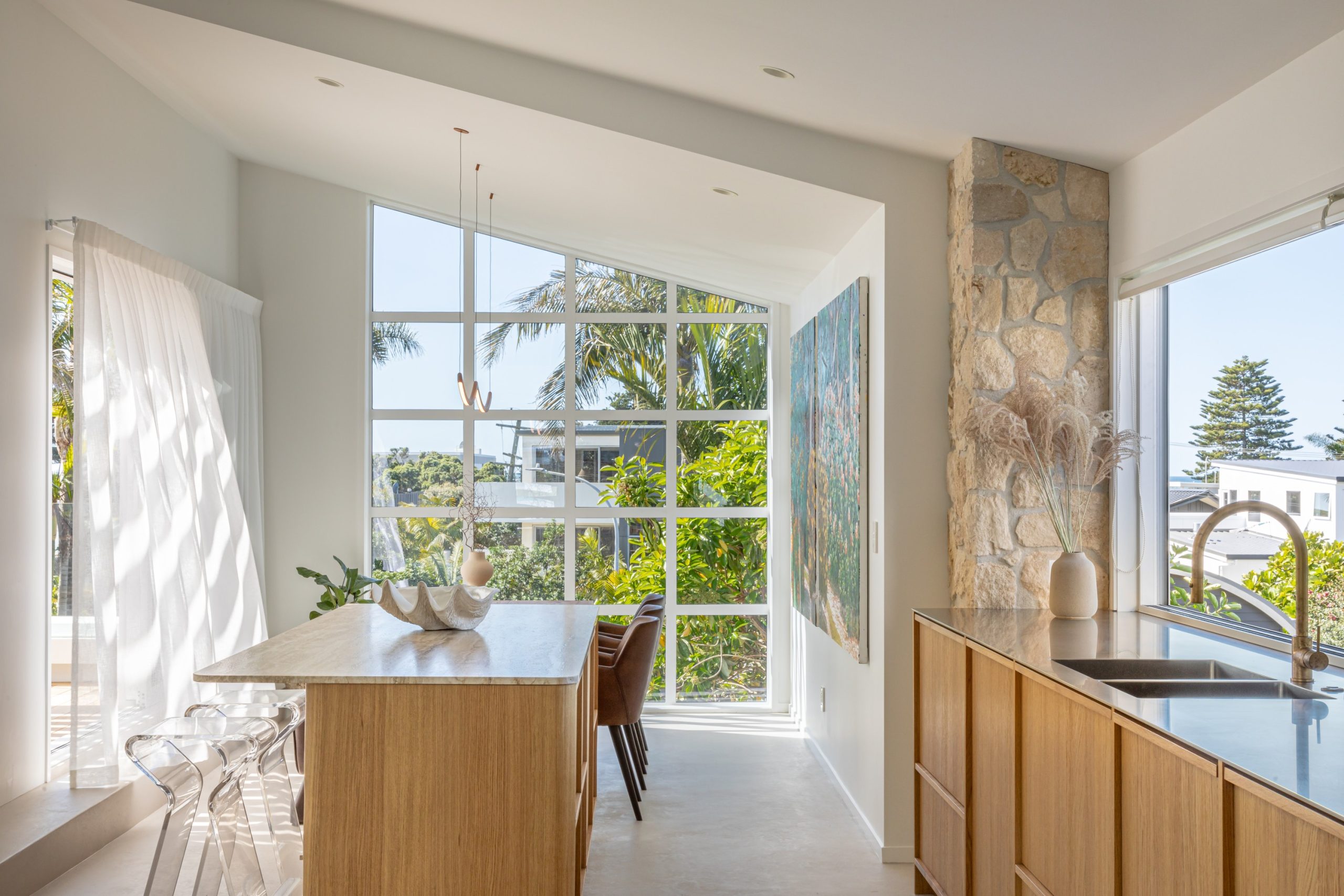
Defined by careful detailing, natural materials, and a quiet sense of mood, Casa de Playa de Verano sets a new standard for everyday kitchens. Built by Jafa Construction and designed by Jenny Holmes of Designmarked Kitchens, the space draws on Mediterranean influences without leaning into pastiche, instead translating the relaxed character of a Spanish coastal villa into a kitchen that is practical, calm, and deeply liveable.
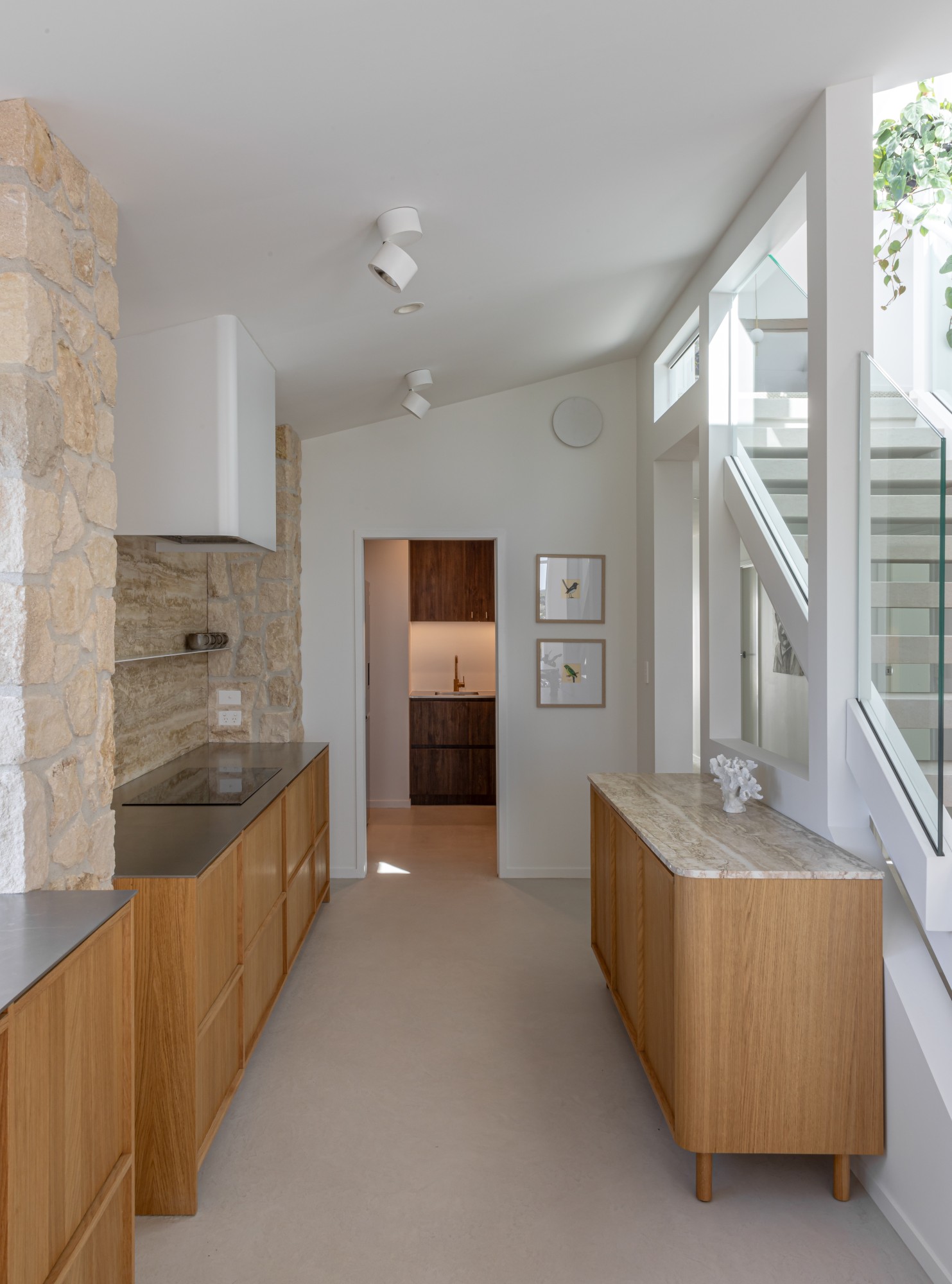
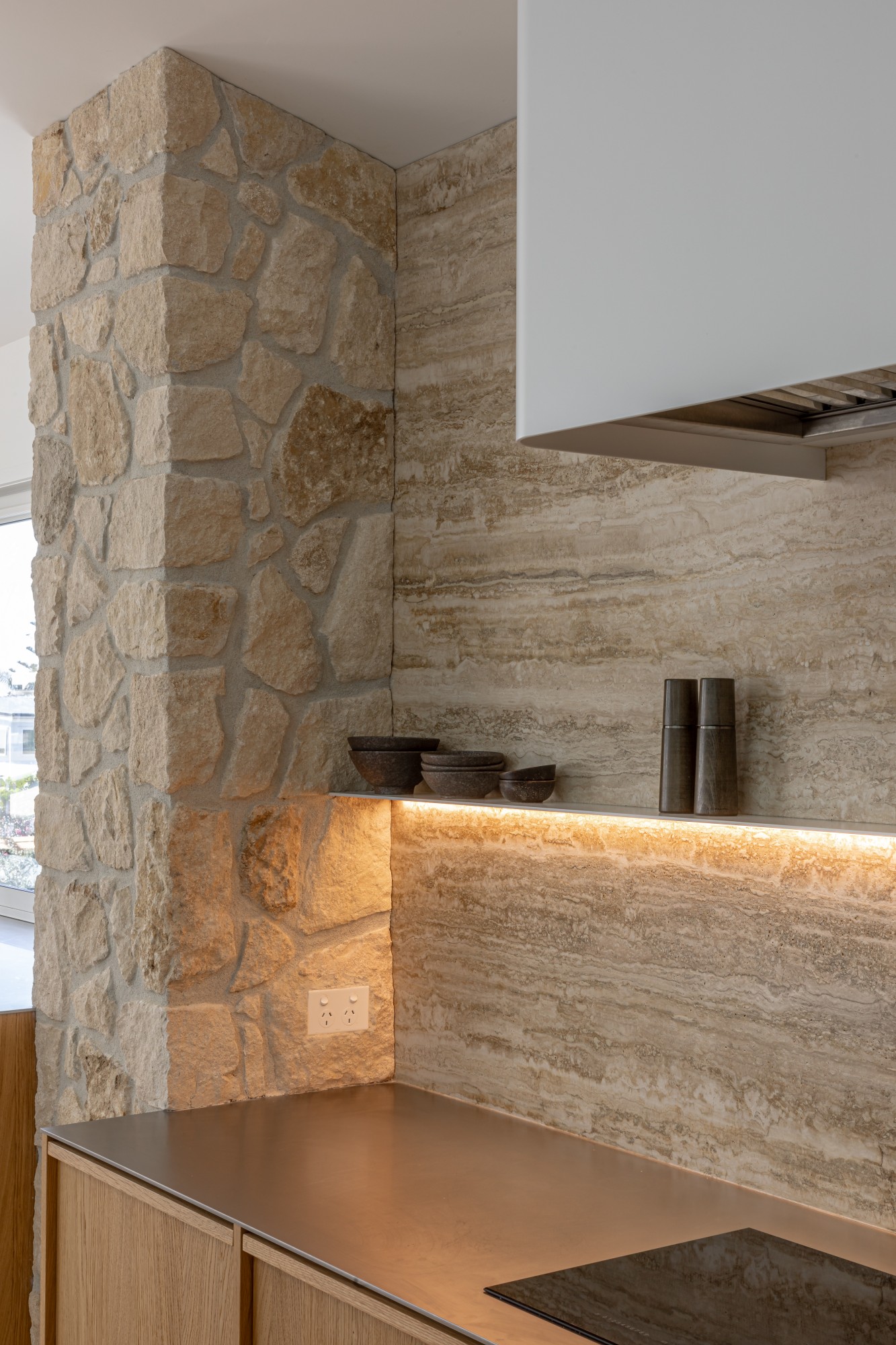
The design brief called for an open, light-filled kitchen that felt welcoming rather than formal, and one that supports everyday family life while offering a sense of retreat. “This kitchen is all about that relaxed Spanish villa vibe,” Jenny says. “The Charleston limestone (also used in the entrance) pillars break up the long run of cabinets and allow different benchtop heights for the sink and hob, while soft muted neutrals echo the views outside.”
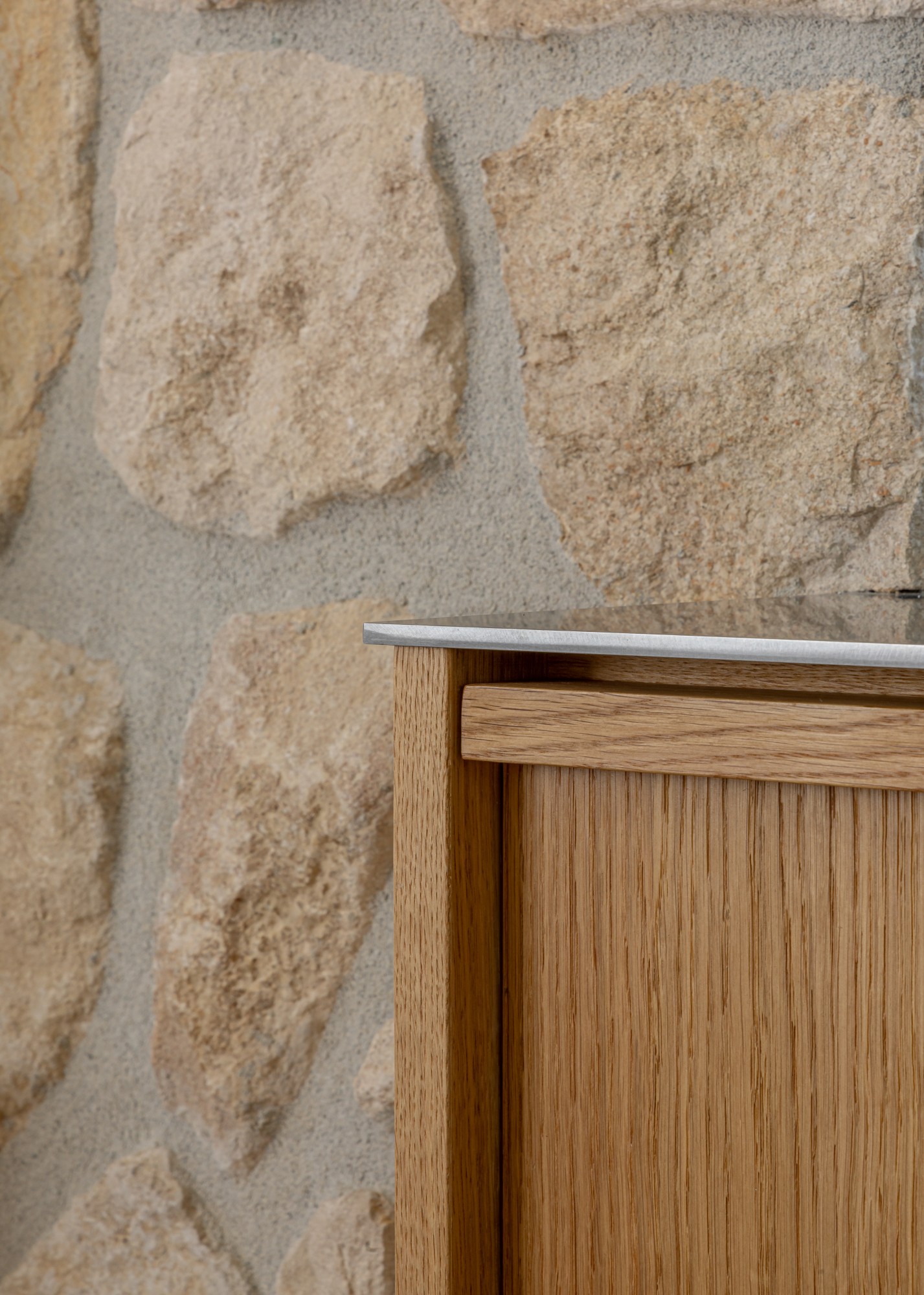
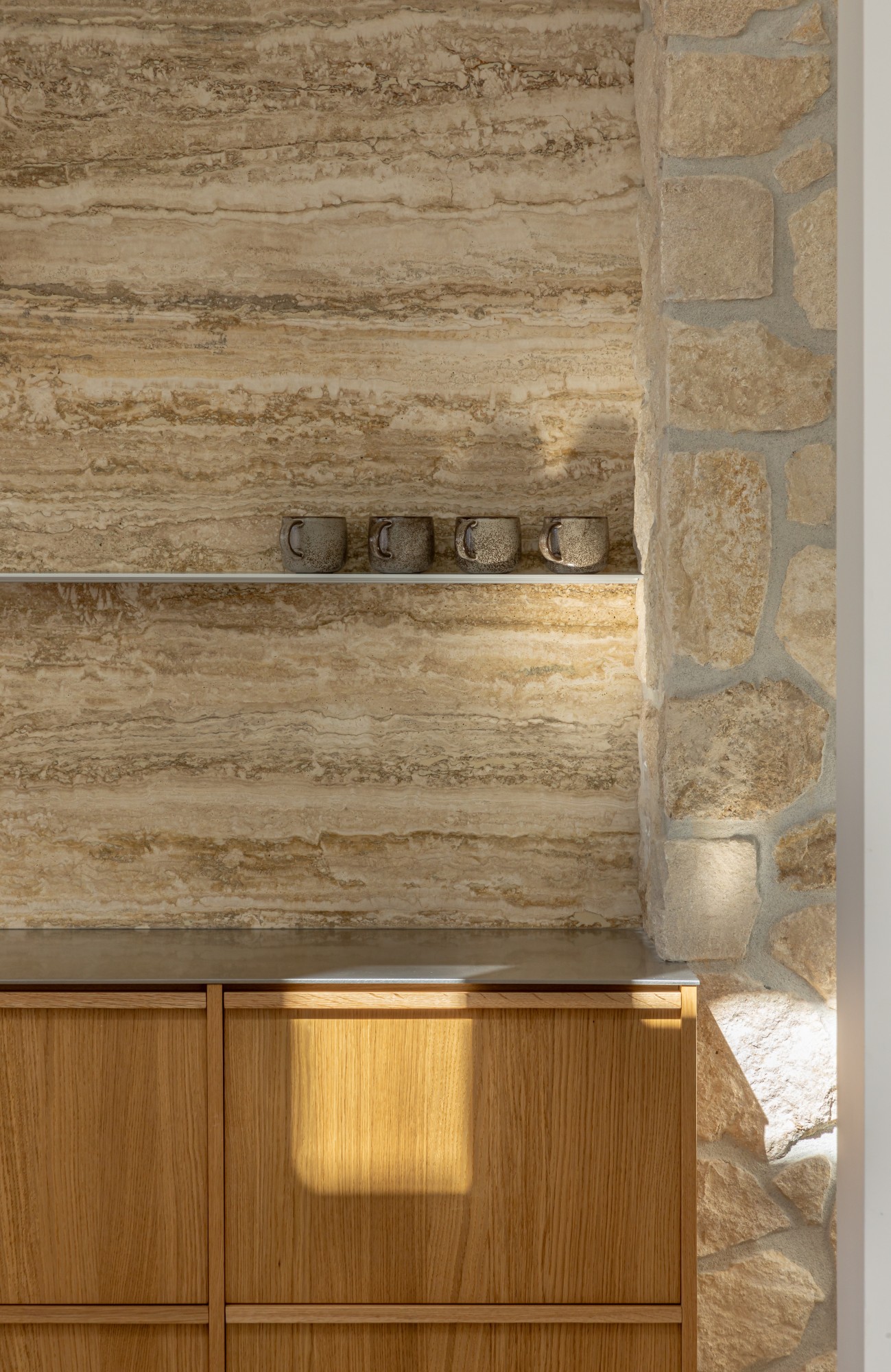
Those limestone pillars form a key architectural feature. Supplied by The Natural Stone Co, the Charleston limestone is sourced from the West Coast of the South Island, processed into lightweight cladding and laid with pointed joints. The stone adds texture and depth while subtly zoning the kitchen, helping reduce the visual scale of the cabinetry and creating a sense of rhythm across the space.
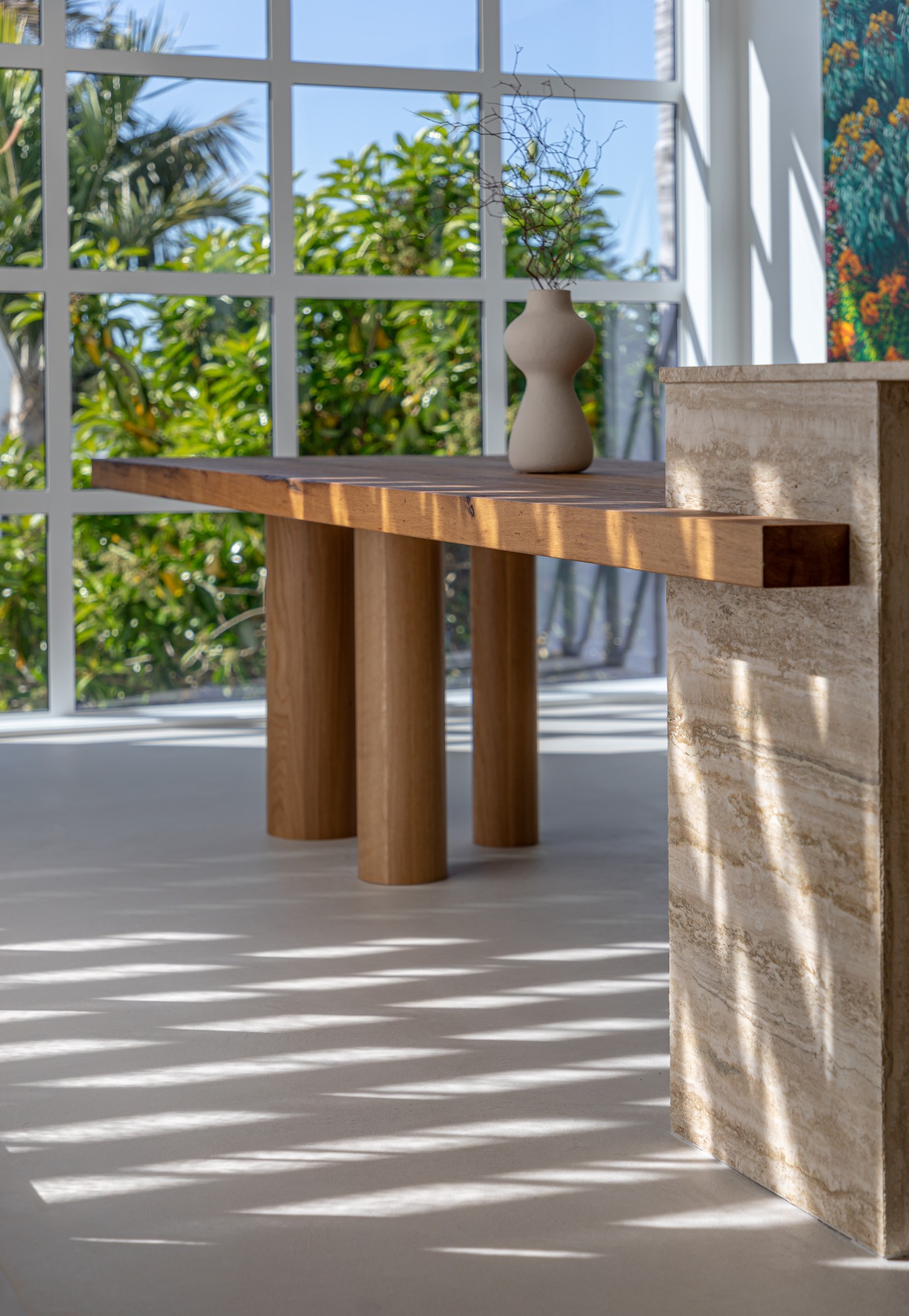
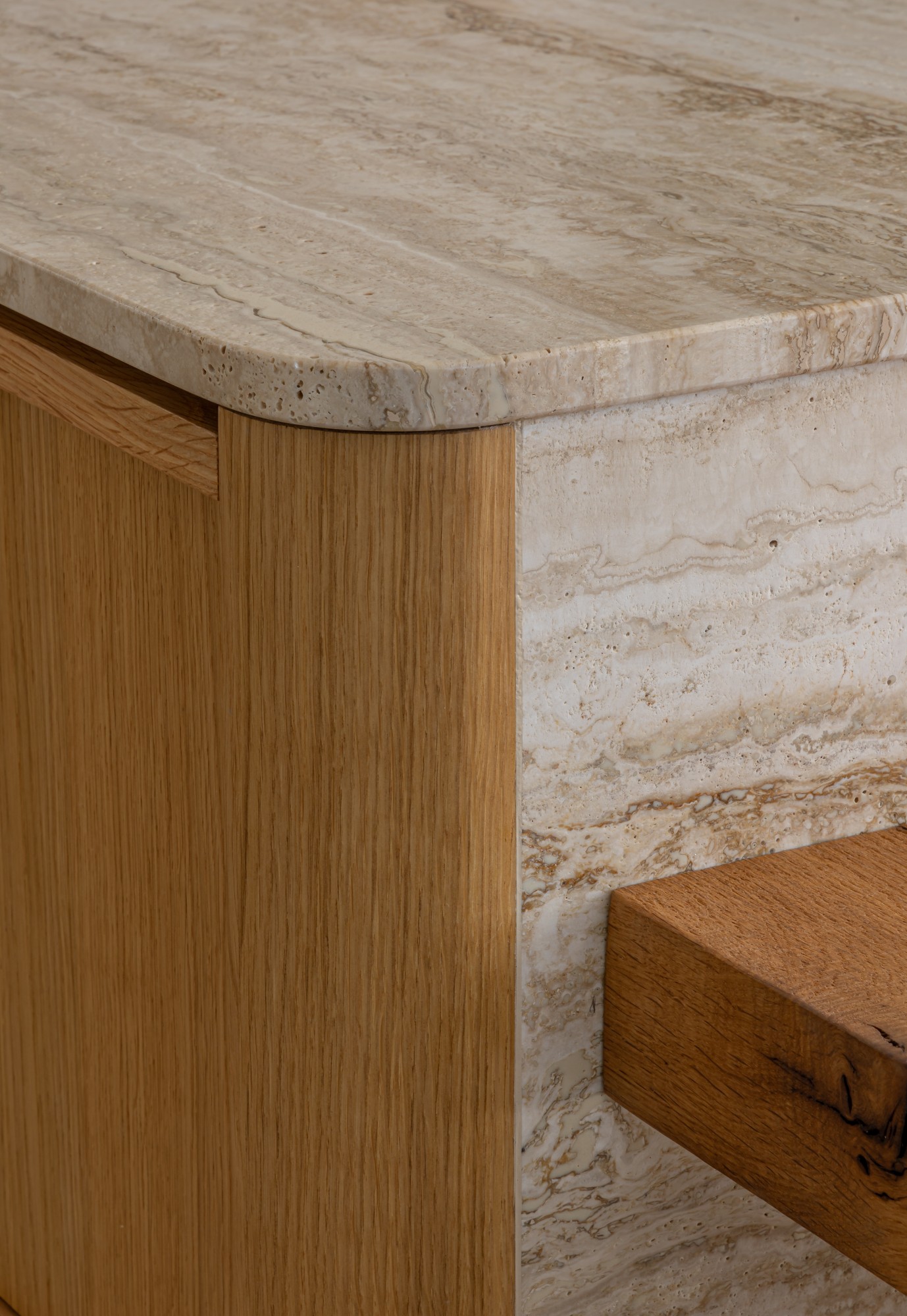
Material selection plays a central role in shaping the kitchen’s character. Recycled oak cabinetry provides warmth and a sense of familiarity, while travertine adds softness and visual variation. “I drew on the relaxed, rustic vibe of a coastal Spanish villa, using recycled oak and travertine to Defined by careful detailing, natural materials, and a quiet sense of mood, Casa de Playa de Verano sets a new standard for everyday kitchens. Built by Jafa Construction and designed by Jenny Holmes of Designmarked Kitchens, the space draws on Mediterranean influences without leaning into pastiche, instead translating the relaxed character of a Spanish coastal villa into a kitchen that is practical, calm, and deeply liveable.
The design brief called for an open, light-filled kitchen that felt welcoming rather than formal, and one that supports everyday family life while offering a sense of retreat. “This kitchen is all about that relaxed Spanish villa vibe,” Jenny says. “The Charleston limestone (also used in the entrance) pillars break up the long run of cabinets and allow different benchtop heights for the sink and hob, while soft muted neutrals echo the views outside.”
Those limestone pillars form a key architectural feature. Supplied by The Natural Stone Co, the Charleston limestone is sourced from the West Coast of the South Island, processed into lightweight cladding and laid with pointed joints. The stone adds texture and depth while subtly zoning the kitchen, helping reduce the visual scale of the cabinetry and creating a sense of rhythm across the space.
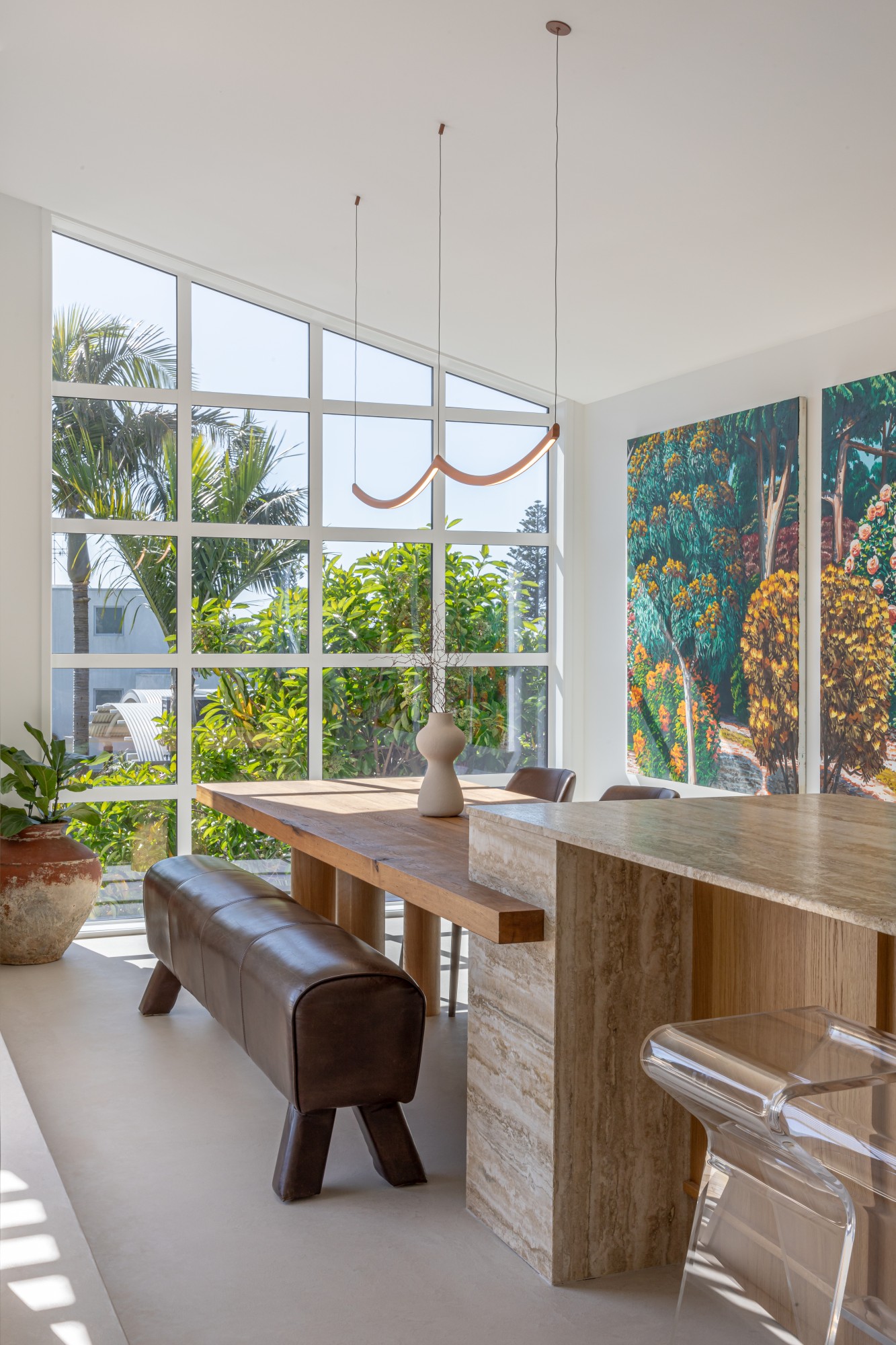
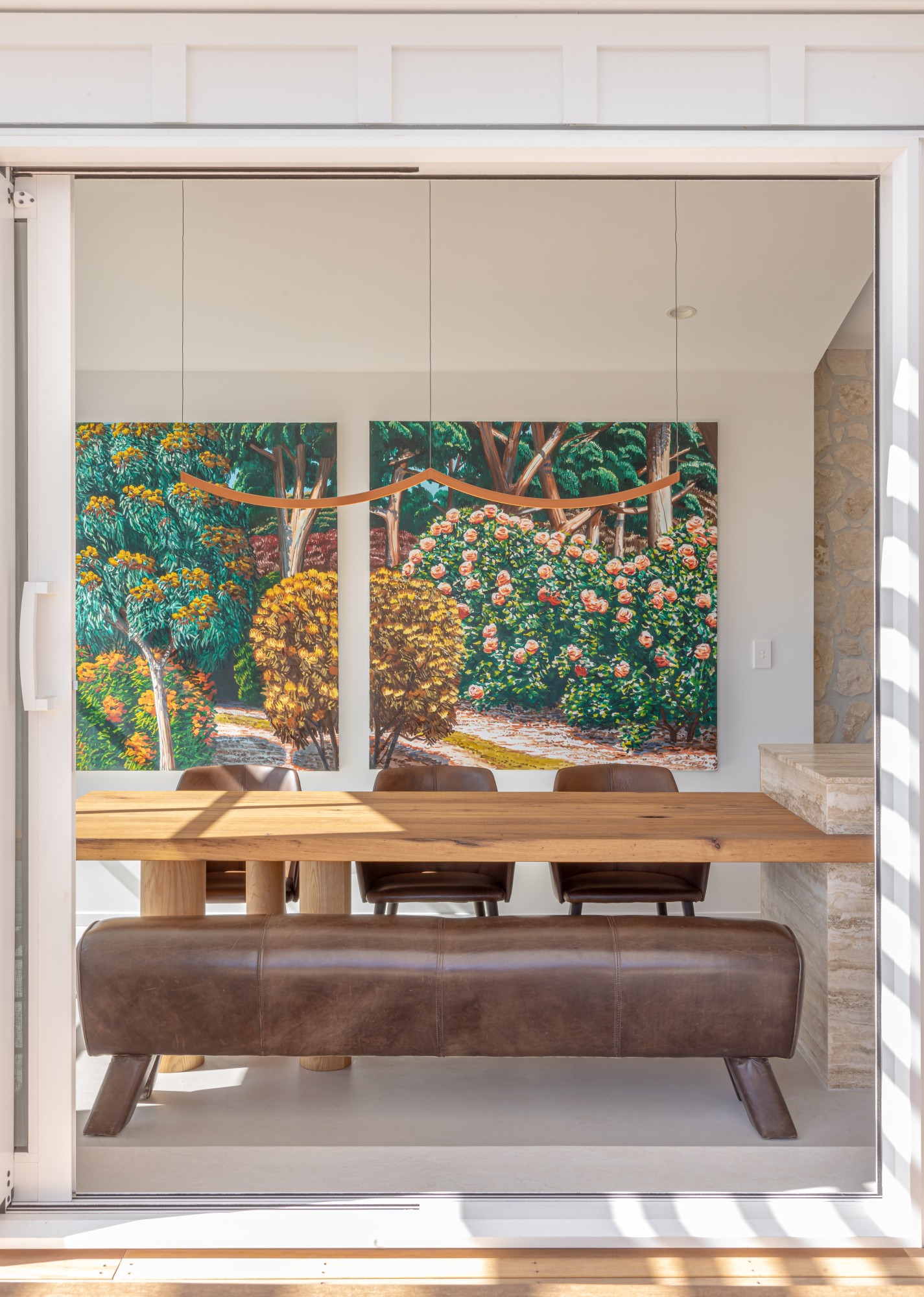
Material selection plays a central role in shaping the kitchen’s character. Recycled oak cabinetry provides warmth and a sense of familiarity, while travertine adds softness and visual variation. “I drew on the relaxed, rustic vibe of a coastal Spanish villa, using recycled oak and travertine to bring that feeling to life,” Jenny explains. “The oak adds warmth and character, making the kitchen feel inviting and lived-in, while the travertine’s texture adds depth and visual softness.”
The Stone benchtops from Made In Stone and vertical stone elements reinforce the kitchen’s durability and tactility, grounding the lighter timber tones and creating surfaces that are well-suited to daily use. The palette is deliberately muted, allowing material texture and natural light to take precedence over colour contrast or decorative detail.
For Jenny, successful kitchen design begins with how a space is experienced rather than how it appears in isolation. “When I’m designing for feeling and atmosphere, I think about how a space is experienced rather than how it looks on its own,” she says. “Light is considered first, followed by material layering and spatial flow. Attention is paid to movement through the space, sightlines and the small operational details that influence comfort and ease of use.
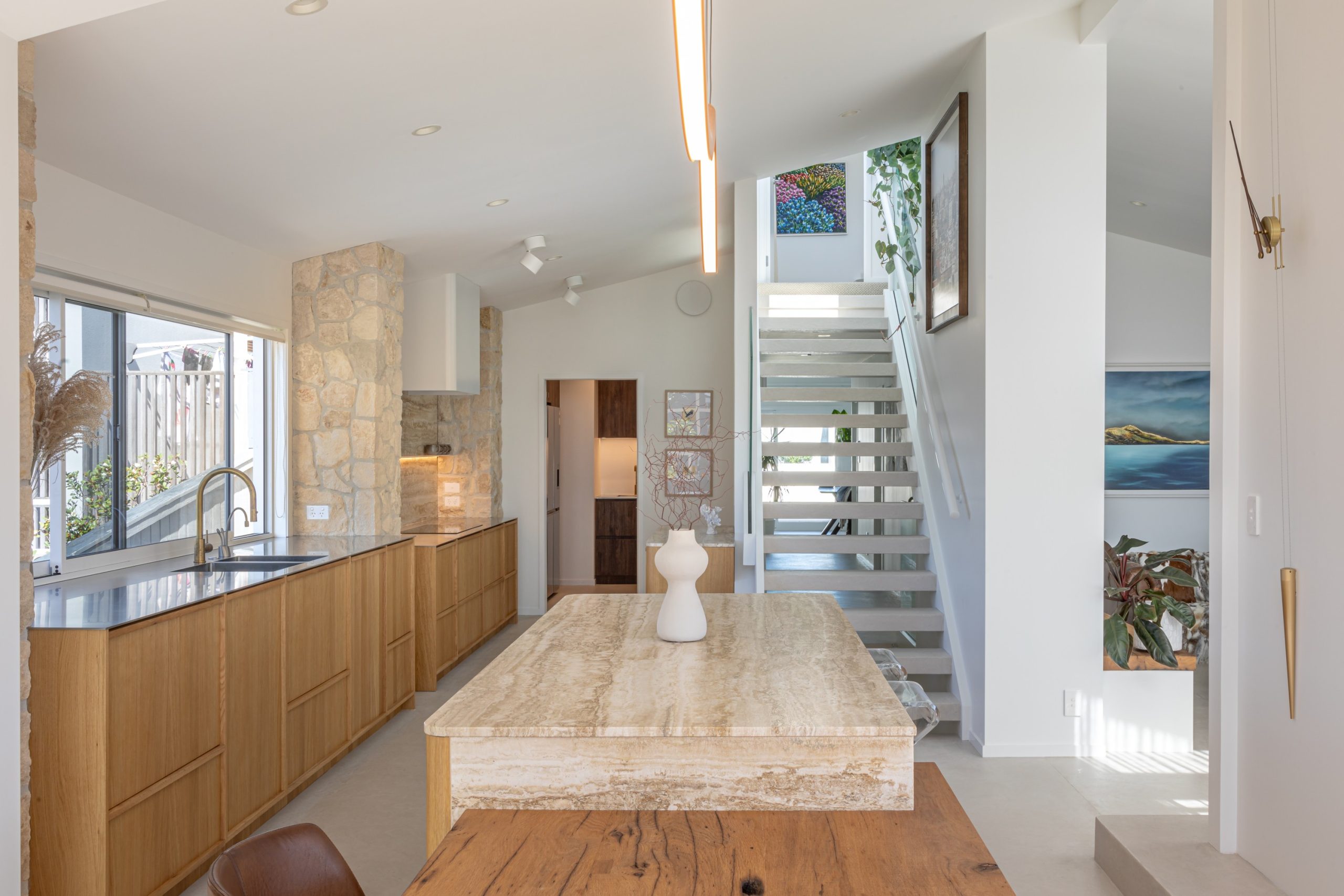
Functionality is carefully resolved but never overemphasised. “I like to make kitchens that work perfectly for the people using them, so I tailor everything to their day-to-day routines,” Jenny says. Preparation, cooking and cleaning zones are clearly defined, with benchtop heights adjusted to suit different tasks. Storage is generous but discreet, ensuring the kitchen remains visually calm even when in use.
Hardware selection supports that sense of quiet functionality. Blum hardware is used throughout the kitchen, contributing to smooth drawer action and soft-close doors. “Hardware like Blum is the kind of detail you hardly think about – but it makes a big difference in how the kitchen feels to use every day,” Jenny notes. “It’s the kind of subtle quality that quietly makes the space feel polished and comfortable, without ever drawing attention to itself.”
Lighting was another important factor in shaping the space’s mood. Natural light was maximised by enlarging and lowering eastern windows to bench height, allowing morning light to enter directly across work surfaces. An internal wall supporting the staircase was partially opened and reinforced with glass, allowing afternoon light to filter through and increasing the sense of openness within the kitchen.
“Lighting really shapes how a kitchen feels,” Jenny says. “Natural light makes the space bright and cheerful during the day, while softer, layered lighting adds warmth and cosiness in the evening.” Decorative pendants above the dining area are by Nightwork Studio, providing a softer, more intimate counterpoint to the kitchen’s architectural lighting.
The kitchen sits within a broader architectural framework developed in collaboration with Complete Architecture. “Complete Architecture was really team-focused – they listened, offered smart solutions, and helped make sure every idea could work in reality,” Jenny says.
Their involvement ensured the kitchen was well integrated into the home’s overall layout, with light, structure, and circulation carefully aligned.
Casa de Playa de Verano was recognised at the 2025 National Kitchen & Bathroom Association New Zealand Excellence in Design Awards, earning the Visual Impact Award, and Waikato Kitchen Design Recognition. It was also a Home Magazine 2025 Kitchen Finalist of the Year. For Jenny, the recognition reflected the value of thoughtful, people-focused design rather than surface-level styling.
“I think one thing that really comes through is that this kitchen is about the people using it, not just a space that’s design worthy – although that is a nice bonus!” she says. “Every decision – from the lighting and layout to the material, textures, and hardware – was made to support how the family lives, making the kitchen feel welcoming, effortless, and comfortable.”
The result is a kitchen that feels settled and natural, designed to be used daily, to age well, and to subtly enrich the rhythm of everyday life.
Contact details:
Designmarked Kitchens
021 168 9361
jenny@designmarked.co.nz
www.designmarked.co.nz
Written by: Paige O'Brien
Photos Provided by: John Williams Photography - www.jwphotography.co.nz
Designer: Designmarked Kitchens - www.designmarked.co.nz


