Framing the view
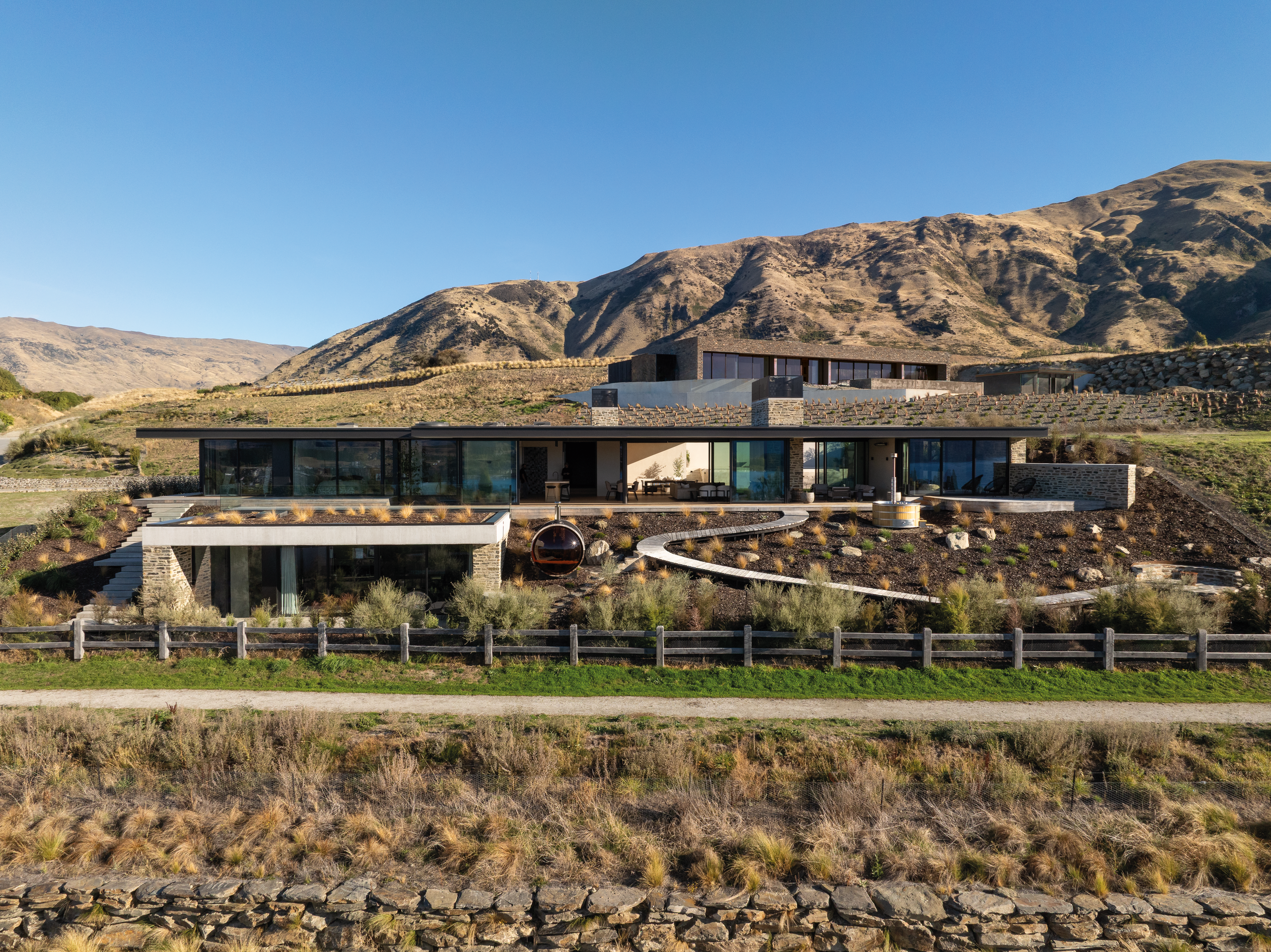
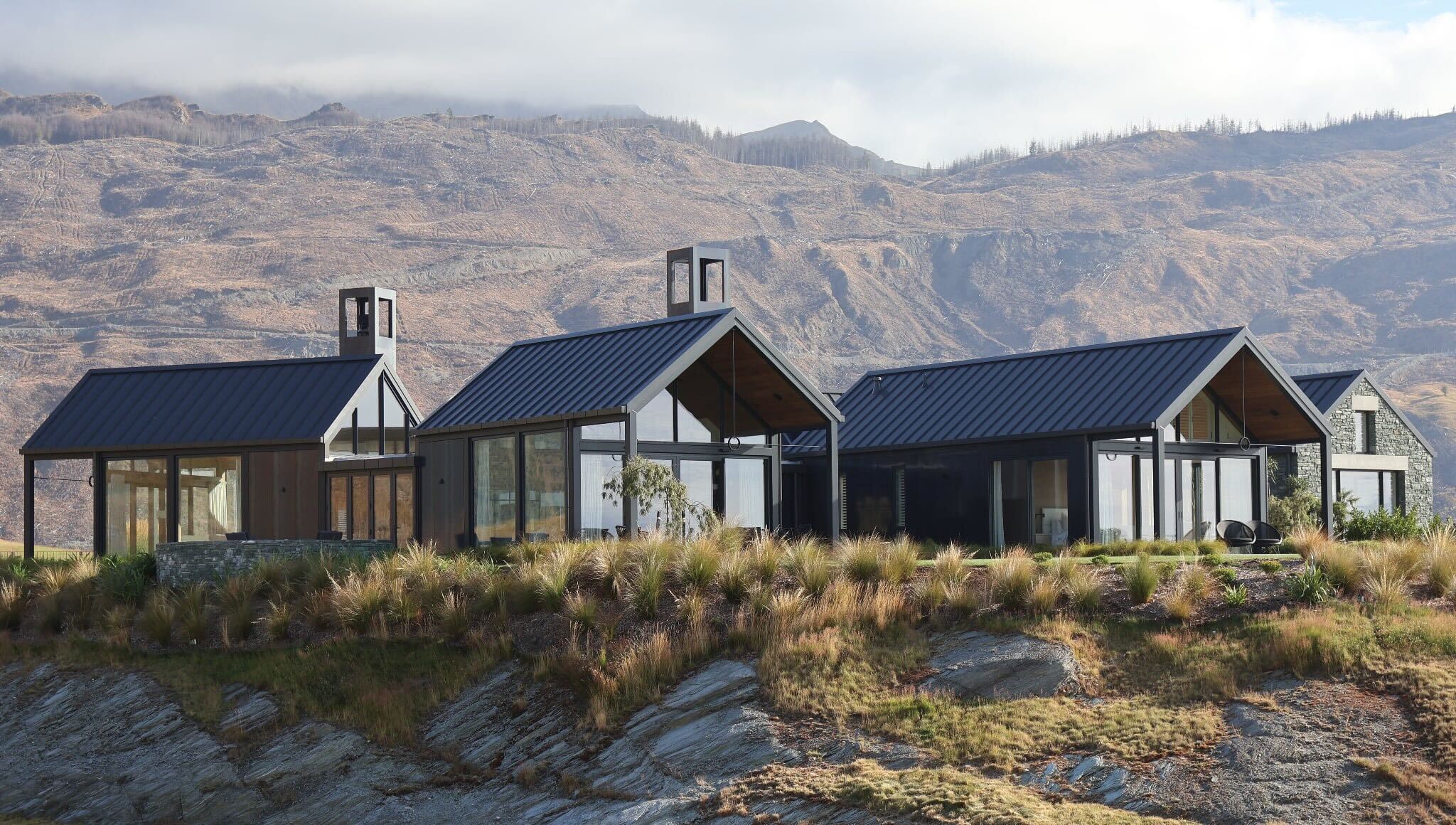
JP House by Bolig Architecture sits within Queenstown's dramatic landscape, shaped by both the surrounding mountains and the personal vision of architect Maja Marshall.
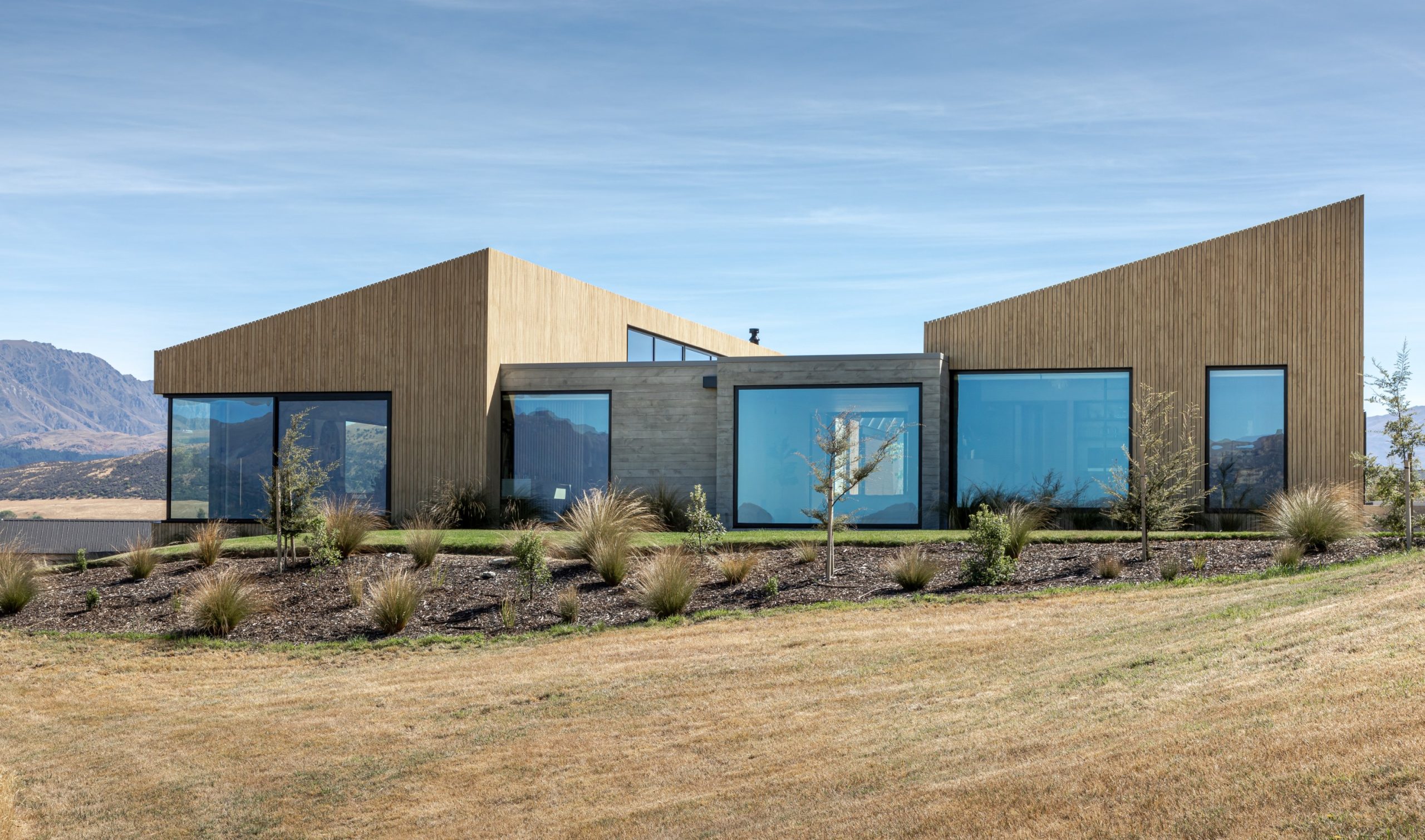
Designed for her own family, the home explores how architecture can frame views, shape daily life, and provide a sense of protection in an exposed environment. Maja began with a clear vision: “Views from anywhere on the property – direct and look-through views.” The brief also called for “a spacious, fun, open-plan family home” and “a healthy environment incorporating sustainable elements without compromise to views.”
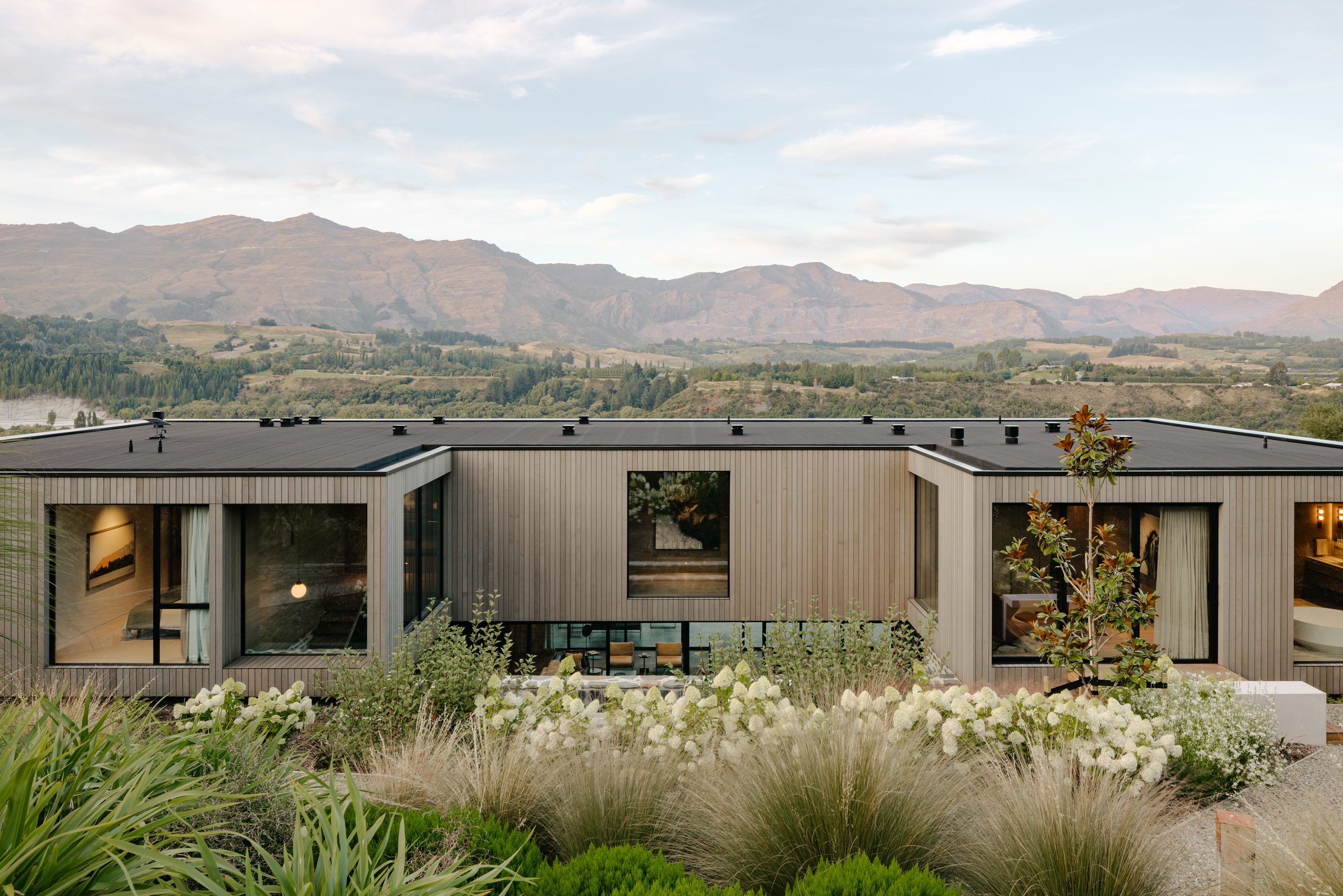
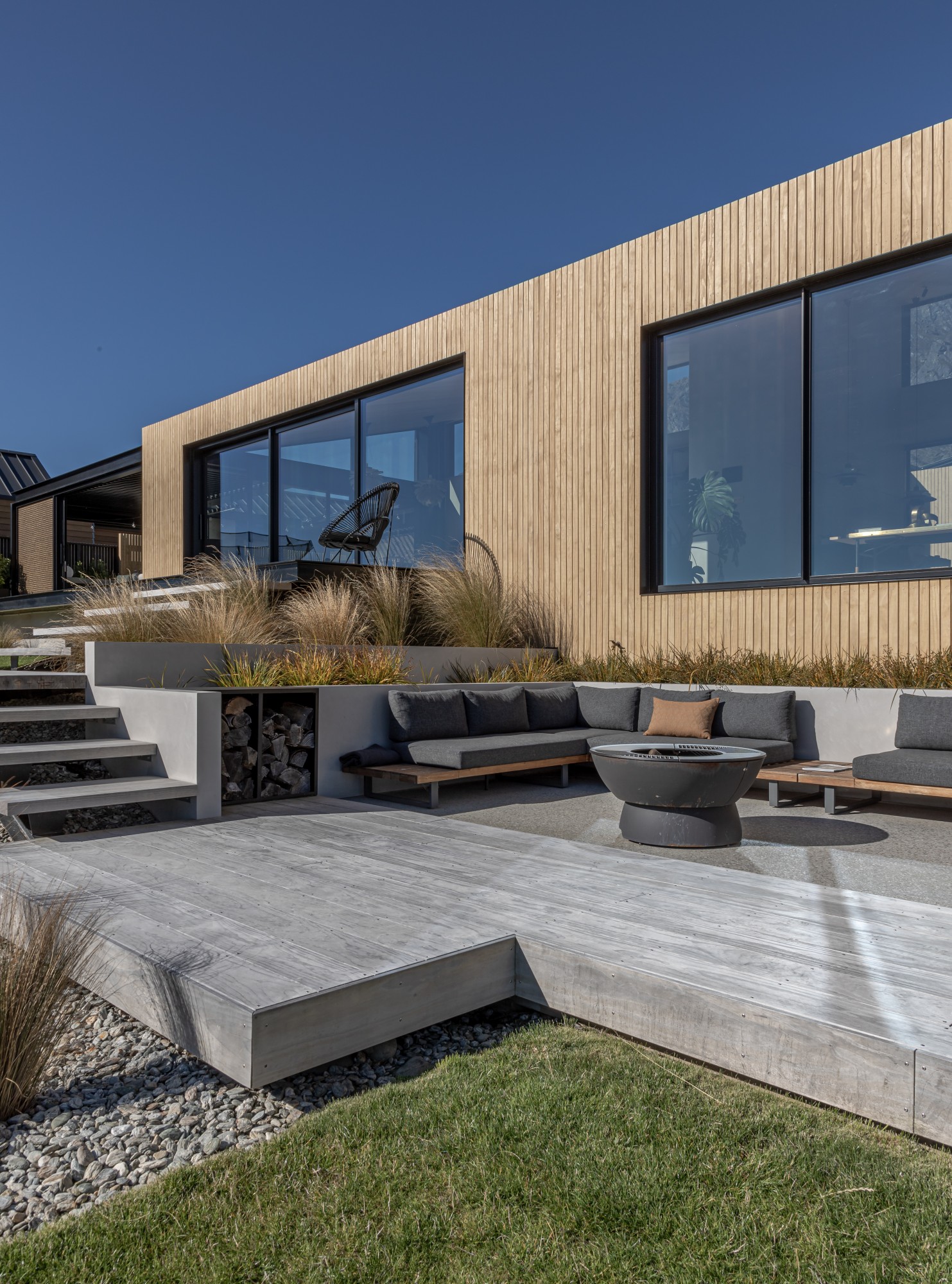
The result is a sculptural U-shaped plan that responds directly to Queenstown’s climate and terrain. The arrangement frames expansive views while forming a sheltered courtyard that becomes a calm centre within the rugged alpine environment. “The U-shape creates a courtyard sheltered from the southerly winds but also an internal garden allowing for views through the living wing to the lake and mountains. While I love a courtyard for architectural reasons, it also allows for all-year-round outdoor use.” The courtyard also shapes the experience of the architecture itself, creating “a sense of the architecture in an almost sculptural way.”
The landscape itself was the primary driver of the house’s form and orientation. “The landscape had everything to do with the form and layout of the house. Every space was carefully planned to optimise the site we were so lucky to own. Not fully taking advantage of this would have been a waste of a magical location and opportunity.”
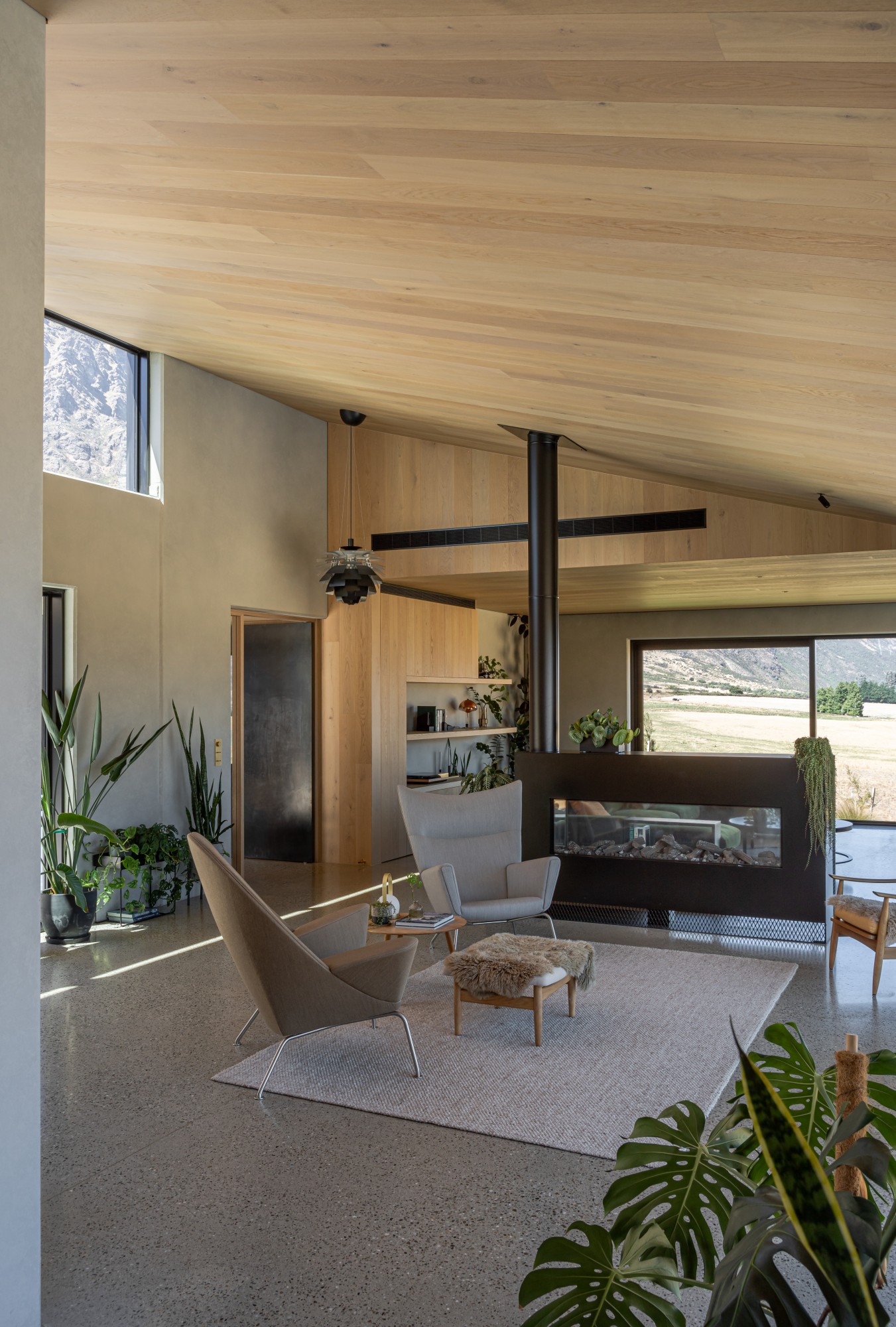
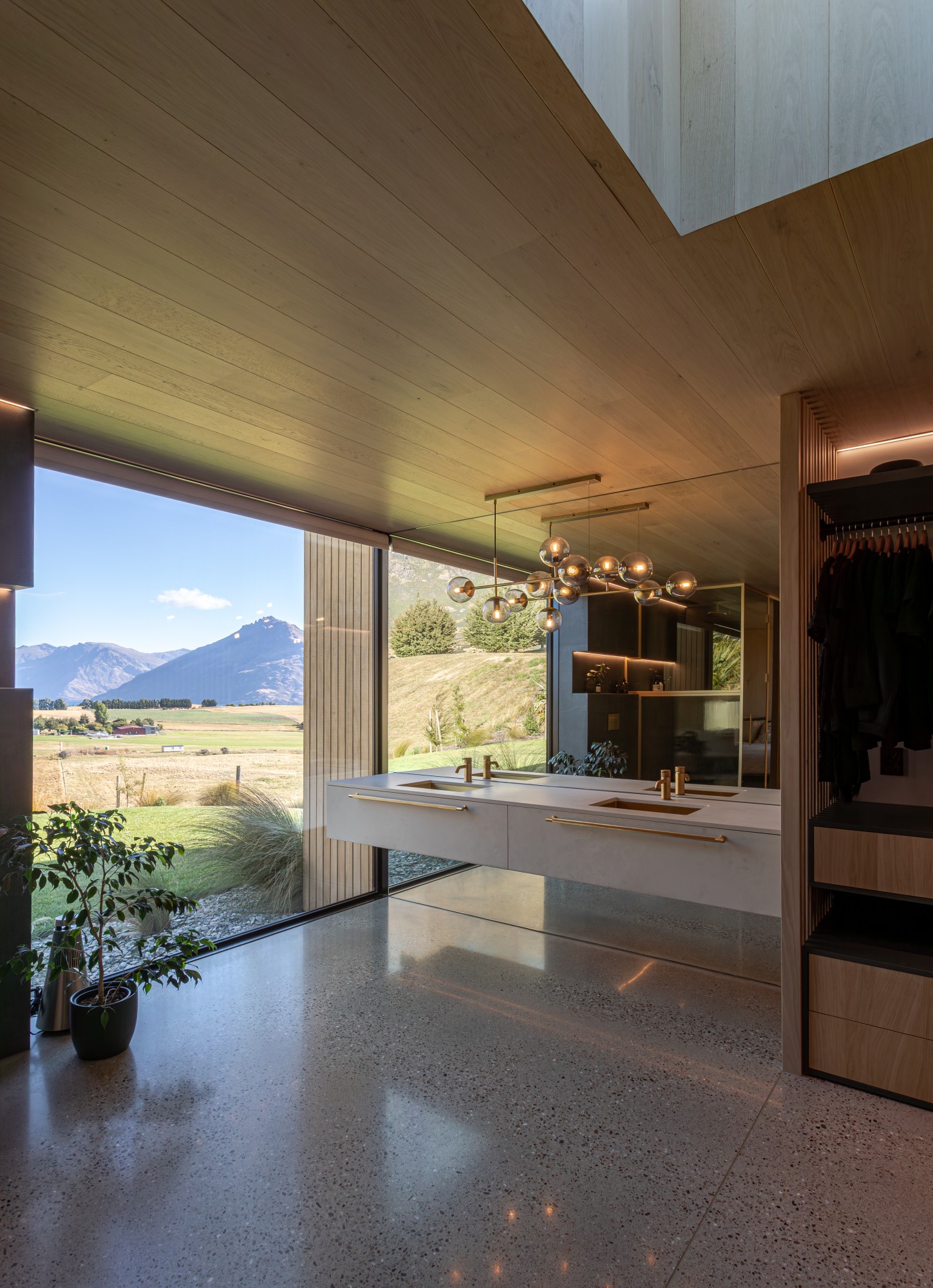
Inside, the surrounding landscape becomes the focal point of the interior spaces. “As you enter the living wing, you get the most stunning views of farmland, lakes and mountains with a sense of floating over the landscape below. The high sloping ceilings bring your eyes up towards a wall of rugged mountains, making them appear closer than they actually are. All rooms and spaces are designed to be open with big views directly or through the courtyard of the house.”
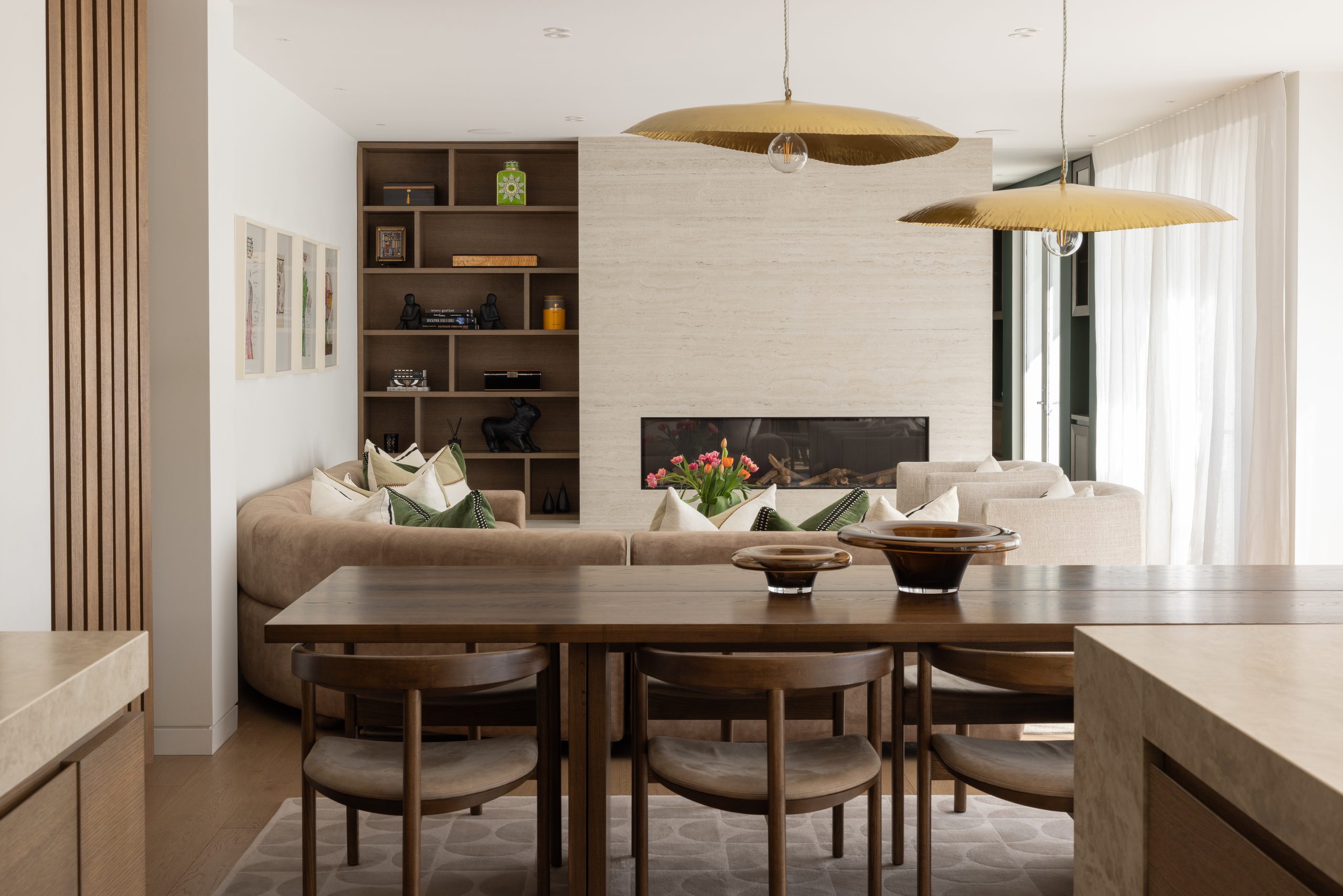
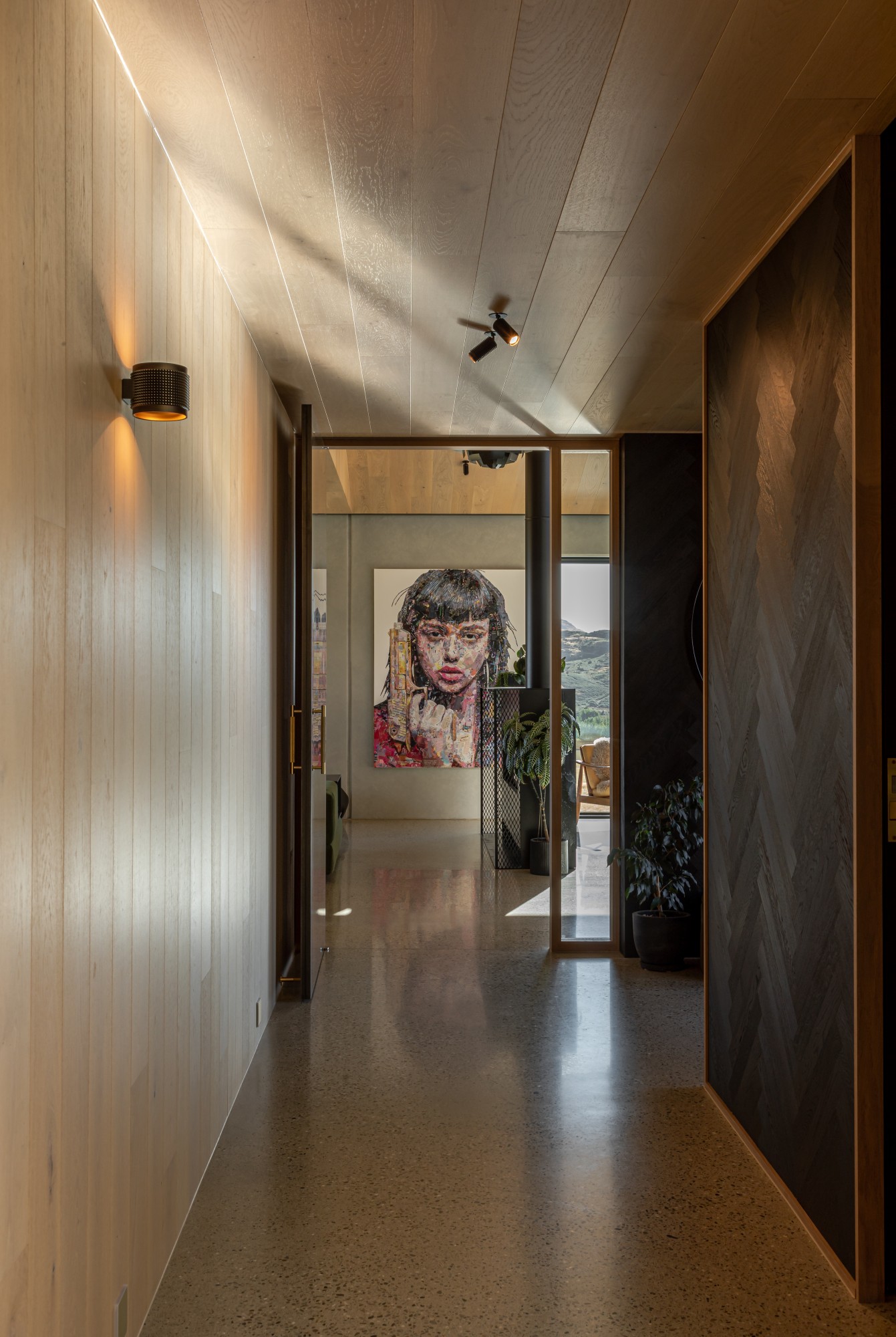
The interior reveals a carefully balanced palette of materials. Concrete, timber and steel create a tactile contrast that feels both contemporary and grounded in its environment. The design reflects Maja’s Scandinavian background while responding to the colours and textures of the Queenstown landscape. “Growing up with brick and concrete buildings was a factor in the choice of materials as well as the rugged surroundings.
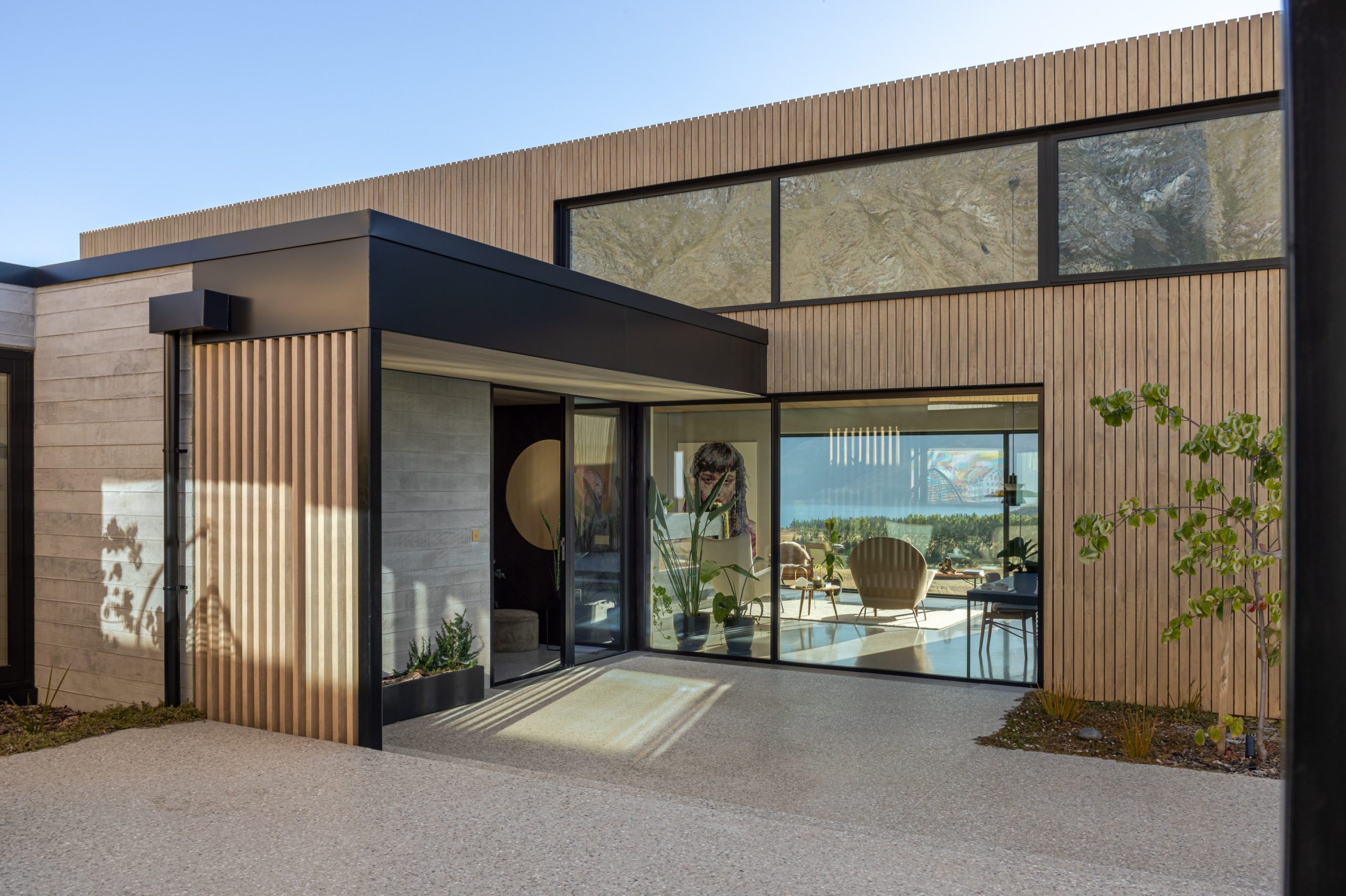
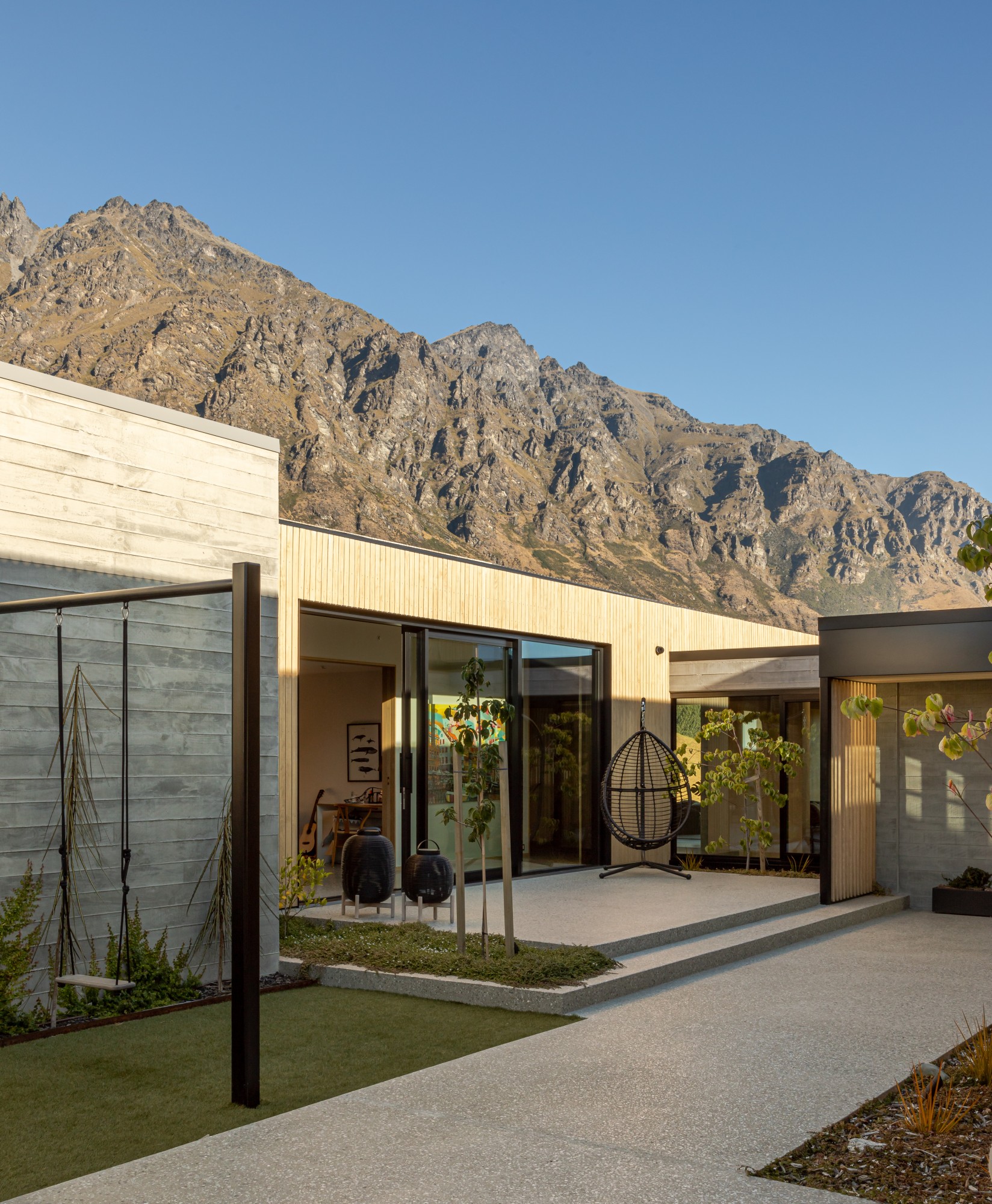
The rest of the materials were chosen for a warm and calming environment, softening the concrete. The result is definitely a fusion between Queenstown and Scandinavian aesthetics.”
Timber plays a particularly important role in shaping the atmosphere of the home. Ceilings, walls, doors, and joinery, mostly supplied by Haro Flooring, introduce warmth and texture that soften the more industrial elements of the architecture, while timber on the floors is minimal and limited to two bedrooms. “I think timber in its natural expression brings a sense of calm to the indoor environment. It is, in some ways, in contrast to the more industrial black steel and kitchen, but it works so well together.”
Concrete also plays a role in the home’s character, creating visual continuity between interior and exterior spaces. Coloured concrete supplied by PeterFell allows the natural tones of local aggregate to come through. “We chose to use one of the lightest grey colours in our concrete floors and paving.”
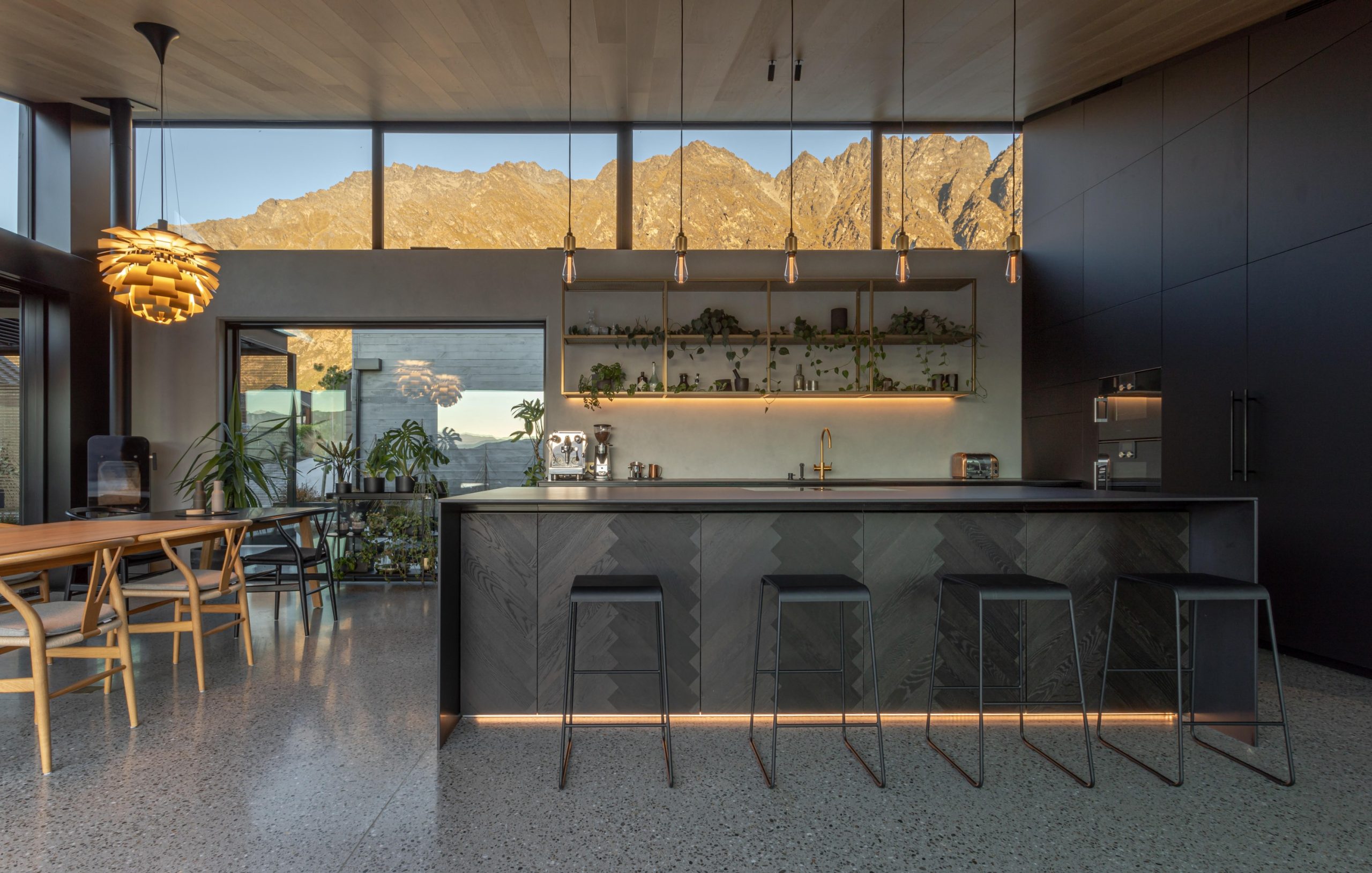
At the heart of the home sits the kitchen, designed as a minimalist matte-black space, it required a high level of precision to achieve the refined look Maja envisioned. To realise this, she collaborated closely with Formatt Bespoke Joinery, whose craftsmanship helped translate her highly detailed design into a functional space.
“The vision for the kitchen was a minimalistic, clean design in matte black. Minimalistic design requires attention to detail to not look boring or cheap.”
Achieving the fine lines Maja envisioned required working with extremely tight tolerances. “The biggest challenges, I think, were working with very small tolerances that I wanted for fine lines and thin benchtop detail.” Detailing continued into the living areas, where timber joinery was carefully aligned with the surrounding wall surfaces. “We had every board drawn and numbered to ensure the wall and the cabinet door wood grain lined up seamlessly. Although this may sound a bit over the top to some people, I believe it’s the small details like this that matter in architecture and design.”
Bringing such a detailed and unconventional design to life required close collaboration with the construction team at Mike Greer Architectural Builders. “The team and I worked closely to achieve my sometimes unusual or complex details. They had a lot of great solutions and suggestions for achieving a great result. It was great to be working with a team who took pride in their work and valued attention to detail.”
Performance and sustainability were also major considerations throughout the design “Solar panels, and a house battery help keep the power bill down, but also provide us with off- grid supply during the many power outages in this region.”
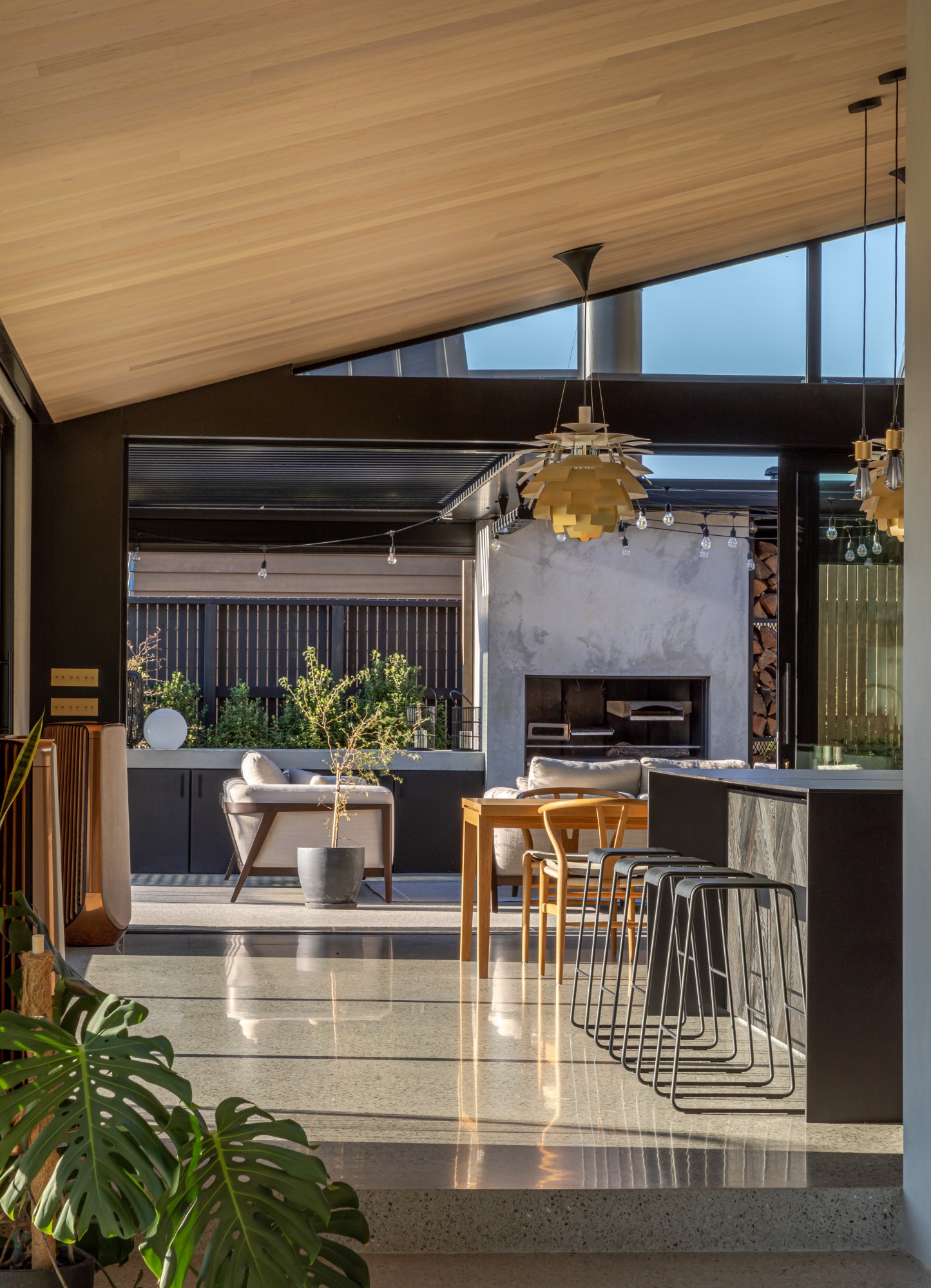
Despite the bold use of concrete, glass and steel, the home feels warm and deeply comfortable, a reflection of the design decisions woven throughout “Attention to detail is what makes this home a success. There are subtle, unique features and textures wherever you look.”
For Maja, the most remarkable feature of the home is the landscape itself “While I would like to say that the architecture itself is the outstanding element, I think the views are. The design is allowing this to be the outstanding feature of the house.”
JP House by Bolig Architecture is less about imposing architecture on the landscape and more about carefully framing it. Through thoughtful planning, detailing and a personal connection to the place, the house becomes both a shelter and a viewing platform, a home that lives in constant dialogue with the extraordinary Queenstown environment around it.
Contact details:
Bolig Architecture
021 100 1879
maja@bolig.nz
Images by: John Williams - www.jwphotography.co.nz