Terrace house
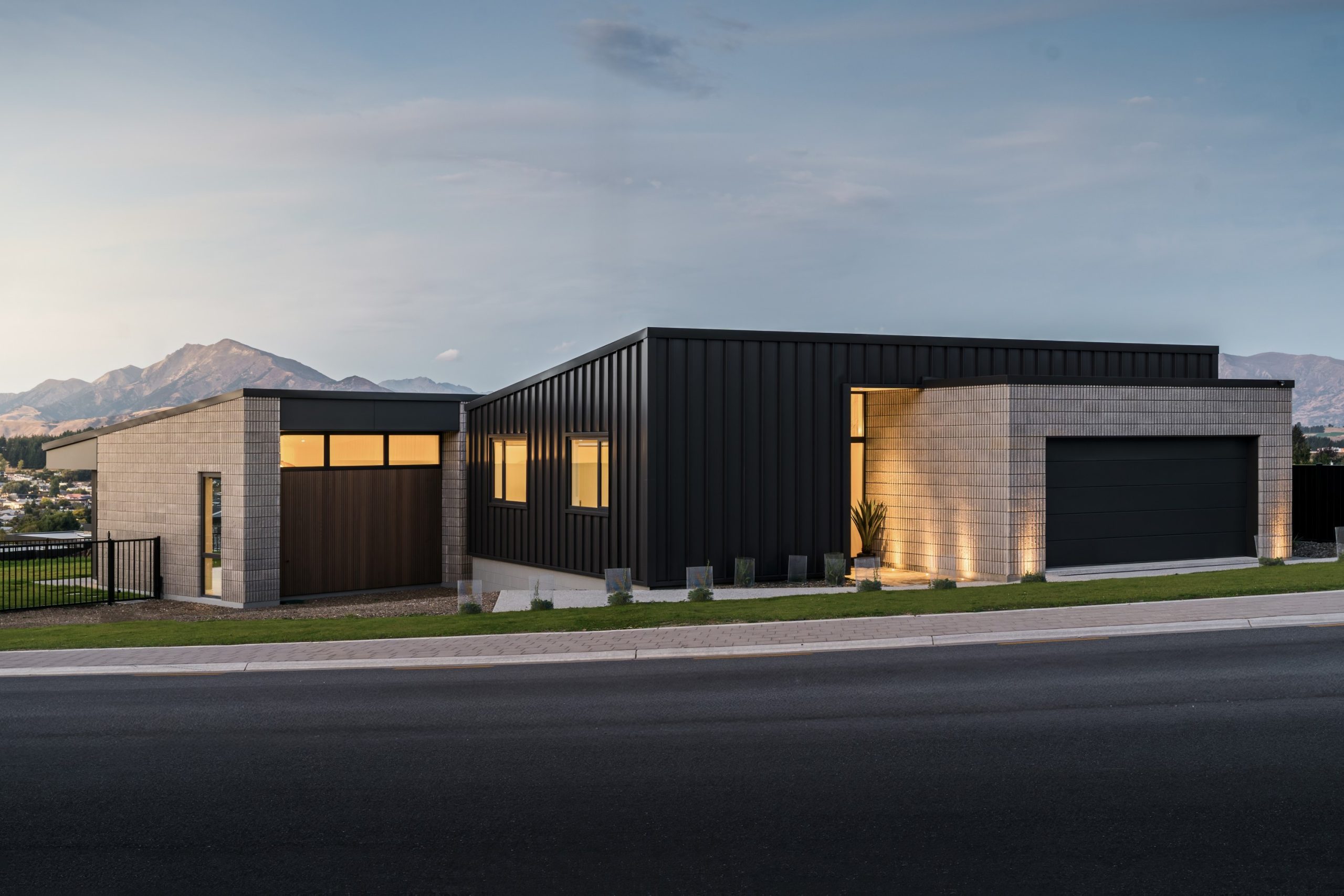
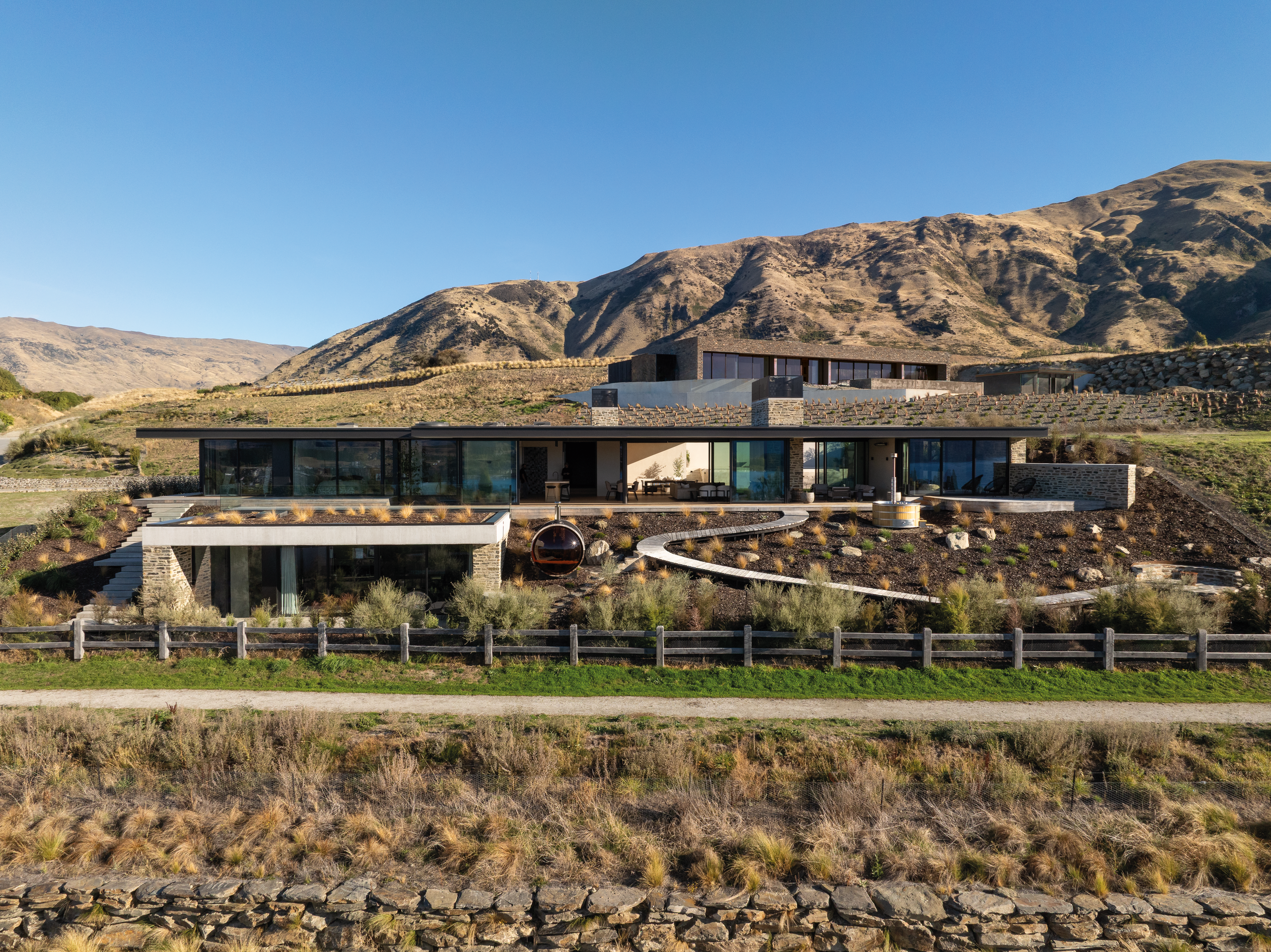
In the West Meadows neighbourhood of Wanaka, a new house by Immersion Architecture brings a quietly confident presence to its prominent corner site. Named Terrace House, the project pairs robust construction with carefully framed views to create a contemporary alpine retreat designed for extended family living. Rather than relying on spectacle, the architecture celebrates material honesty and spatial clarity, allowing texture, light and landscape to define the experience of the home. At its core, the design is about permanence, durability and the tactile pleasure of well-chosen materials.
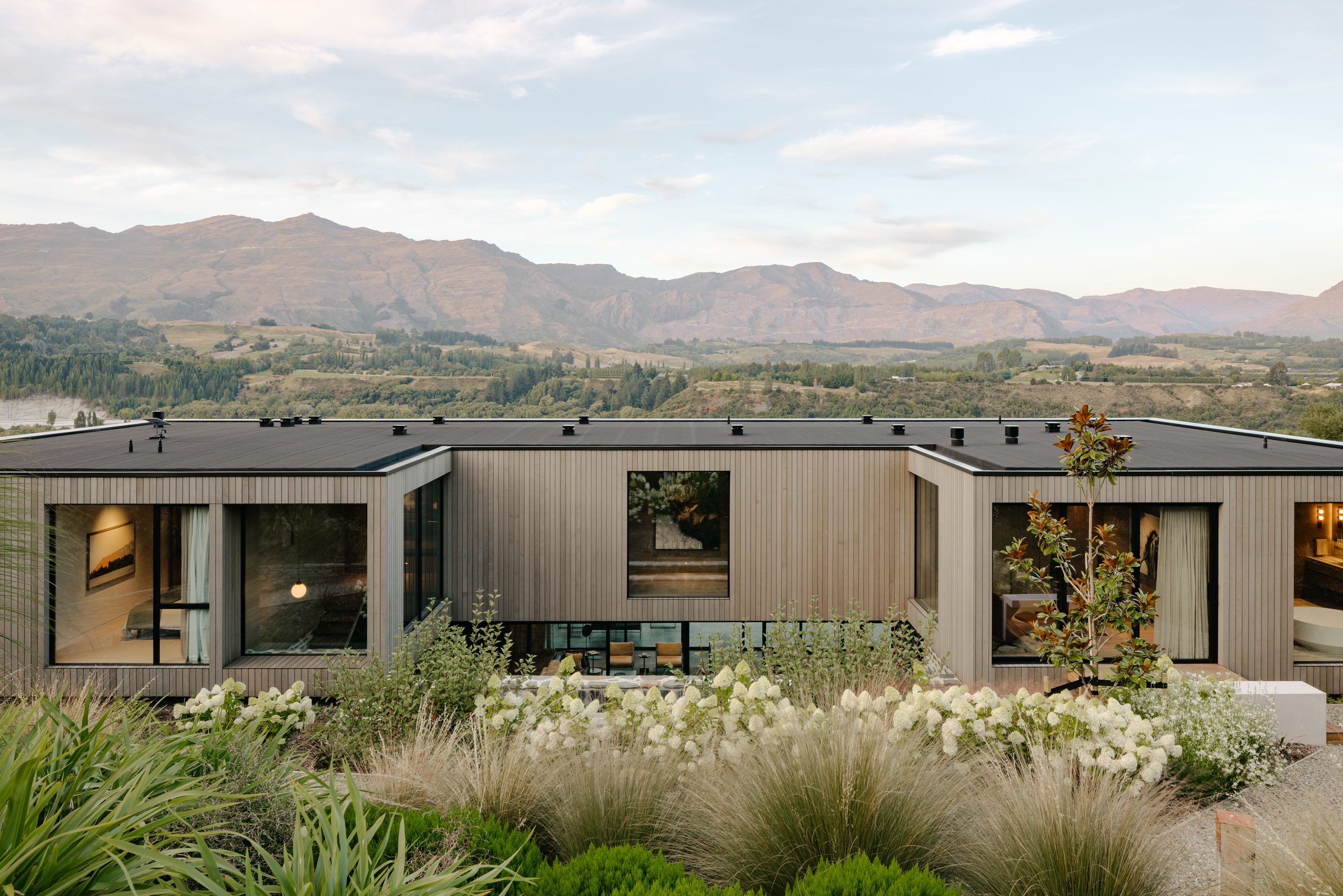
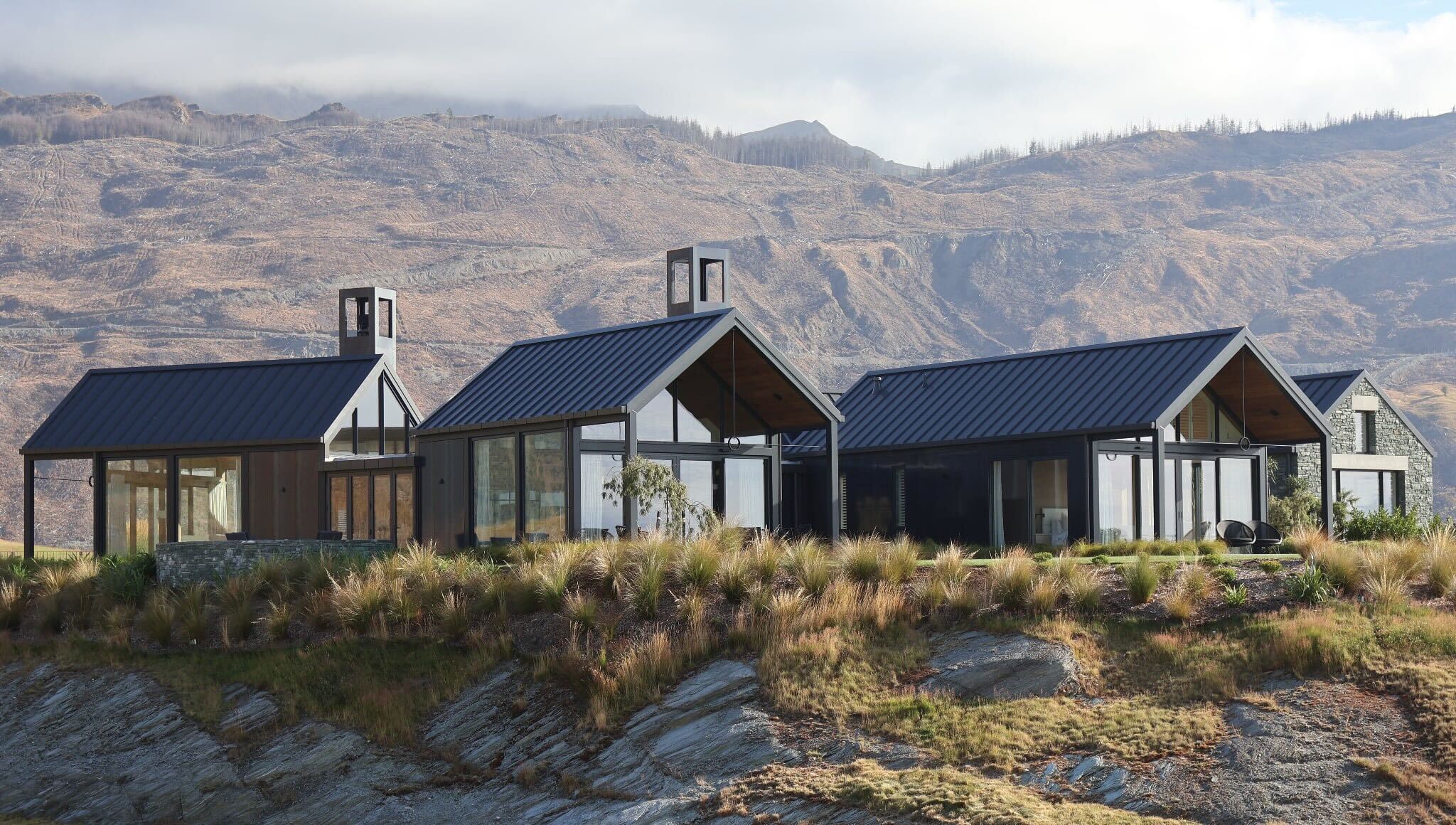
The exterior composition is a series of interlocking pavilions stepping gently down the natural fall of the land. These simple volumes are expressed through a rich palette of fluted concrete block, vertical cedar shiplap and dark steel tray cladding, creating a dialogue between solidity, warmth and precision.
The fluted masonry in particular establishes a strong vertical rhythm across the façade, its recessed channels catching light and shadow throughout the day. These Viblock fluted blocks provide all the benefits of structural block with the architectural flair of a fluted face. Timber softens the composition, introducing warmth and a fine grain that contrasts with the weight of the concrete surfaces. Together the
materials give the home a character that feels both contemporary and enduring within the alpine environment.
Set on a sweeping corner within the West Meadows development, the house is carefully shaped to balance openness with privacy.
A sequence of stepped forms shields the interior from the street while allowing carefully edited views toward Mount Roy and Lake Wanaka beyond. The massing settles the building into the site rather than dominating it, with each pavilion slightly offset to respond to topography and orientation.
Between the two primary volumes, a glazed link introduces transparency and light, marking the transition between arrival and living spaces. This slender connector also opens directly to a sheltered courtyard that functions both as a service area and as an outdoor spillover zone for guests and children during gatherings.
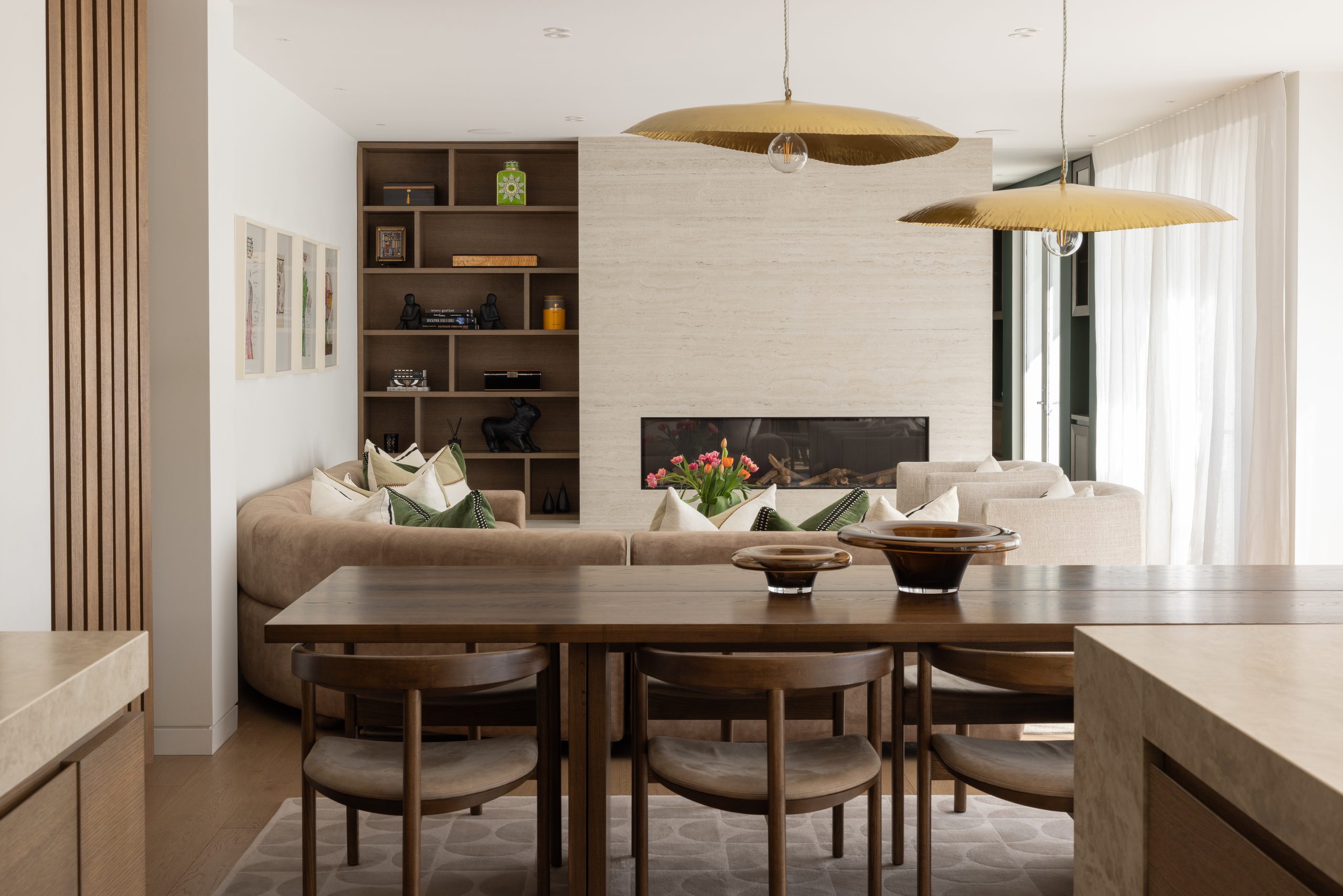
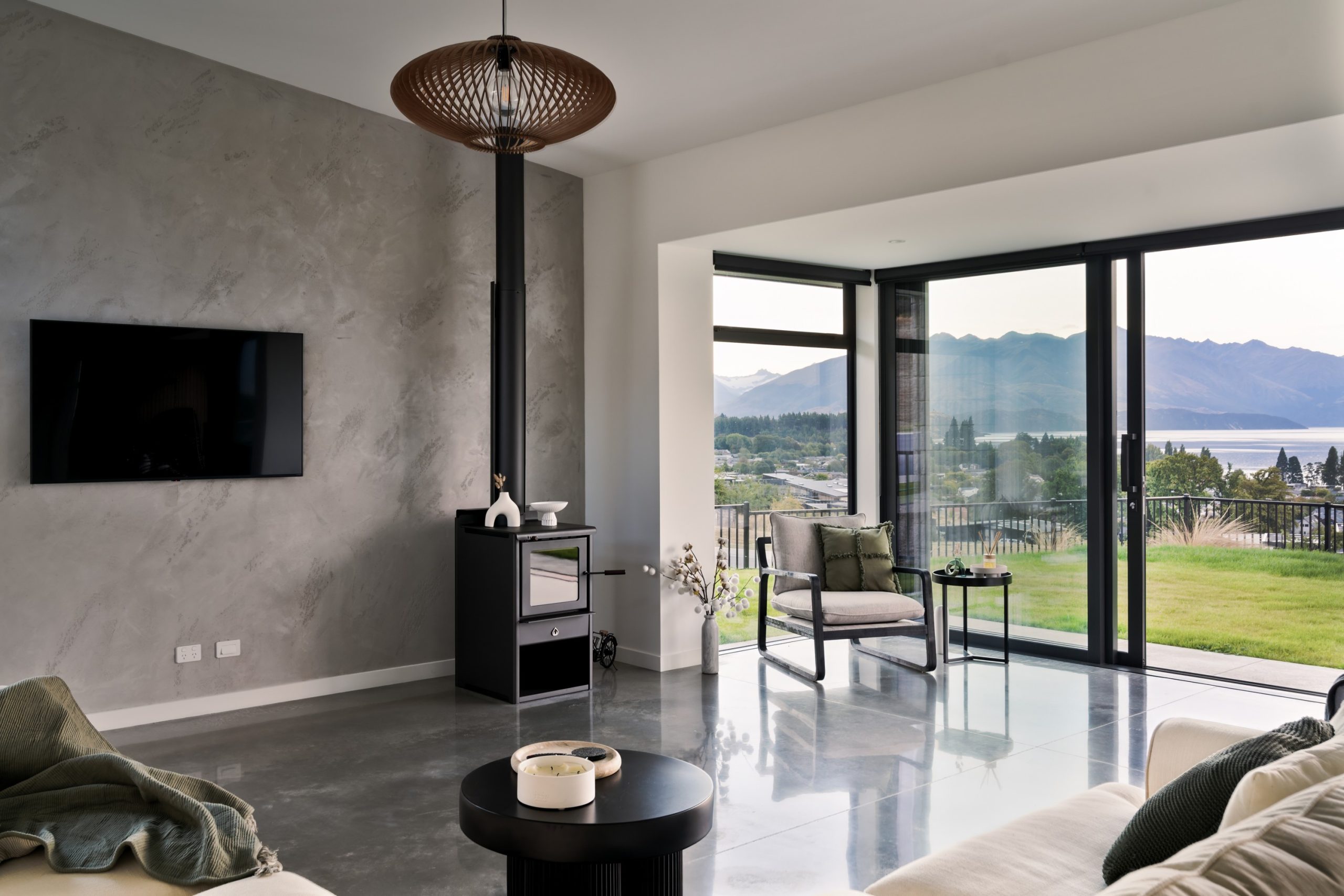
Inside the main pavilion, the plan opens dramatically toward the north, where expansive glazing captures sunlight and uninterrupted mountain views. Oversized sliding doors stretch across the living frontage, dissolving the boundary between interior and terrace. Above the living and dining zone, the ceiling lifts and angles upward, guiding the eye toward distant peaks while drawing daylight deep into the room. The atmosphere is both relaxed and generous, anchored by polished concrete floors and carefully detailed
timber elements. Exposed slabs operate not only as durable surfaces but also as thermal mass, storing warmth from winter sun and slowly releasing it back into the house as temperatures drop. This passive strategy works alongside hydronic underfloor heating to maintain comfort year-round.
Despite the calm simplicity of its forms, the house is underpinned by rigorous efficiency. Architect Richard Pearce of Immersion Architecture explains that the design was guided from the outset by a tightly controlled budget. “Careful planning allowed a generous four-bedroom two-bathroom home to be realised within a compact footprint of just 215sqm. Subtle adjustments in level help the building negotiate a sharp topographical drop at the vehicle crossing. By splitting the plan half a storey, the garage and entry remain level with the street while the main pavilion settles more comfortably into the landscape. The approach also heightens the sense of arrival as visitors move through compressed spaces before emerging toward the expansive living room.”
Material selection plays a central role in the character and longevity of the project. “Fluted masonry units provide the most distinctive texture, with their vertical grooves casting deep shadow lines that animate the exterior walls. Cedar shiplap cladding from Hermpac introduces warmth and subtle variation as the timber weathers naturally over time.”
Steel tray cladding and roofing elements add precision while reinforcing the home’s robust alpine character. Builder Tom Hudson of Hudson Builders notes that the contrast between the fluted block and cedar became one of the project’s most memorable qualities during construction. Inside the polished concrete living floor, oak stair treads and carefully crafted joinery reinforce the sense of durability and calm restraint.
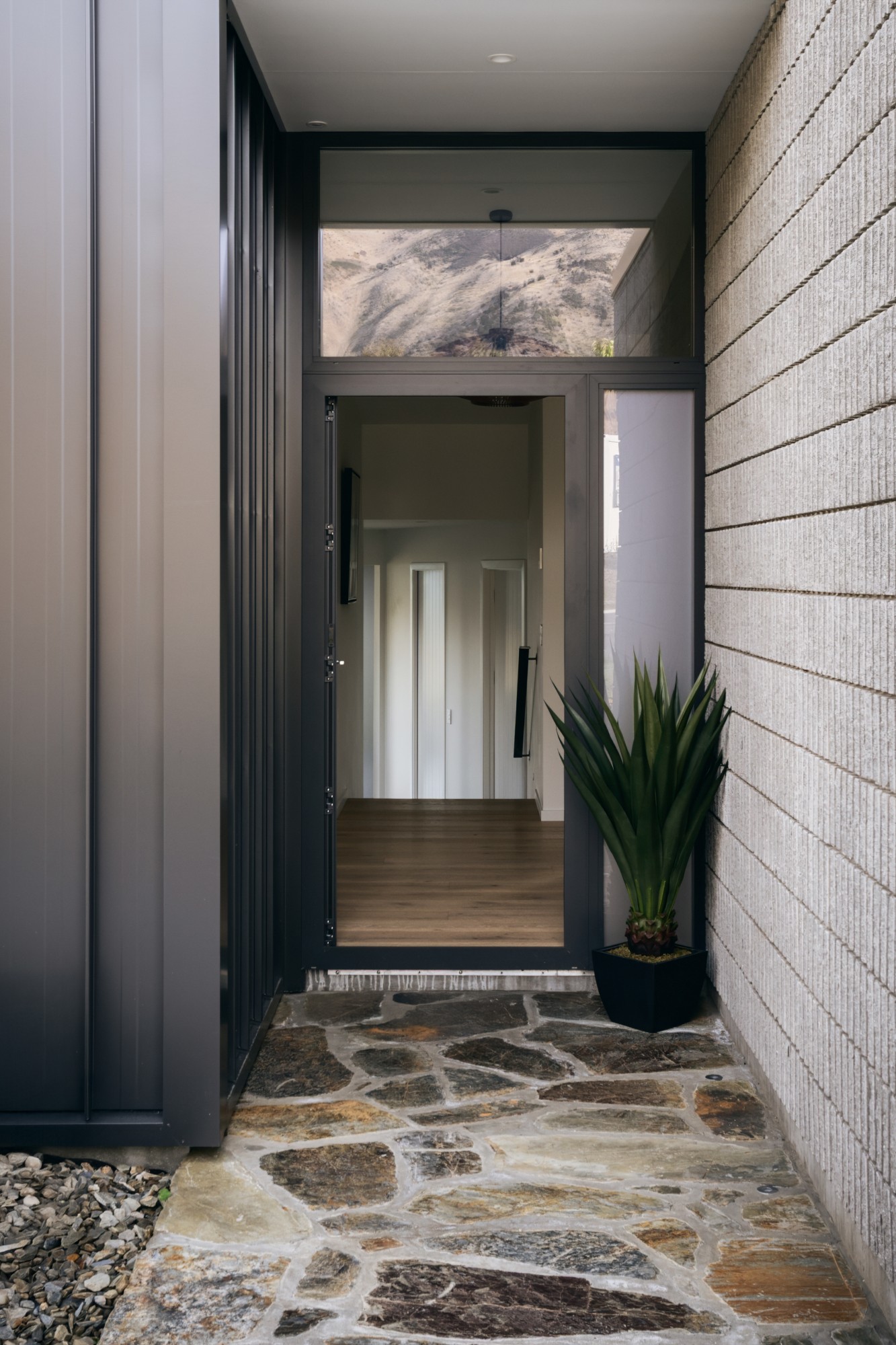
The experience of arrival begins where the entry is carefully carved between two solid volumes along the southern façade. This cleft forms a sheltered threshold that protects visitors from alpine weather while emphasising the thickness of the masonry walls. Stepping inside reveals a bright foyer where ceiling height immediately expands and sightlines begin to unfold through the house. From here, circulation flows easily toward guest bedrooms and service areas, allowing family members and visitors to move independently throughout the day.
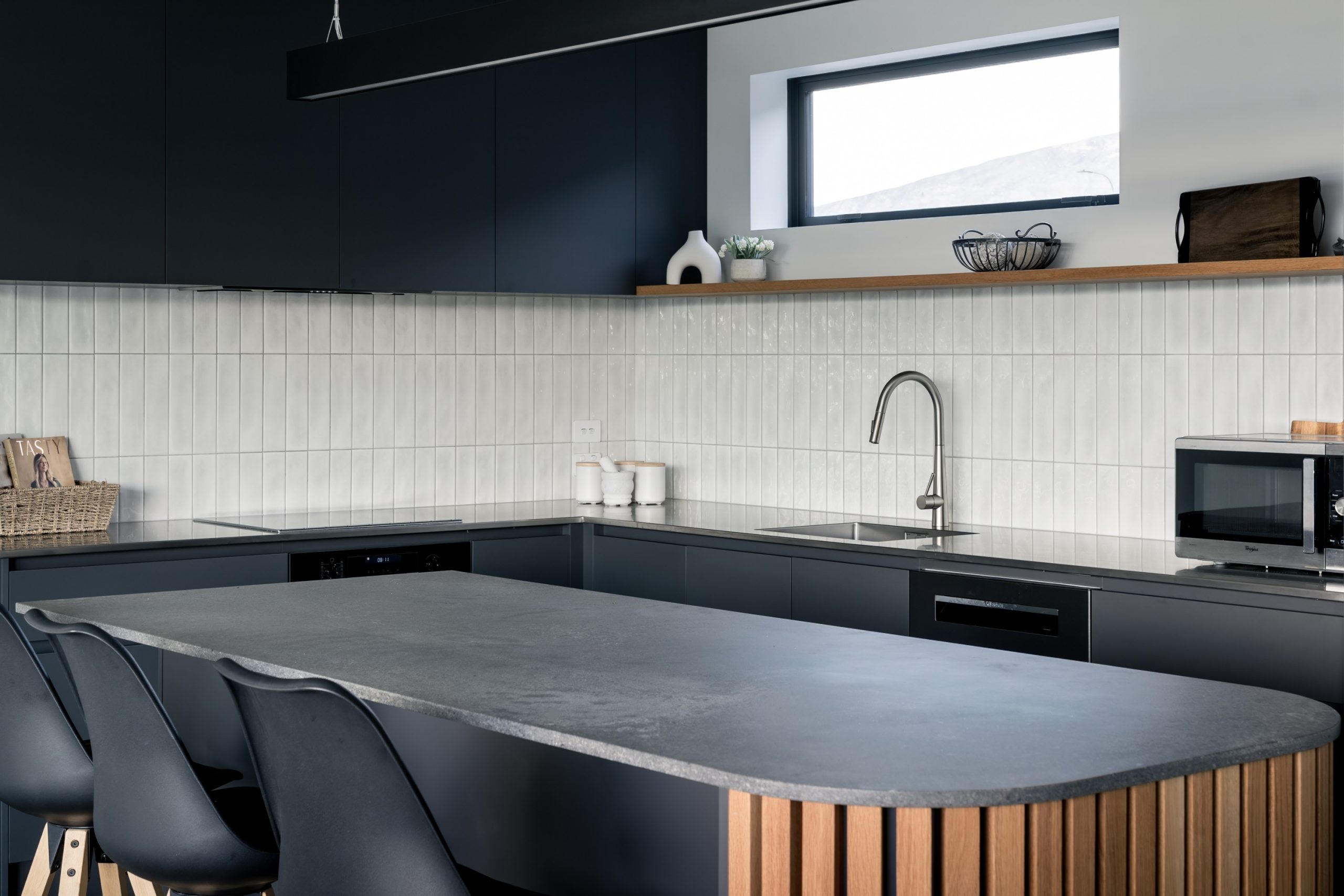
Tom says the 10-month-long build was a rewarding journey. “The project was a pleasure to work on. It was a very smooth-running all the way through and this comes down to the people you’re working with. The clients were very hands-on and this helps us as builders, and the architects were great to work with also, so it all came down to those relationships working well, which ensured everything went to plan.”
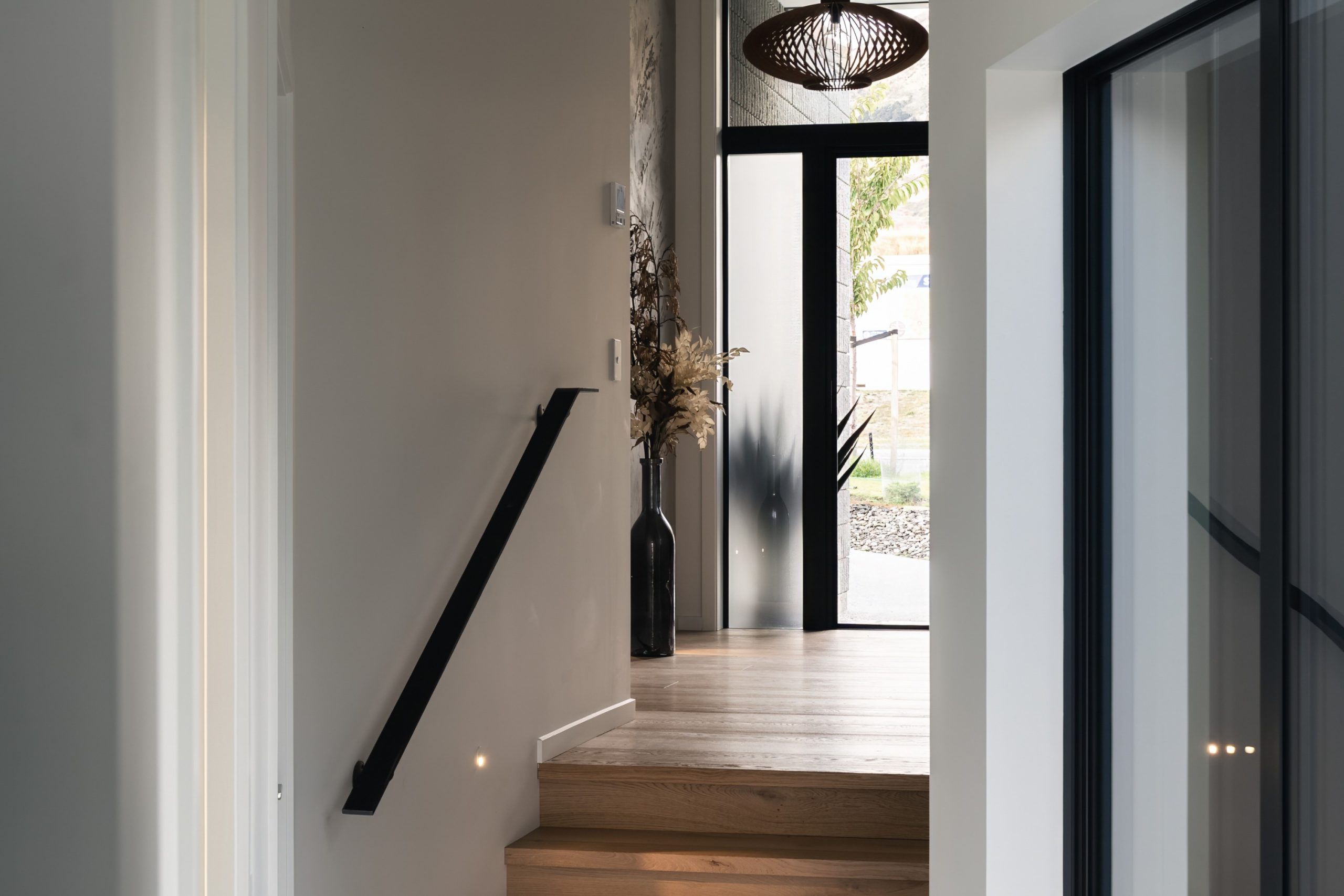
A short flight of stairs then rises to the glazed walkway that links the entry pavilion with the main living volume. This transparent bridge frames glimpses back toward the courtyard while drawing daylight deep into the centre of the plan.
Off the walkway, a practical mudroom provides storage for coats, boots and outdoor gear, before opening directly to the sheltered courtyard outside. The courtyard itself operates as both a service space and an informal outdoor room where children can play and guests gather during busy family weekends.
From this point, the interior sequence culminates in the open plan living area, where the architecture turns decisively toward the northern landscape and the expansive mountain panorama beyond the glazing line of sliding doors and terrace edge that extends daily life outdoors in summer months while maintaining shelter from prevailing winds through generous roof overhangs and carefully positioned walls and planting beds.
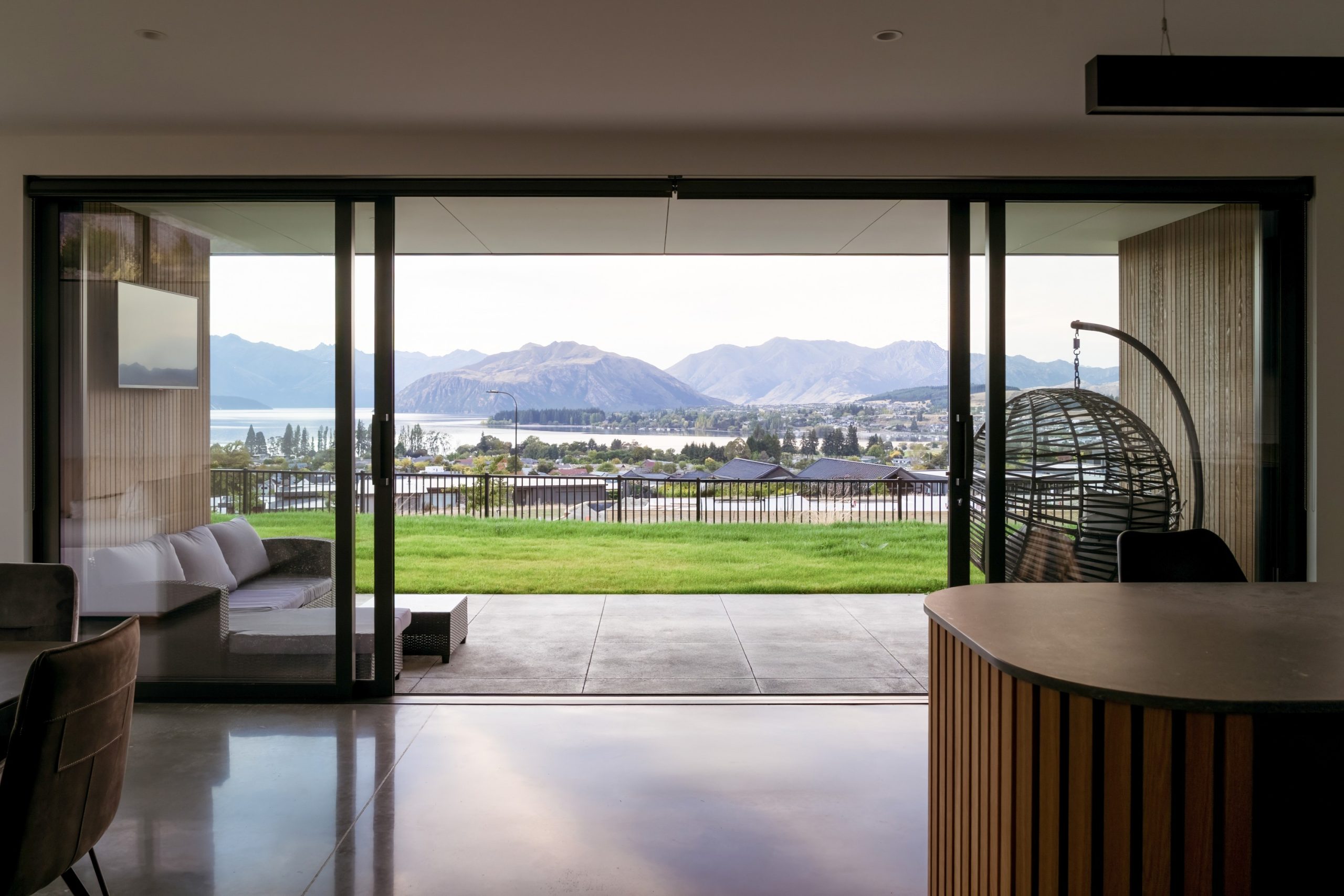
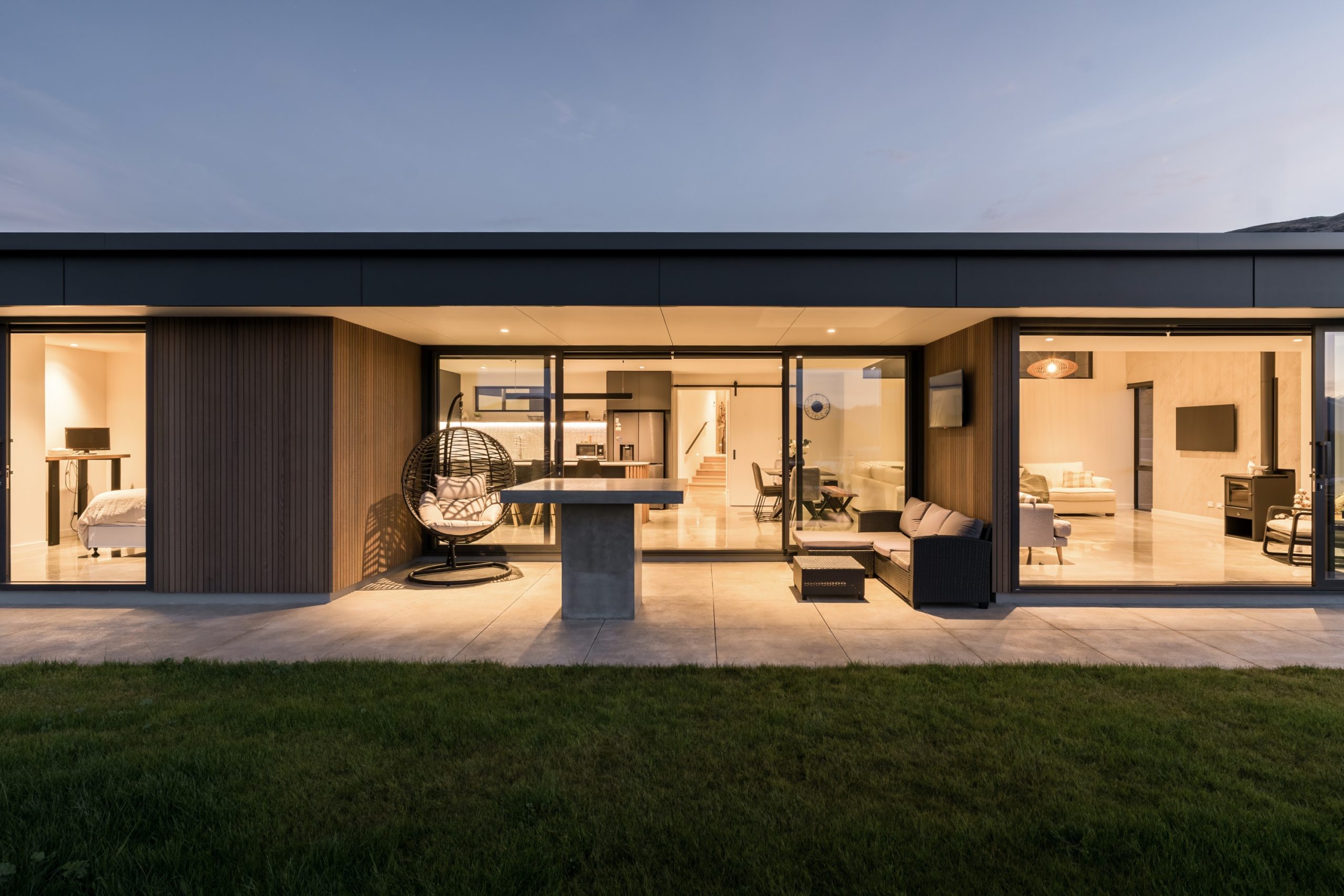
Within the main pavilion the spatial organisation continues the careful choreography of movement and view. The open plan kitchen, dining and living zone stretches along the northern edge of the building so that everyday life remains constantly connected to the landscape.
Large sliding doors open the interior to a covered terrace where cedar lining softens the outdoor room and a wall-mounted television encourages relaxed summer evenings with friends and family. The kitchen anchors one end of the space, allowing cooks to remain part of the social atmosphere while still enjoying clear views toward Mount Roy and Lake Wanaka beyond the glass.
Nearby the dining table sits beneath the rising ceiling plane which tilts upward to capture extra daylight and emphasise the scale of the surrounding mountains. The living area occupies the warm centre of the room, arranged around comfortable seating and the wood-burning fireplace that provides both ambience and additional winter heat.
Just beyond the social zone, a quieter corridor leads to the primary bedroom suite positioned slightly apart from the busiest spaces of the home. From the bed occupants wake to long views across rooftops
toward the lake, reinforcing the sense that architecture, landscape and daily routines are closely intertwined throughout the house plan and its carefully stepped pavilions that continue to shape privacy, sunlight circulation and views across the site every single day.
This enduring layout quietly supports gatherings, relaxation and family life.
Contact details:
Immersion Architecture
0274 442 809
richie@immersionarchitecture.co.nz
Images by: Future Studios - www.futurestudios.nz