Grounded in craft
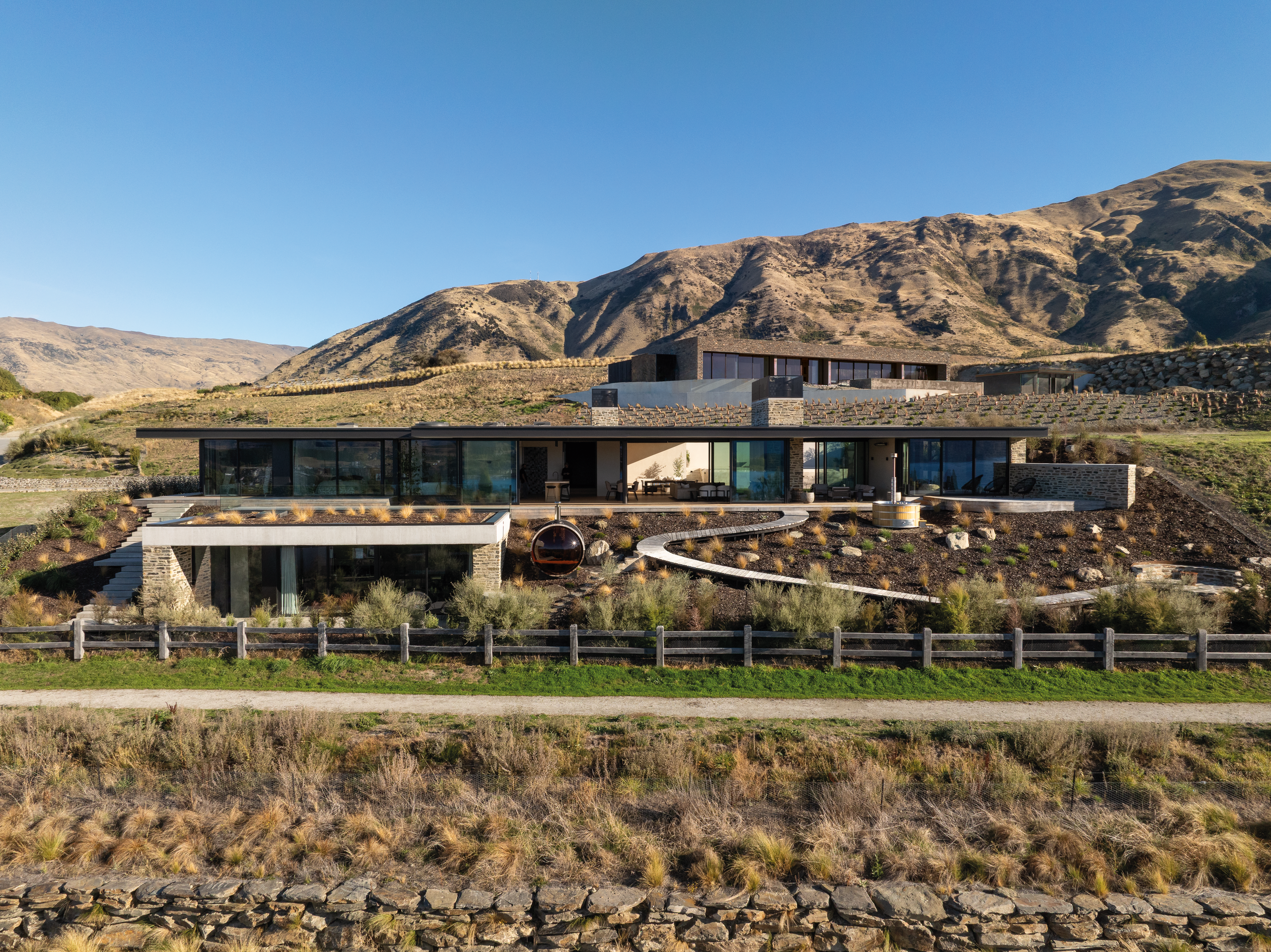
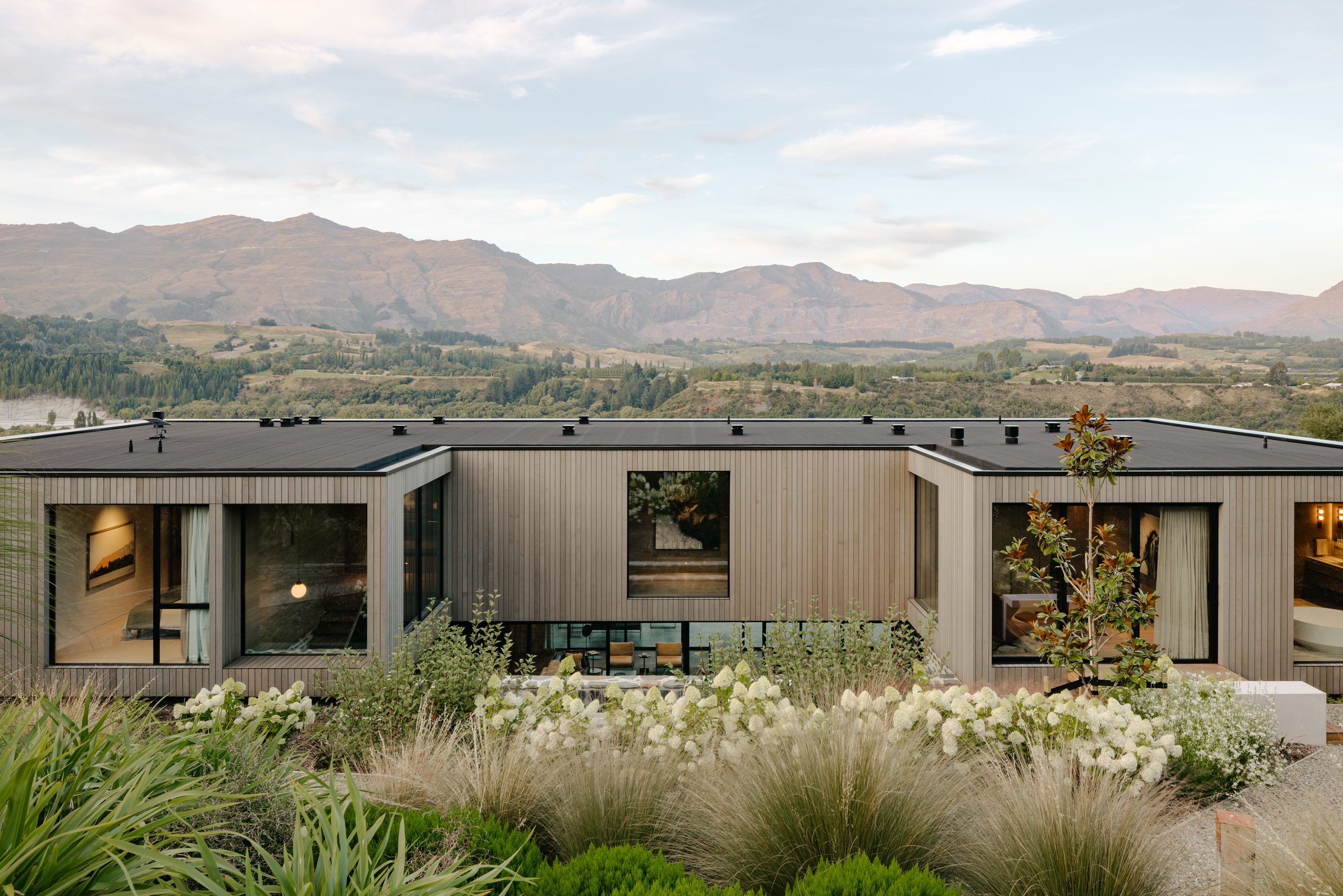
Set among mature trees and neighbouring villas in Mount Eden, Prospect House is an expertly crafted architectural home inspired by childhood memories.
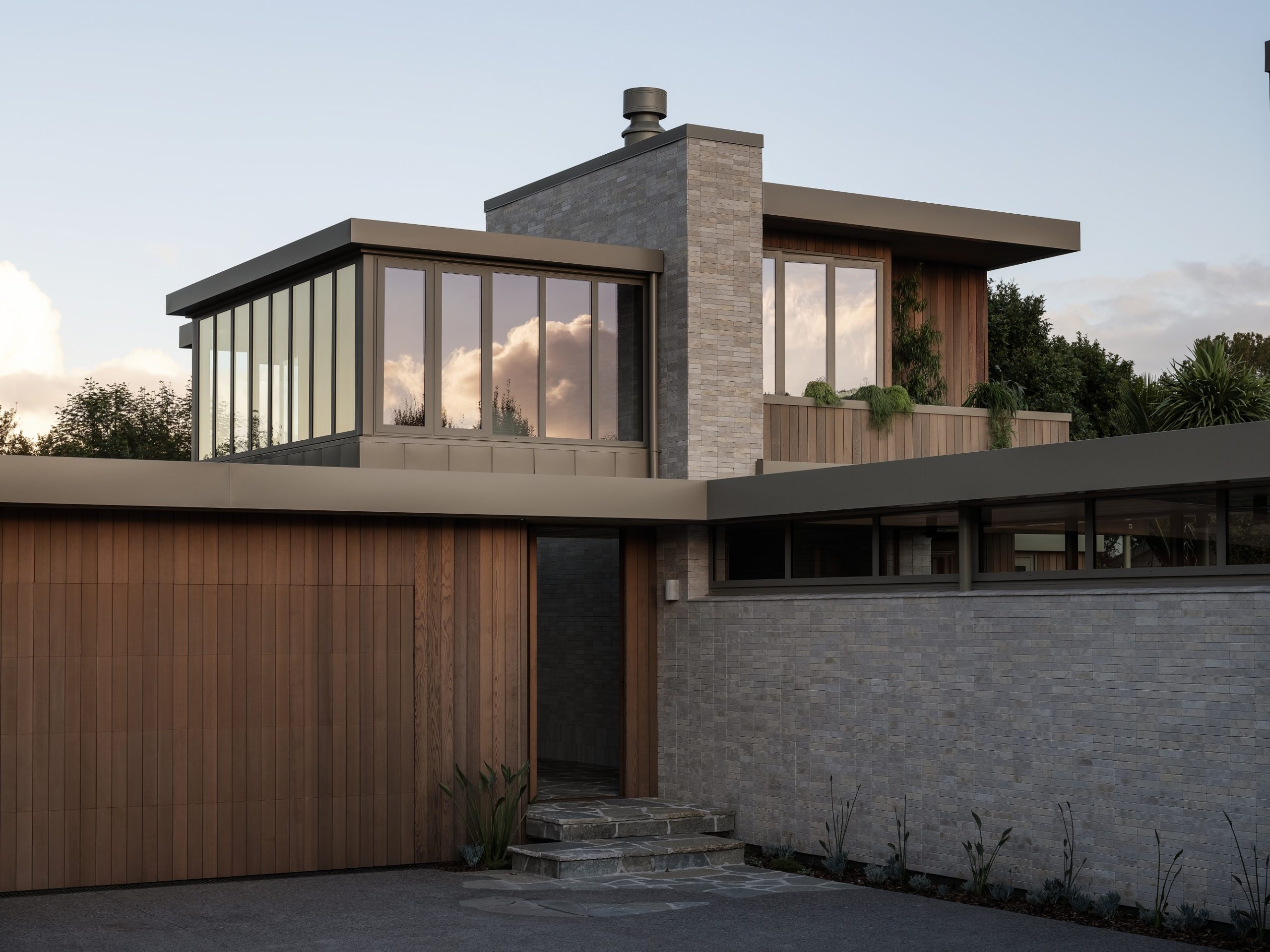
Designed by MAUD with interiors by at.space, the project called for a builder capable of delivering a complex design with precision. Homeowner and interior designer Alex McLeod of at.space, wanted her new family home to reflect happy childhood memories and to capture the sense of calm and intimacy she remembered from her grandparents’ mid-century courtyard home.
Faulkner Construction was engaged early, bringing construction expertise into the design phase to ensure key details were buildable, coordinated and resolved before work began on site. That early involvement proved critical on a project where material transitions, structural elements and sequencing would all play a defining role in achieving a home that feels both refined and effortless.
At the time of tender, Faulkner was also completing a previous MAUD-designed project, establishing a strong working relationship and a shared understanding of the level of detail required. That continuity carried through into Prospect House, where collaboration between architect, interior designer and builder remained consistent from concept through to completion.
The site itself presented immediate challenges. Positioned down a long, narrow driveway with overhead services and established trees, access required careful planning and active management of deliveries, crane work and day-to-day operations. With the clients living in the neighbouring property and sharing access throughout the build, sequencing and site management became key to maintaining a smooth and considered construction process.
Located on the slopes of Maungawhau, the site required substantial excavation through volcanic rock to form the foundations, slab and swimming pool. In several areas, voids were uncovered once the rock was removed, requiring real-time adjustments to the footing design and close coordination with engineers to maintain structural integrity without disrupting the programme.
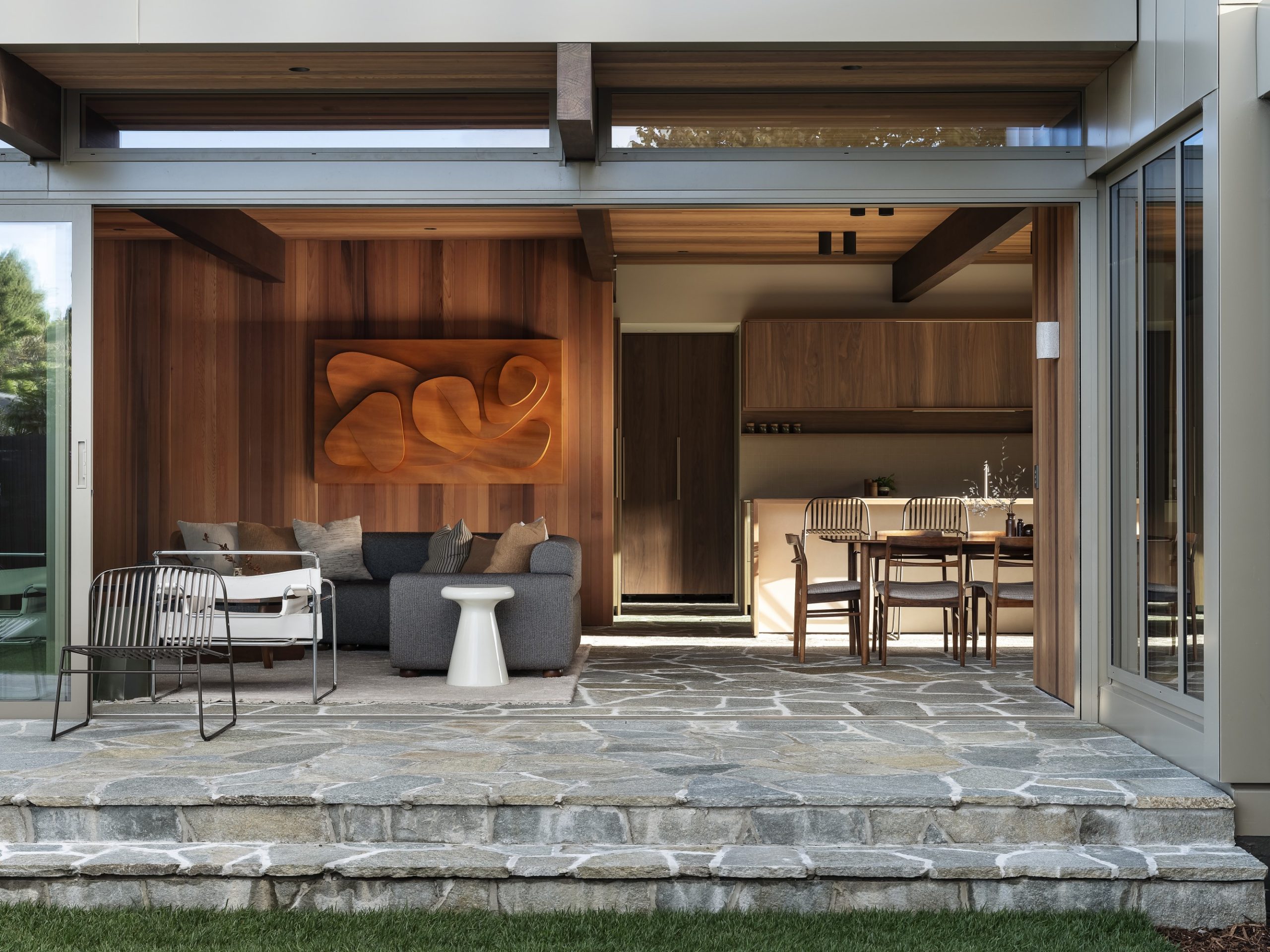
The home incorporates hydronic underfloor heating alongside extensive areas of stone paving that extend seamlessly from the interior into surrounding courtyards. Achieving this level of continuity required precise control of floor levels across multiple zones, supported by careful set-out and the use of nib walls to manage transitions between interior and exterior spaces. The inclusion of a sunken living nook, positioned below natural ground level, further increased the complexity while contributing to the layered, intimate feel of the interior.
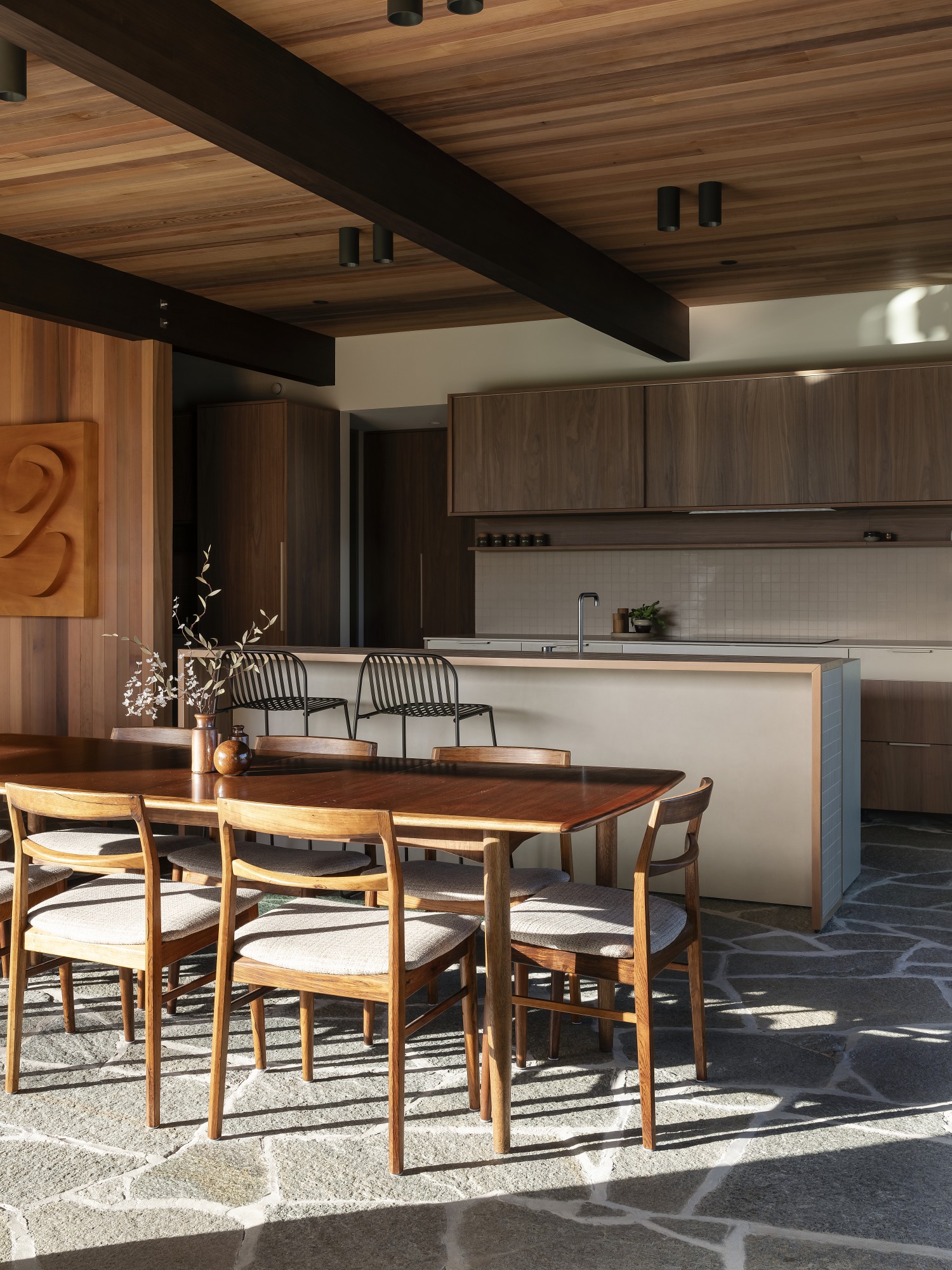
A defining feature of the build is the use of Luca crazy paving from Eco Outdoor NZ, which flows throughout the ground floor and out into the landscaped areas. The surrounding landscape, delivered by Babylon Landscaping, works in tandem with this material continuity, extending the architectural language into the outdoor spaces.
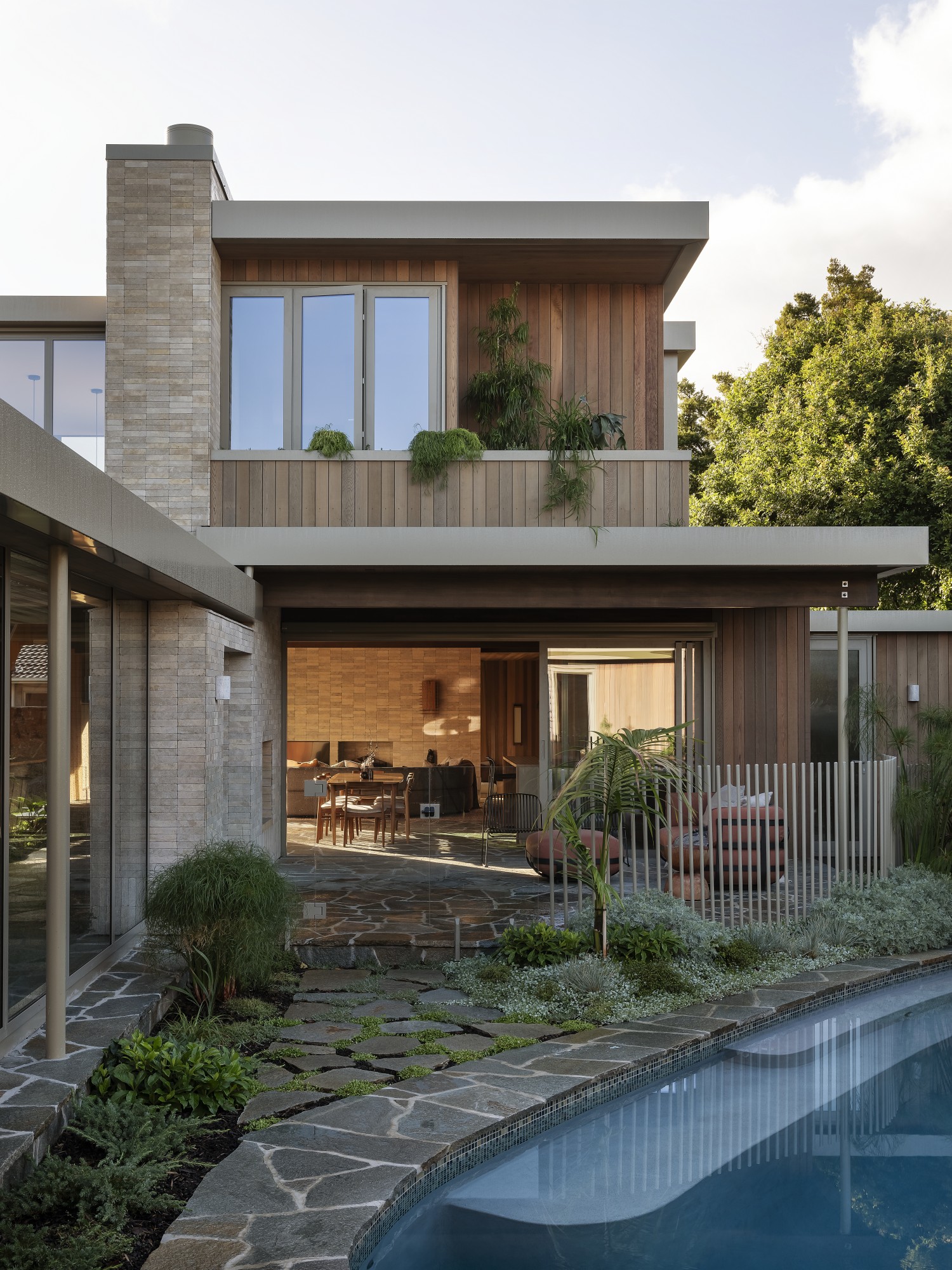
The timber and stone materiality of the home are key elements of the design. Western red cedar weatherboards, supplied by Hermpac, are used extensively both internally and externally, creating warmth and continuity throughout. Beneath these layers, the structural blockwork and masonry by Quality Masonry required a high level of precision. While largely concealed, this work was critical in achieving accurate set-out and alignment, particularly at junctions between cladding systems, recessed joinery and bespoke flashings.
A warm roof system along with custom gutters and cedar fascias are integrated into the roof edge detailing, maintaining the simplicity of form while delivering robust, long-term performance.
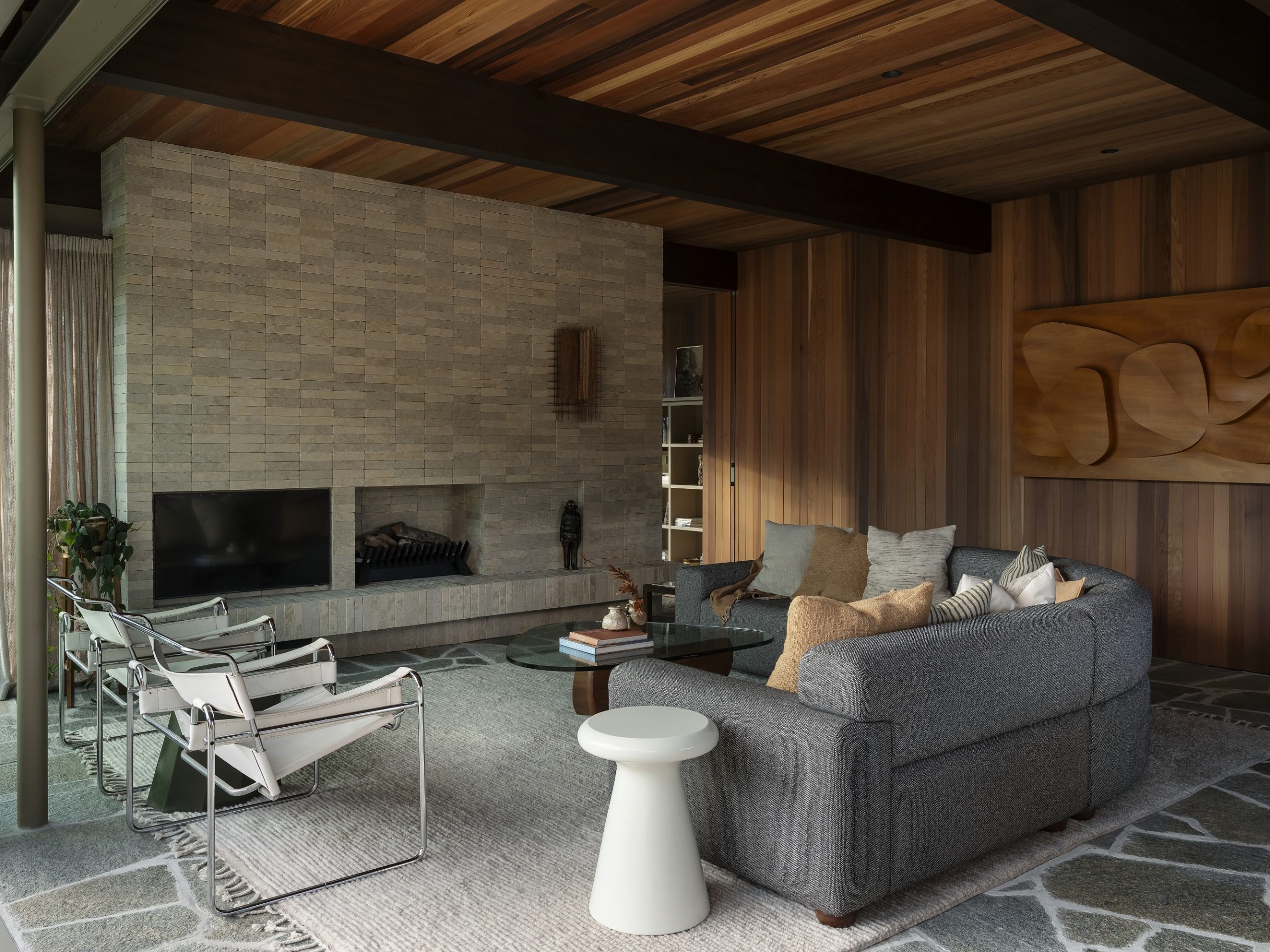
Structurally, the home combines conventional timber framing with engineered elements. Exposed glulam beams feature prominently within the main living areas and snug, acting as both structural components and architectural features.
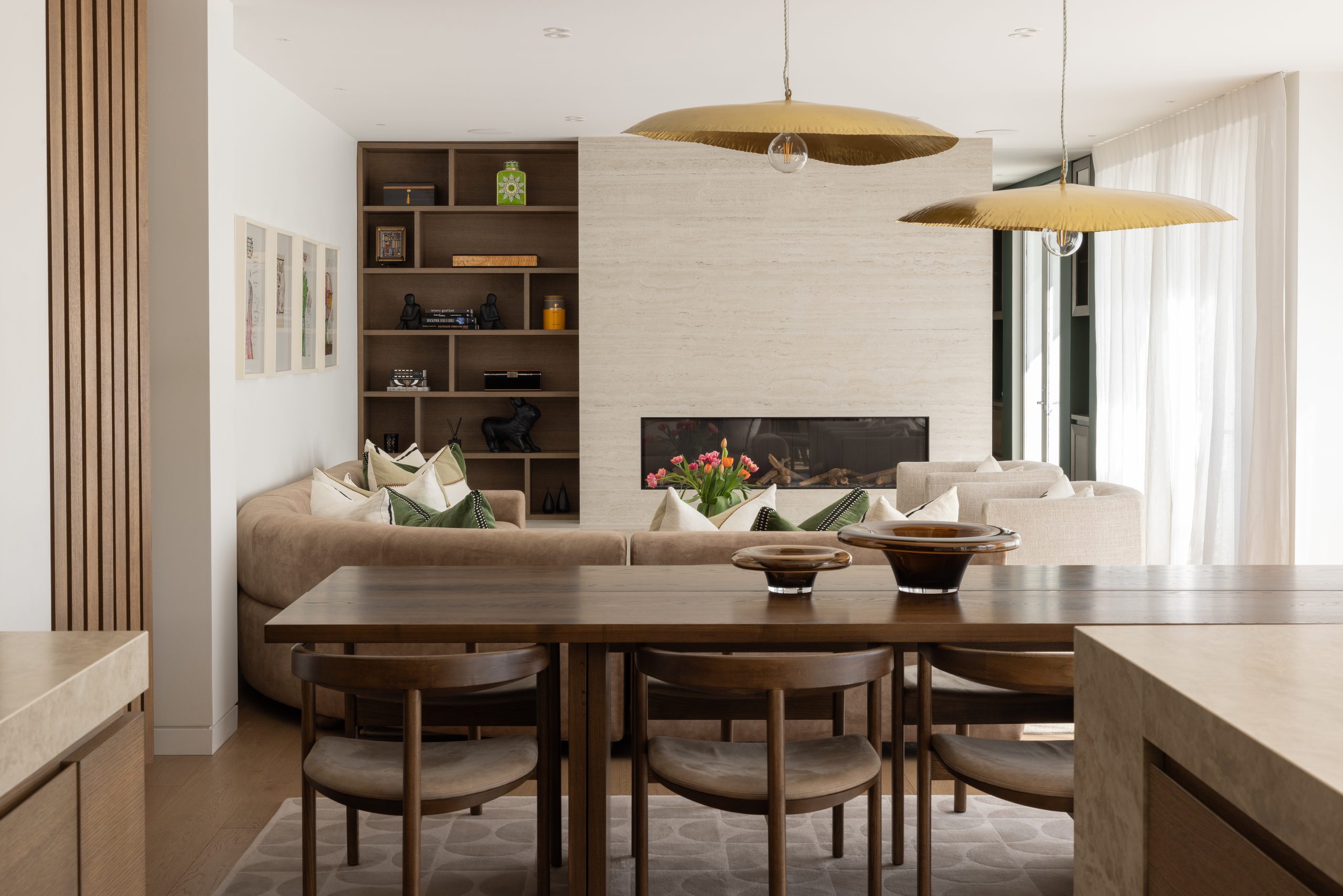
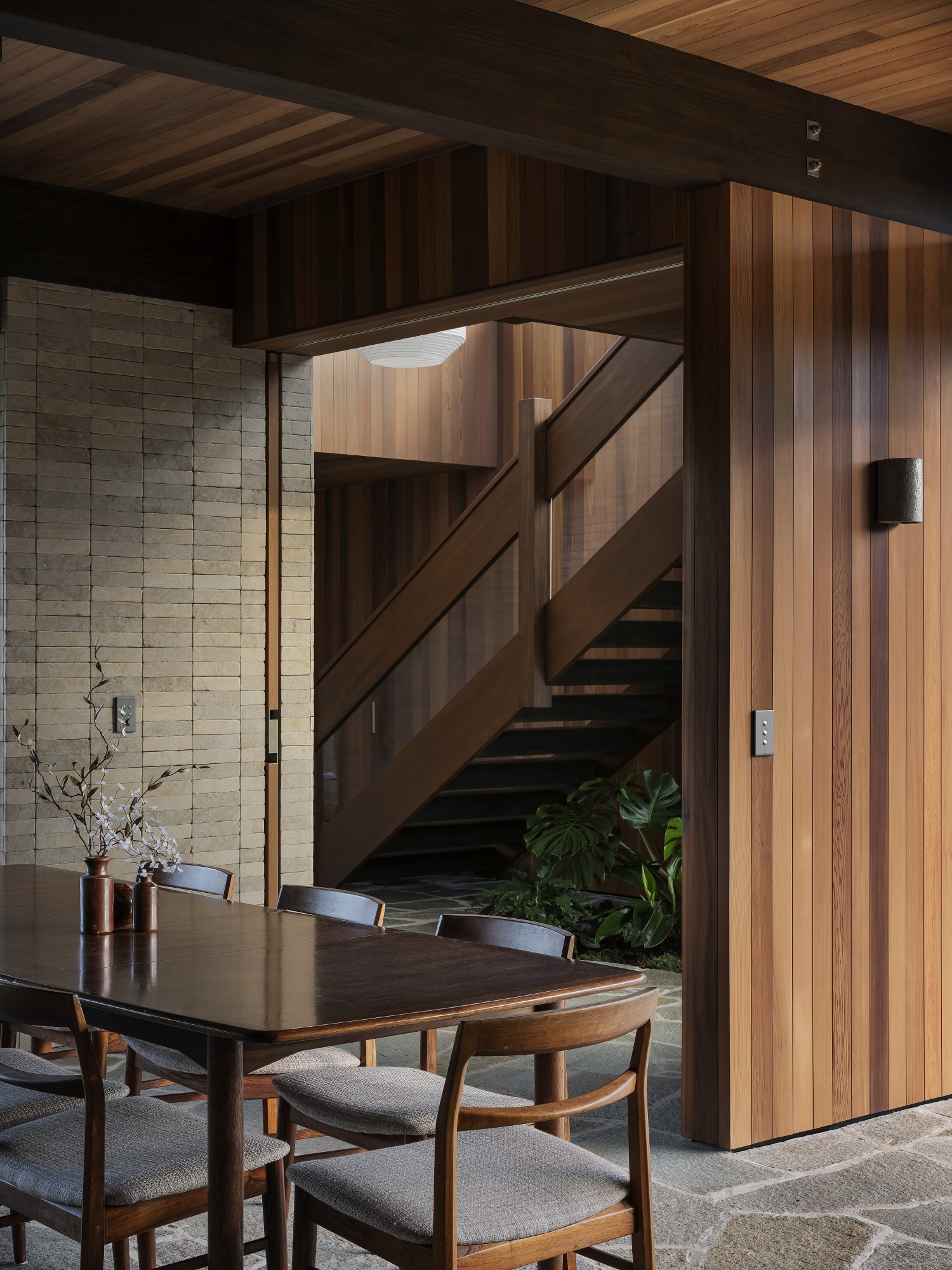
Internally, the material palette is deliberately restrained, allowing texture and light to define the spaces. Cedar linings, limestone batons and stone flooring create a continuous language that extends seamlessly into the exterior. Achieving this level of refinement required a high degree of precision, particularly across long runs where alignment and consistency are critical to the overall feel of the home.
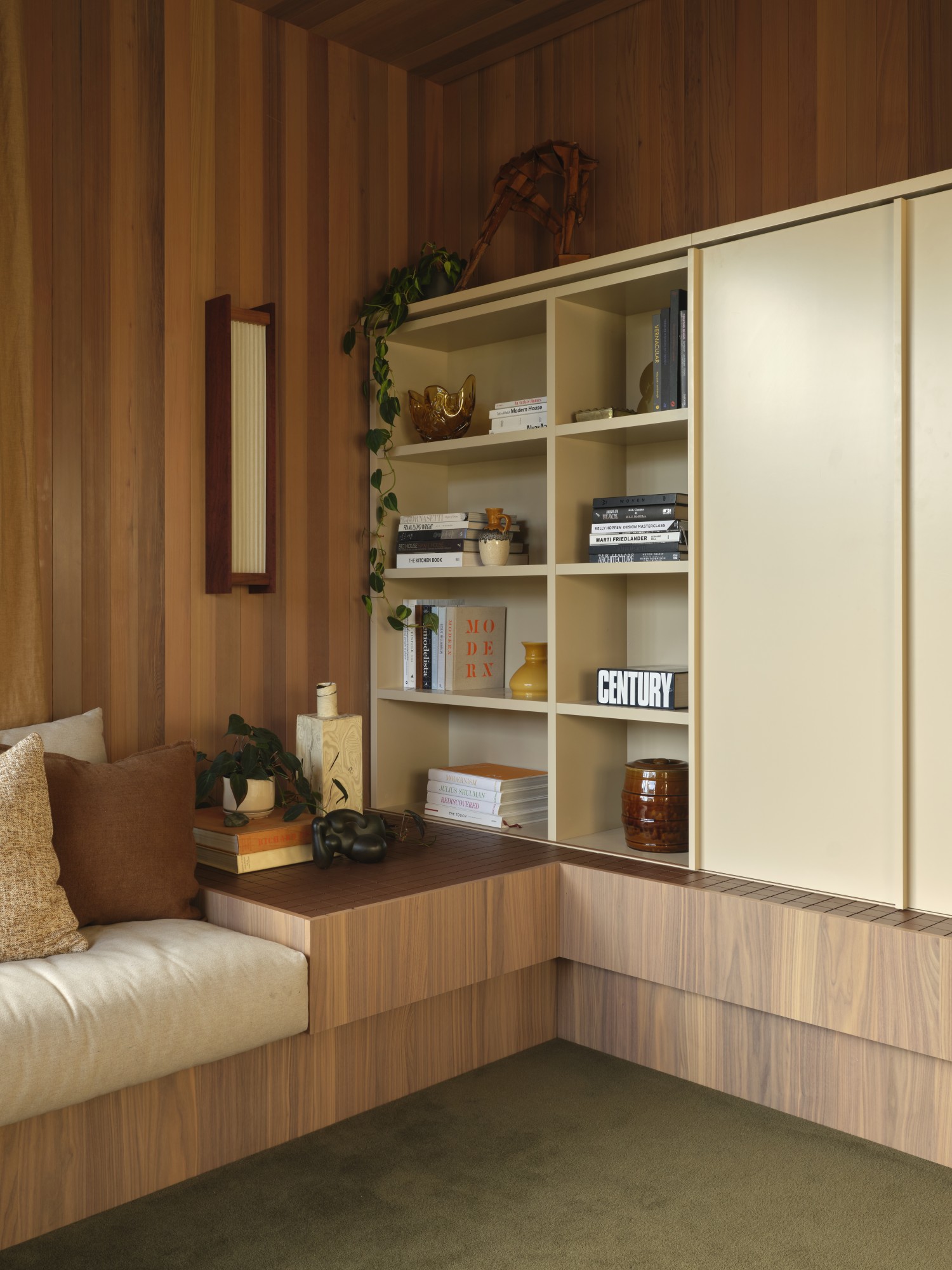
Architect Natasha Markham explains how these materials grew directly from Alex’s memories. “The stone and cedar bring a mid-century warmth without recreating the past. It’s sensory, it invites touch, and it connects the home to its surroundings in an honest way.”
Bespoke joinery plays a key role in anchoring the interior spaces. The kitchen, scullery and integrated cabinetry were crafted by Carlielle Kitchens, with a focus on refined detailing and seamless integration with surrounding materials. These elements required close coordination between at.space, Faulkner Construction and the joinery team, particularly where joinery interfaces with stone, cedar and tiled finishes, ensuring a cohesive and resolved outcome.
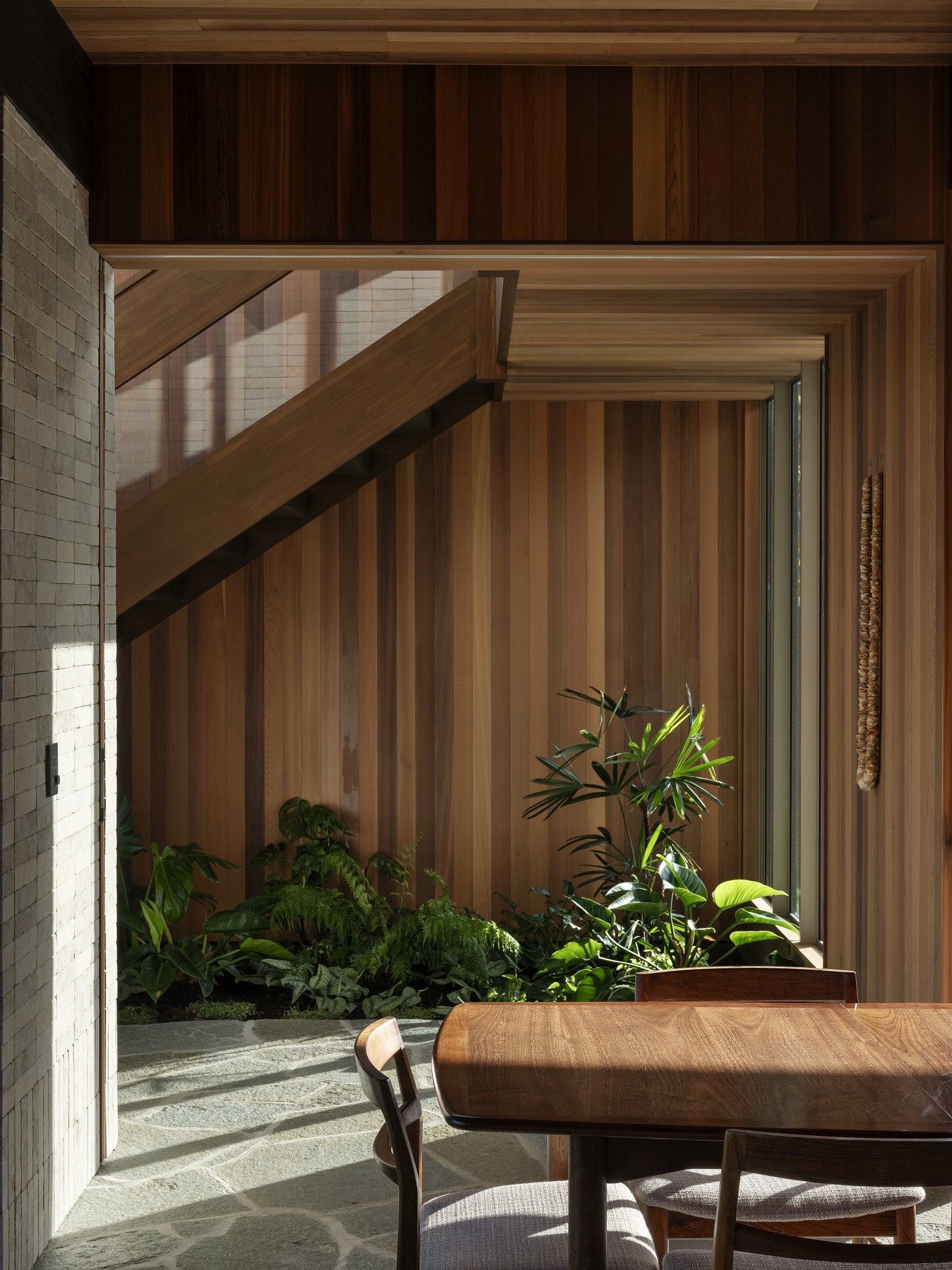
Lighting and outdoor connections were designed with thoughtful detail. Clerestory windows allow light deep into the atrium, and full-height glazing frames the mountain and gardens. WindowMakers’ APL Architectural Suite allows large panels that open onto the courtyards. A glazed gallery corridor links the main living pavilion to the bedroom wing, creating a quiet transition space that balances openness with privacy. “We wanted to blur the line between inside and out,” Natasha explains. “It makes the house feel alive throughout the day.”
The pool and surrounding courtyard, constructed by Hansen Pools, form a central focal point of the home, carefully integrated with the architectural layout and landscape design. The alignment of pool levels, paving and adjacent spaces required precise coordination and set out to maintain the seamless flow between indoor and outdoor environments.
The house relies on natural airflow wherever possible, with high windows and generous overhangs. The underfloor heating works with the stone flooring to provide consistent warmth. “We wanted the house to feel comfortable across all seasons without relying heavily on mechanical systems,” Natasha says.
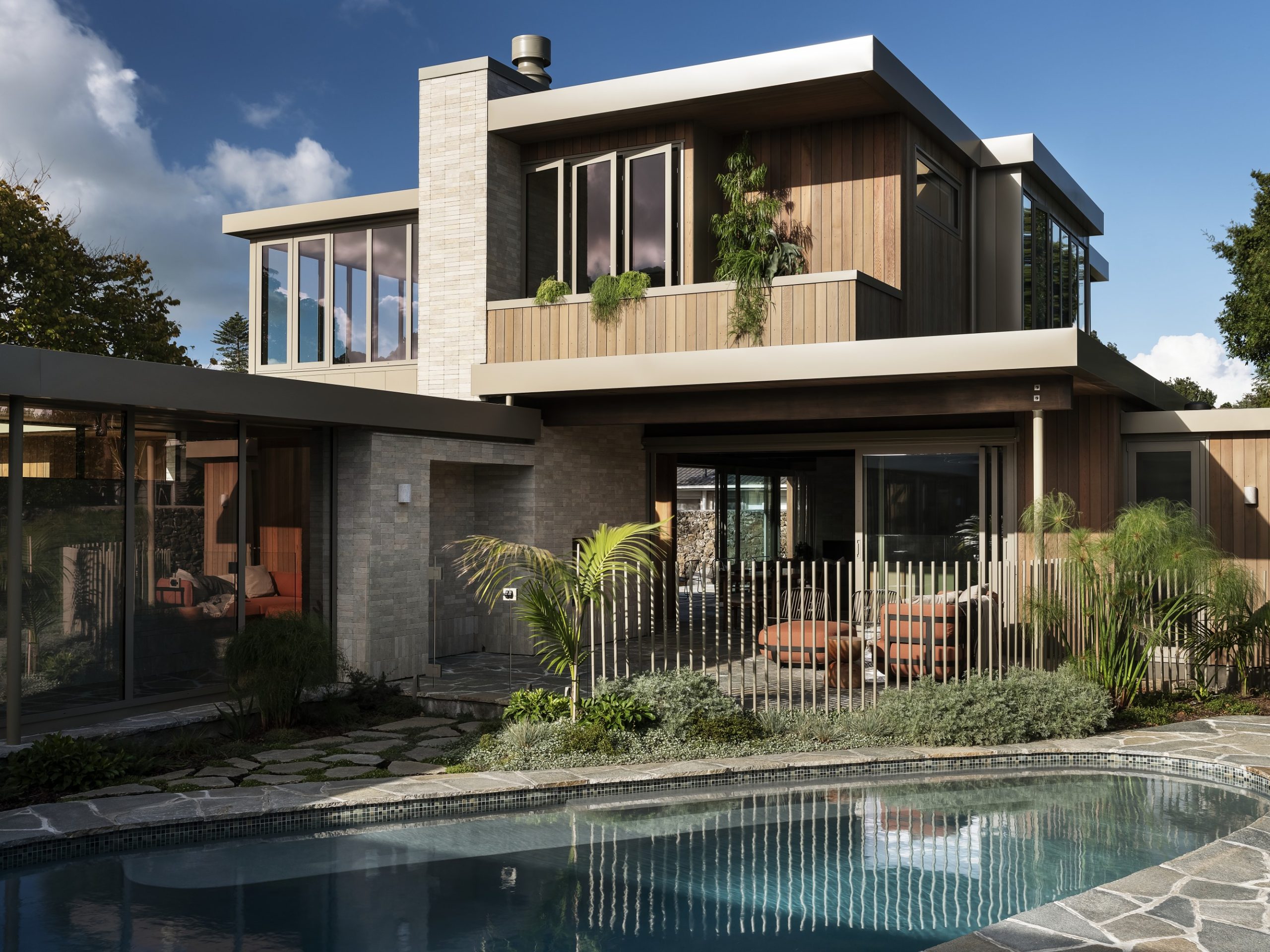
Bespoke detailing is evident throughout the project. Elements such as the curved steel pool balustrade, stainless steel channel drains enabling flush transitions, custom bath framing and extensive joinery required close collaboration between trades and careful integration into the overall build.
An internal garden beneath the staircase introduces a softer, living element into the home, incorporating waterproofing, drainage and irrigation within the structure, and reinforcing the connection between built form and landscape.
What defines Prospect House is not only its architectural intent, but the precision with which it has been executed. The consistent use of cedar and stone, the control of levels across interior and exterior spaces, and the careful sequencing of construction all contribute to a home that feels calm, cohesive and easy to live in.
For Faulkner Construction, the project reflects the value of early involvement, strong collaboration and disciplined delivery. Complex architectural homes require more than craftsmanship alone. They rely on careful planning, clear communication and the ability to translate design intent into buildable outcomes without compromise, while retaining the qualities that make a home feel considered and enduring.
That approach has been recognised through multiple accolades, including a Regional Gold Award and Top 100 national placement at the Registered Master Builders House of the Year Awards, alongside a Regional Interior Design Award.
The success of this home is a reflection of the strong collaboration behind it that faithfully captures the nostalgic vision of its owners.
Contact details
Faulkner Construction
09 534 8166
info@fclnz.com
Images by: Sam Hartnett- samhartnett.com