River Oaks
A study in restraint and resolution, this meticulously composed family residence excels in clarity of planning, material discipline, and refined everyday function.
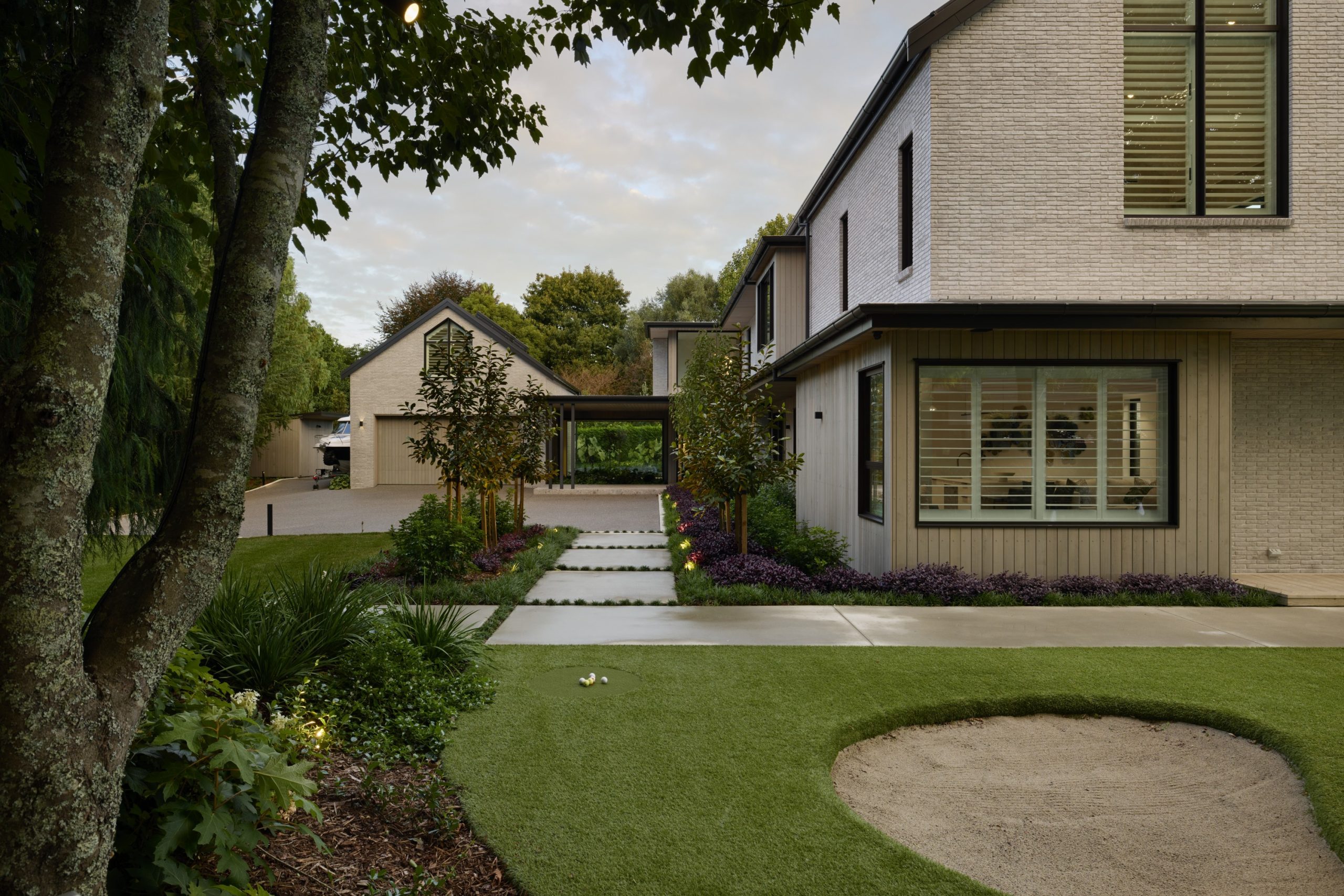
What started as a modest renovation enquiry evolved into a full reconsideration of the site. The existing dwelling was ultimately deemed unviable, opening the opportunity for a complete redesign. The resultant legacy home responds confidently to its setting and speaks a timeless architectural language.
Led by Jon McAlpine Architecture, alongside builder Kevin Garrity from Edinbridge Resources, and interior designer Jayne Tolley of Trinity Interior Design, the project reflects a deeply collaborative process grounded in clarity of intent and the height of industry knowledge and discipline.
Set on a quiet, tree-lined no-exit road, the design is structured around a sequence of arrival, compression and release. Entry is marked by a substantial pivot door with a solid brass handle, setting the tone for a robust, refined home with an industrial yet warm palette. From here, the experience transitions into a double-height volume before narrowing into a brick-lined gallery that forms the central spine.
This rhythm establishes a calm atmosphere that draws visitors naturally toward the heart of the plan, open living spaces that serve as a generous social anchor. A discreet service spine supports the kitchen and utility areas, ensuring fully integrated function without disrupting visually. A detached media room across from a landscaped courtyard keeps immersive audio away. Elsewhere, concealed study nooks, hidden cloakrooms, and flexible breakout spaces ensure the home adapts fluidly to family life.
Vertical circulation is expressed through a cantilevered oak and steel staircase, acting as both connector and sculptural focal point. Above, the upper level accommodates children’s bedrooms, a shared bathroom, and a secluded master suite, along with an additional living space that supports changing family needs over time. “Despite its extensive architectural expression and meticulous craftsmanship, at its heart, this remains a family home,” Jon McAlpine says.
The project took on a special meaning for Jon. “Through its intricate detailing, sophisticated systems, and the expertise of the many professionals involved, this project has been a profound learning experience that has further shaped my professional development,” he says. “What began as a client engagement has evolved into a valued friendship.”
Tempering the robustness of the home itself while preserving its industrial edge required a thoughtful interior approach.
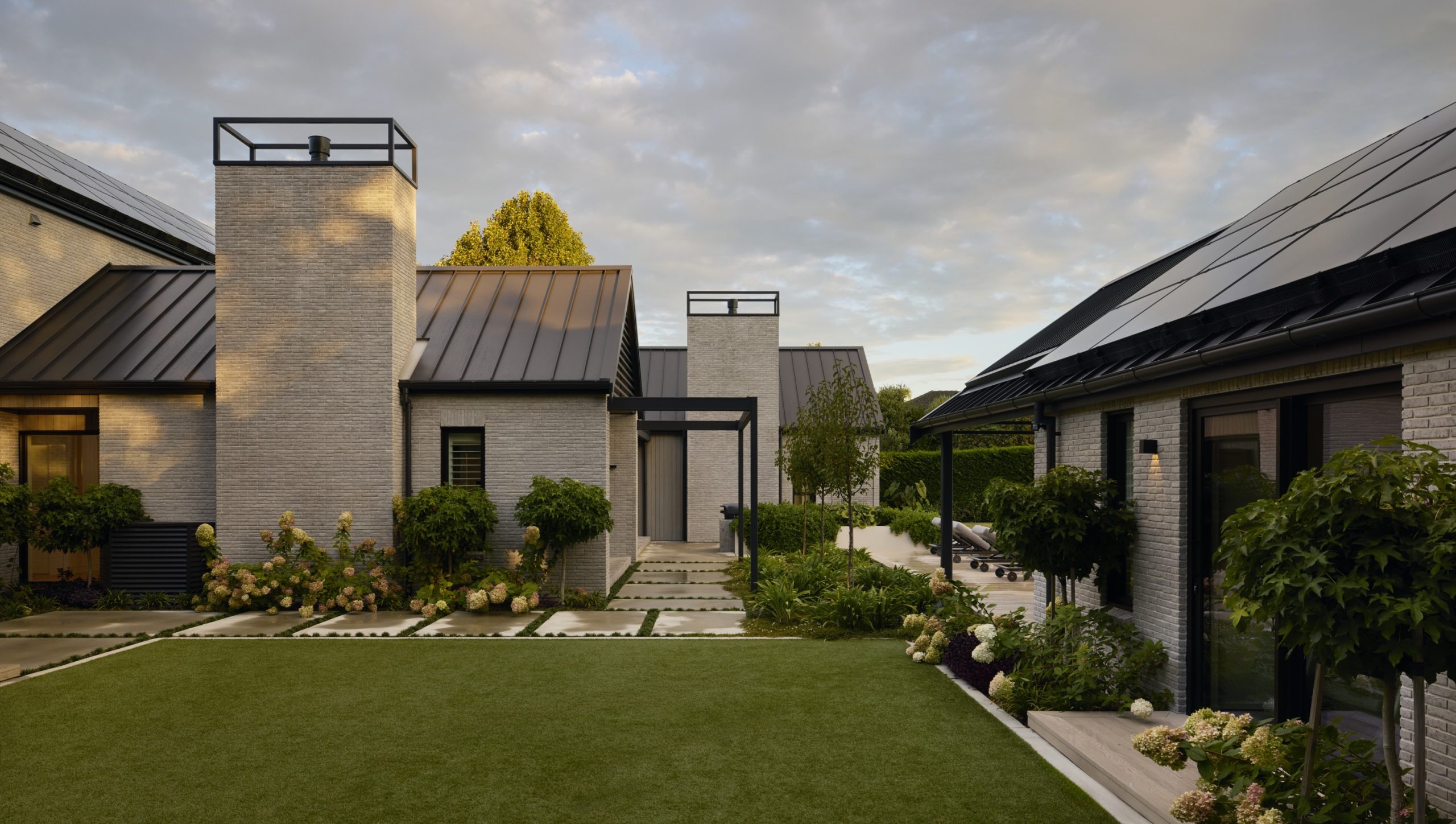
Interior designer Jayne Tolley of Trinity Interior Design worked closely with the wider team and fully understood the building’s strengths. Her mission: to soften its industrial clarity without diminishing its powerful industrial feel.
“The client and architect arrived with the industrial brick, joinery, and timber flooring already decided,” Jayne explains. “We knew the brick was the star, so we encouraged bringing it inside, blurring the lines between landscape and interior for a seamless connection to the outdoors.”
Garden views from every room connect inside and out. Sightlines remain active rather than incidental. Glazing is carefully positioned to frame moments of greenery, filtered light, and seasonal change. Balancing harsher elements with softened textures and natural material variation maintains a sophisticated, rather than austere, impression.
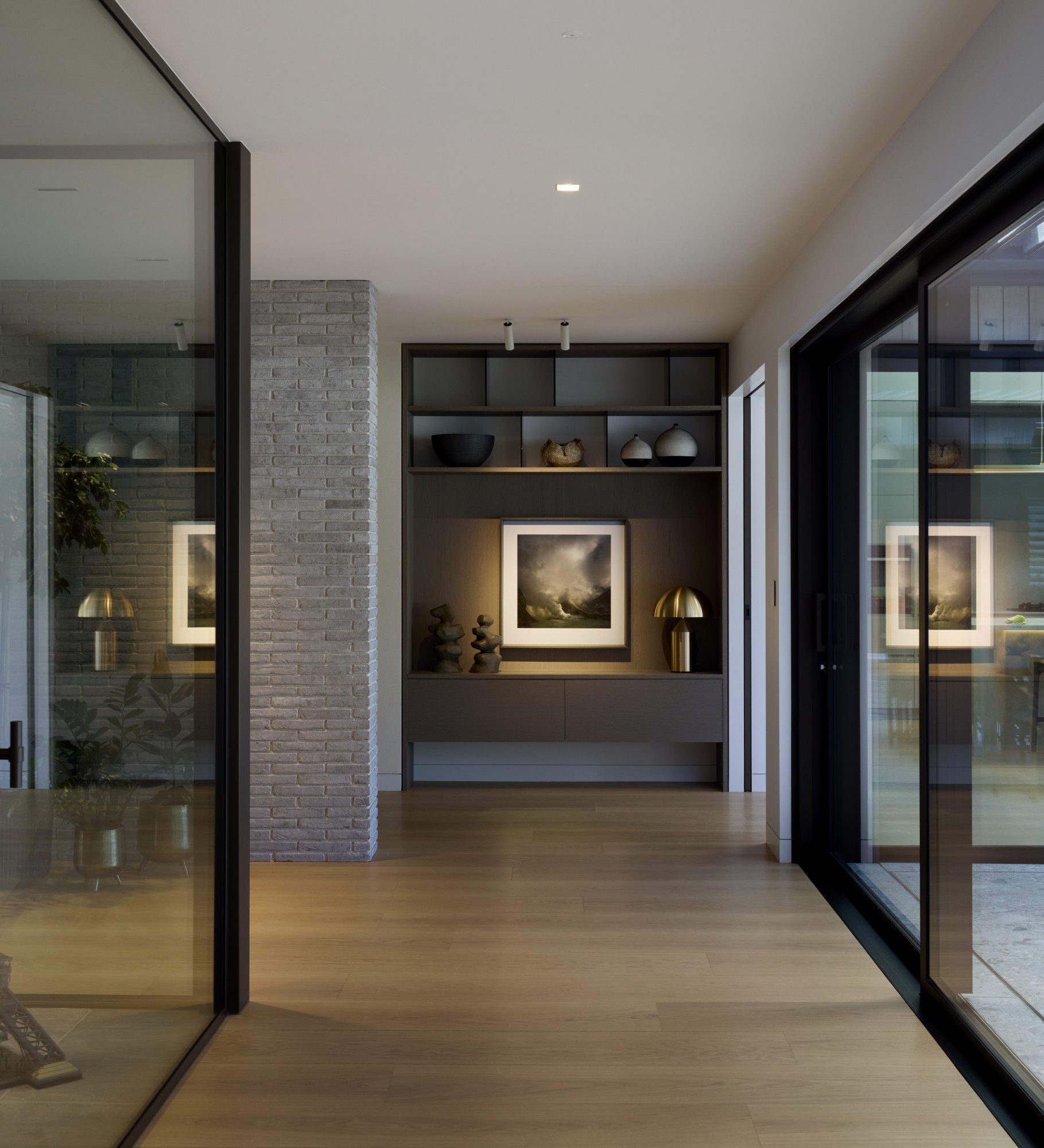
“We wanted to ensure the industrial feel didn’t lean cold,” Jayne says of the tactile, warm palette. “We balanced the rugged brick with soft paint colours, velvet-textured Ambitec walls, and warm tile selections. While our client was careful about the home not feeling too organic, we mindfully wove in timber and the movement of natural stone to strike a perfect balance.”
Throughout, strength and softness exist in careful balance. Materials are expressed honestly, yet layered with enough restraint to avoid visual heaviness. Brickwork introduces texture and permanence, while engineered oak flooring carries warmth through the main circulation spaces and living areas. Stone surfaces, bronze accents, and tactile finishes add depth without competing for attention, reinforcing the calm and cohesive nature of the interiors.
Rather than relying on decorative gestures, the design draws richness from craftsmanship and proportion. Detailing is intentionally understated, with flush joinery, recessed elements, and clean junctions allowing the architecture to feel seamless and composed.
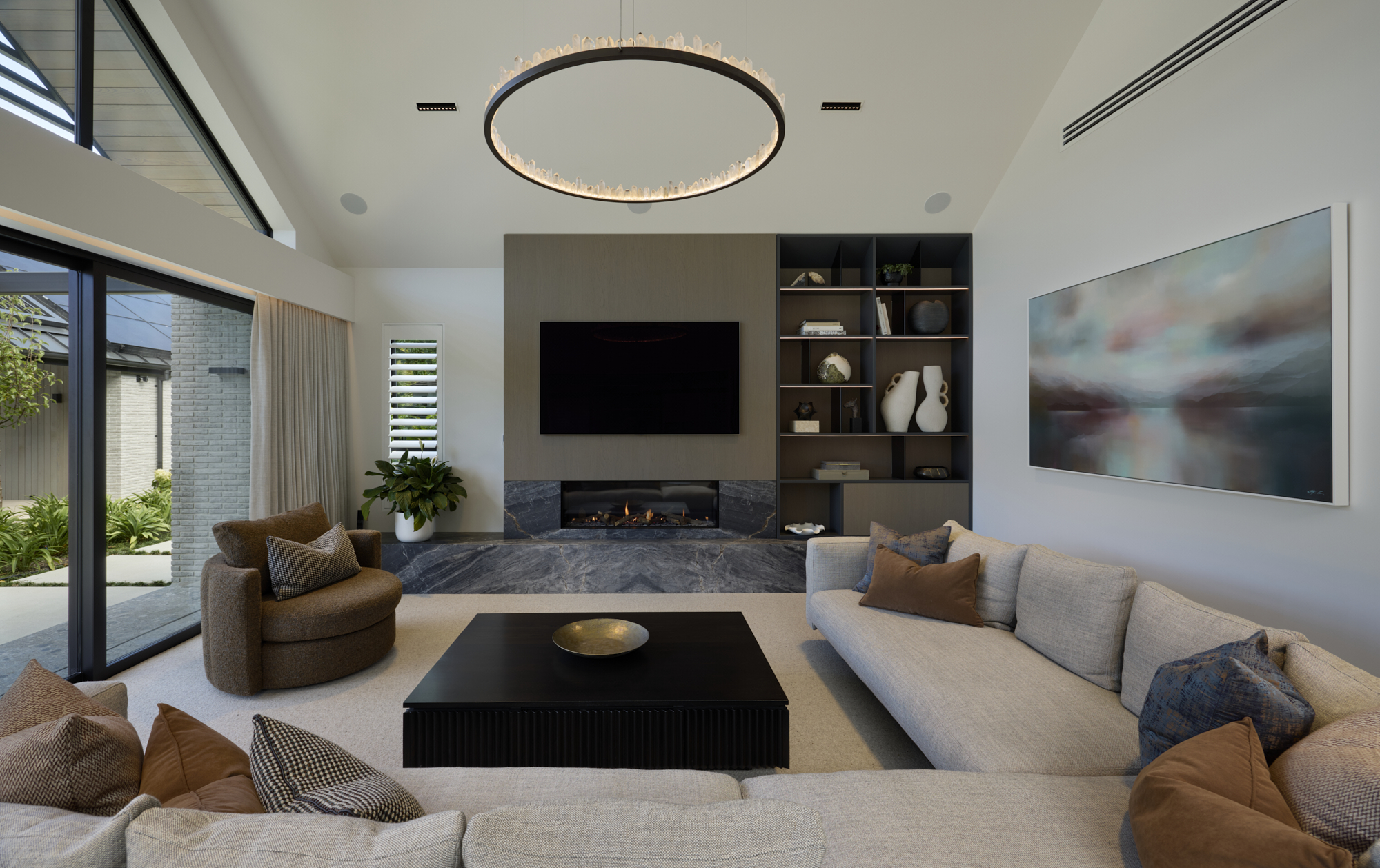
The result is a home that feels highly resolved without becoming overly formal or untouchable. Proportion and texture carry more presence than ornament.
That thinking carries through particularly strongly in the kitchen, crafted by The Kitchen Business. Positioned at the centre of the living environment, the space feels integrated into the architecture rather than separated from it. Storage, appliances, and preparation areas are carefully concealed within bespoke joinery, so the space remains visually calm even during busy family life.
Soft lacquered cabinetry works alongside natural stone surfaces and aged metallic finishes, creating a palette that feels durable, tactile, and timeless. The kitchen is highly functional yet a natural extension of the surrounding living spaces.
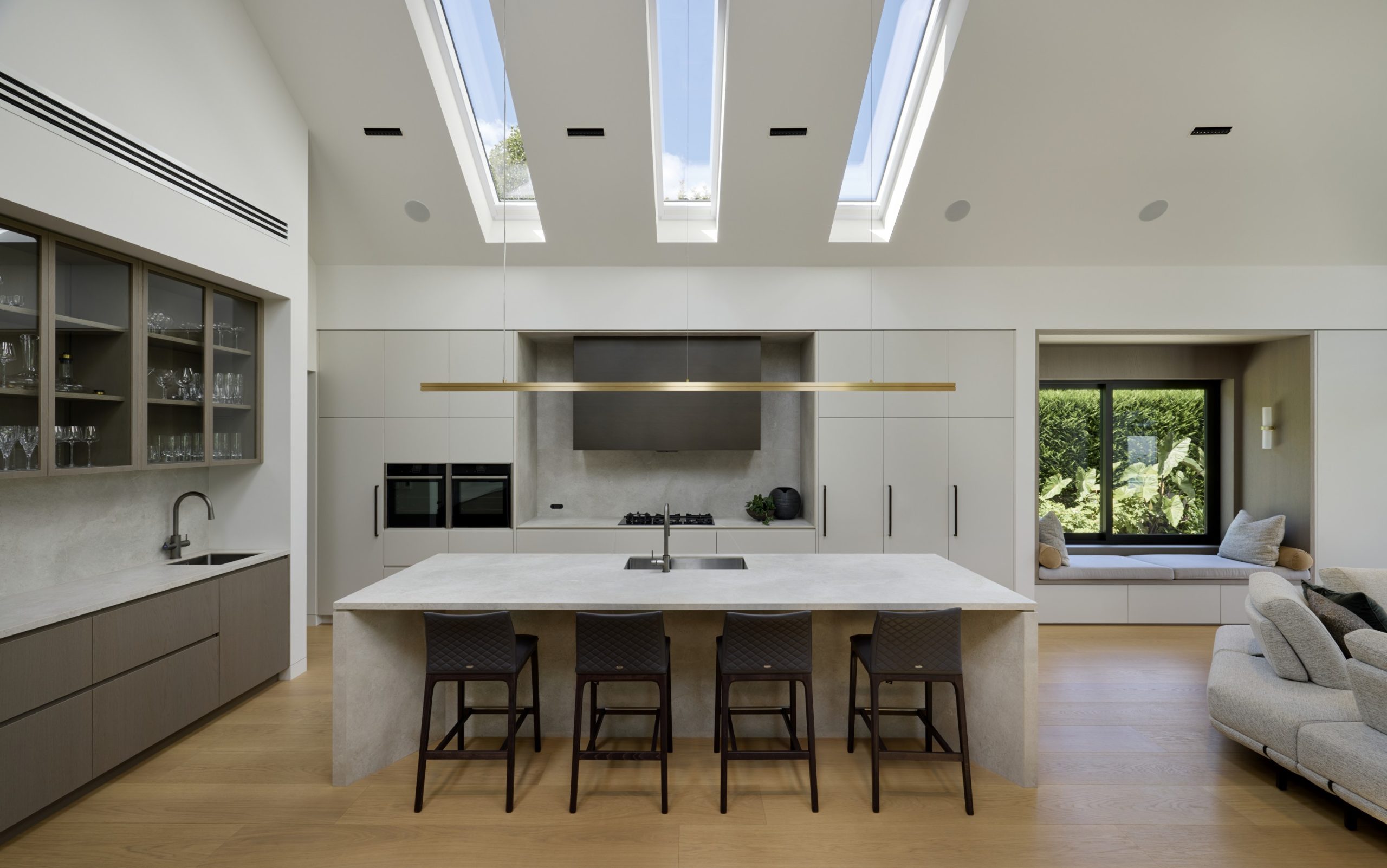
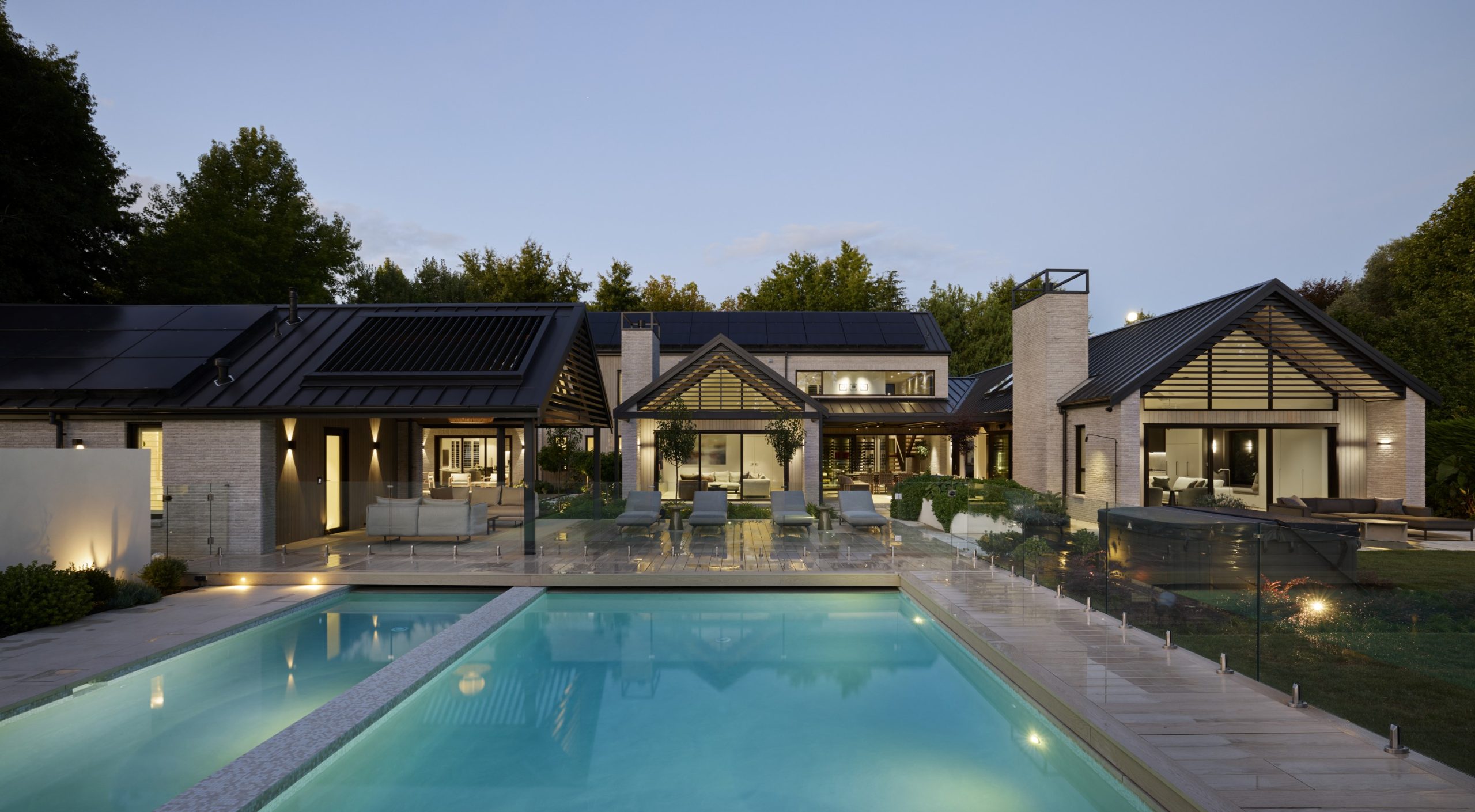
Large expanses of glazing strengthen the relationship between indoors and out. Gardens remain visible from almost every angle, bringing changing light, greenery, and seasonal movement into the dwelling throughout the day. Sunlight moves across brickwork, timber, and textured walls, softening industrial elements.
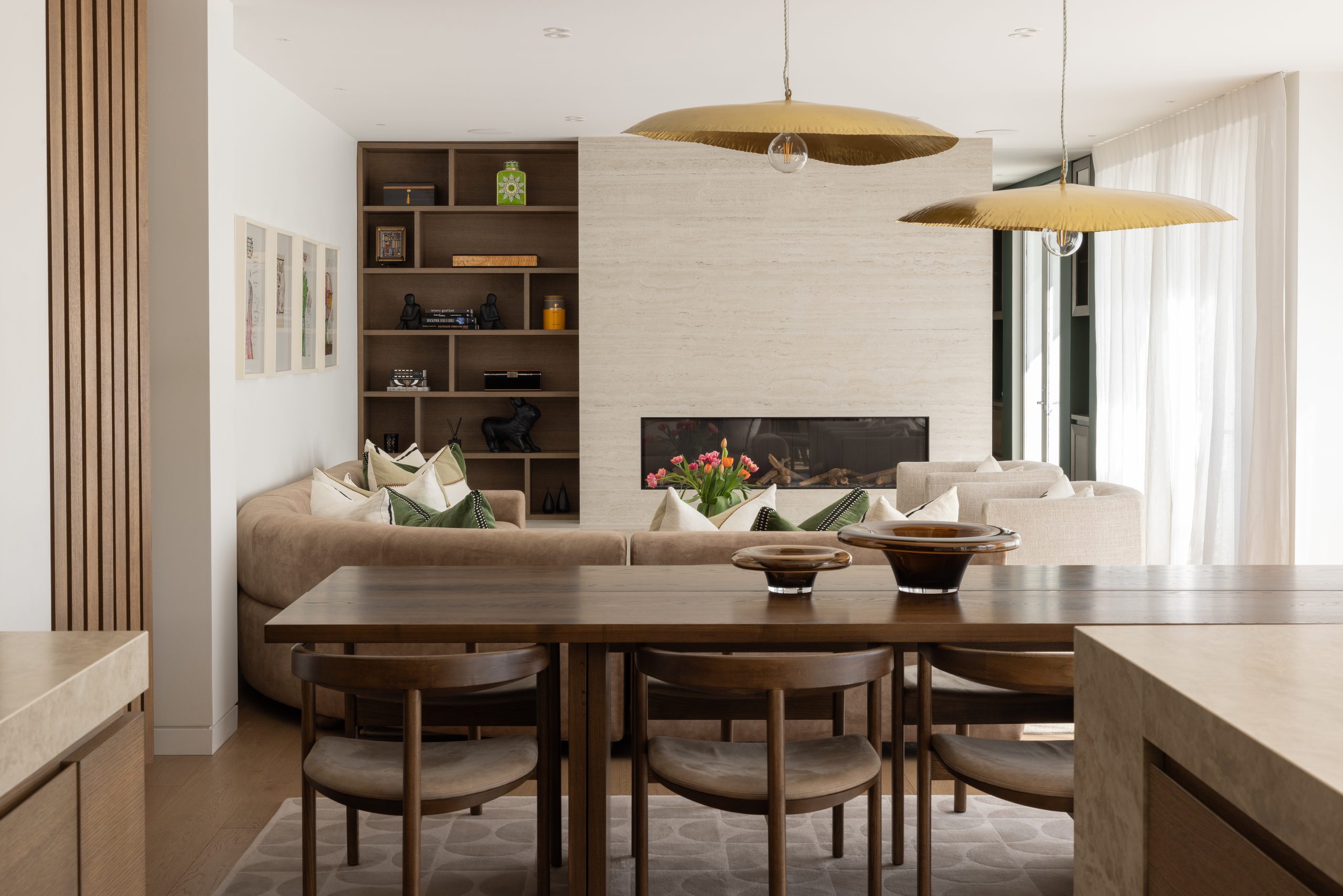
The Escea DS1400 Gas Fireplace anchors the main living space with a quiet linear presence. Its frameless design aligns with the home’s strong horizontal lines. Beyond form, it adds atmosphere. Flame movement introduces warmth and subtle motion, especially in the evenings when the interior shifts into a softer register. Escea’s direct vent system and flexible flue allowed seamless integration into the building without disrupting spatial flow.
Lighting is handled in layers rather than statements. Recessed fittings define circulation and highlight texture, while pendants introduce moments of focus within larger volumes. During the day, natural light shapes the interiors. At night, lighting softens the palette, creating depth through shadow rather than brightness. The shift between the two states is subtle but intentional.
The wine room introduces a slightly darker, moodier tone. Steel-framed glazing, oak veneer panelling, and textured finishes create a space that feels more like part of the architecture than a separate utility room. It’s practical, but also highly atmospheric.
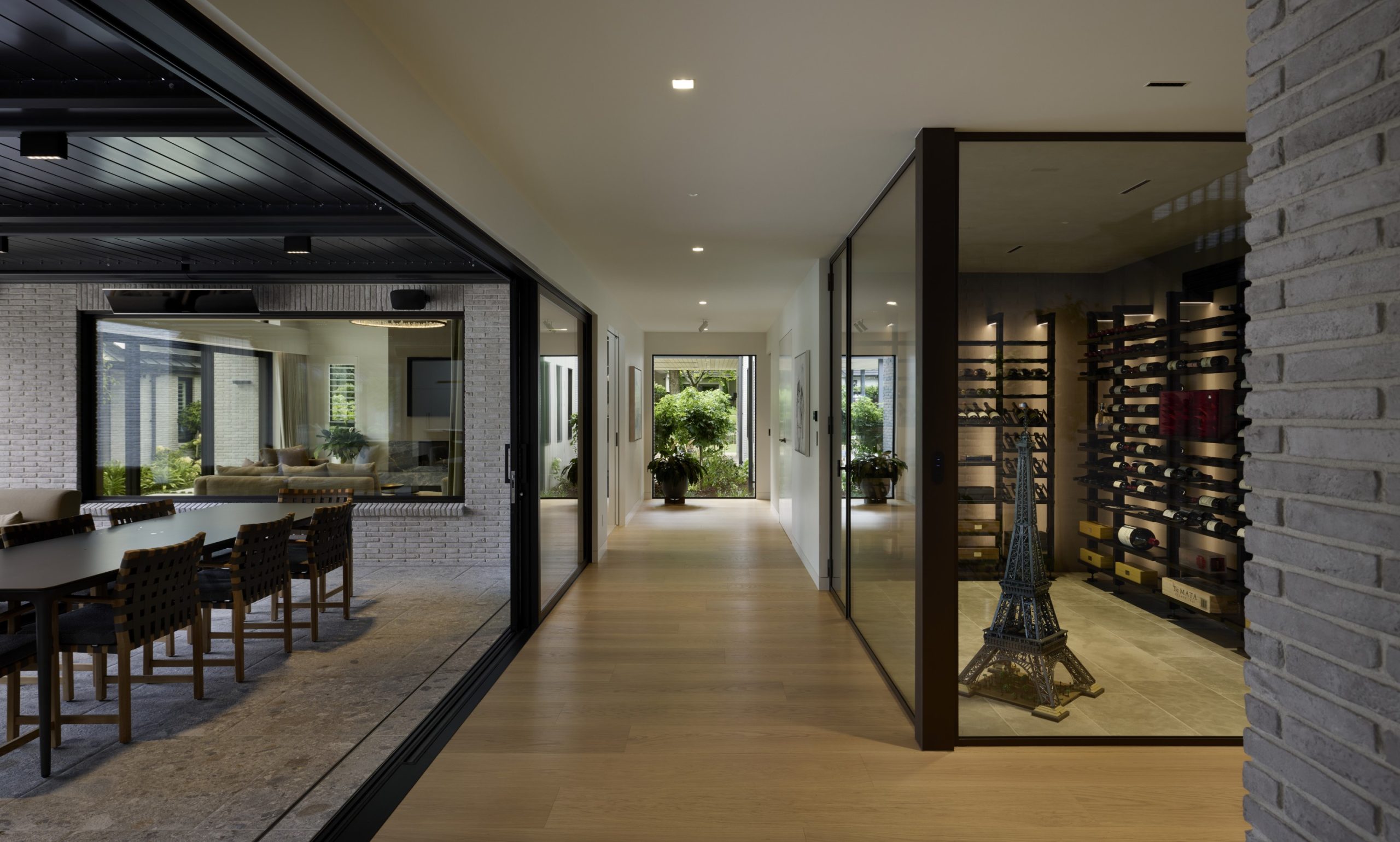
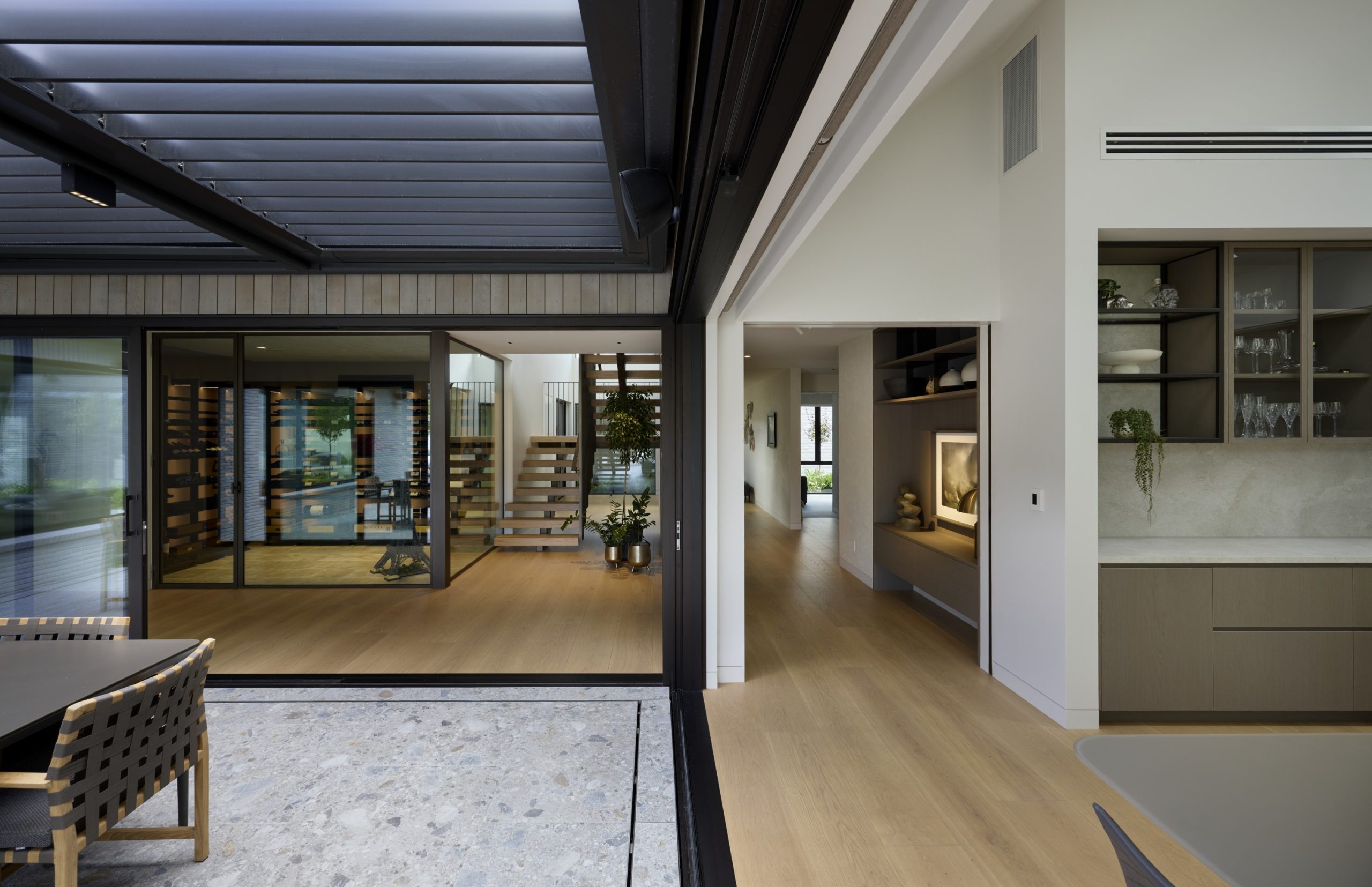
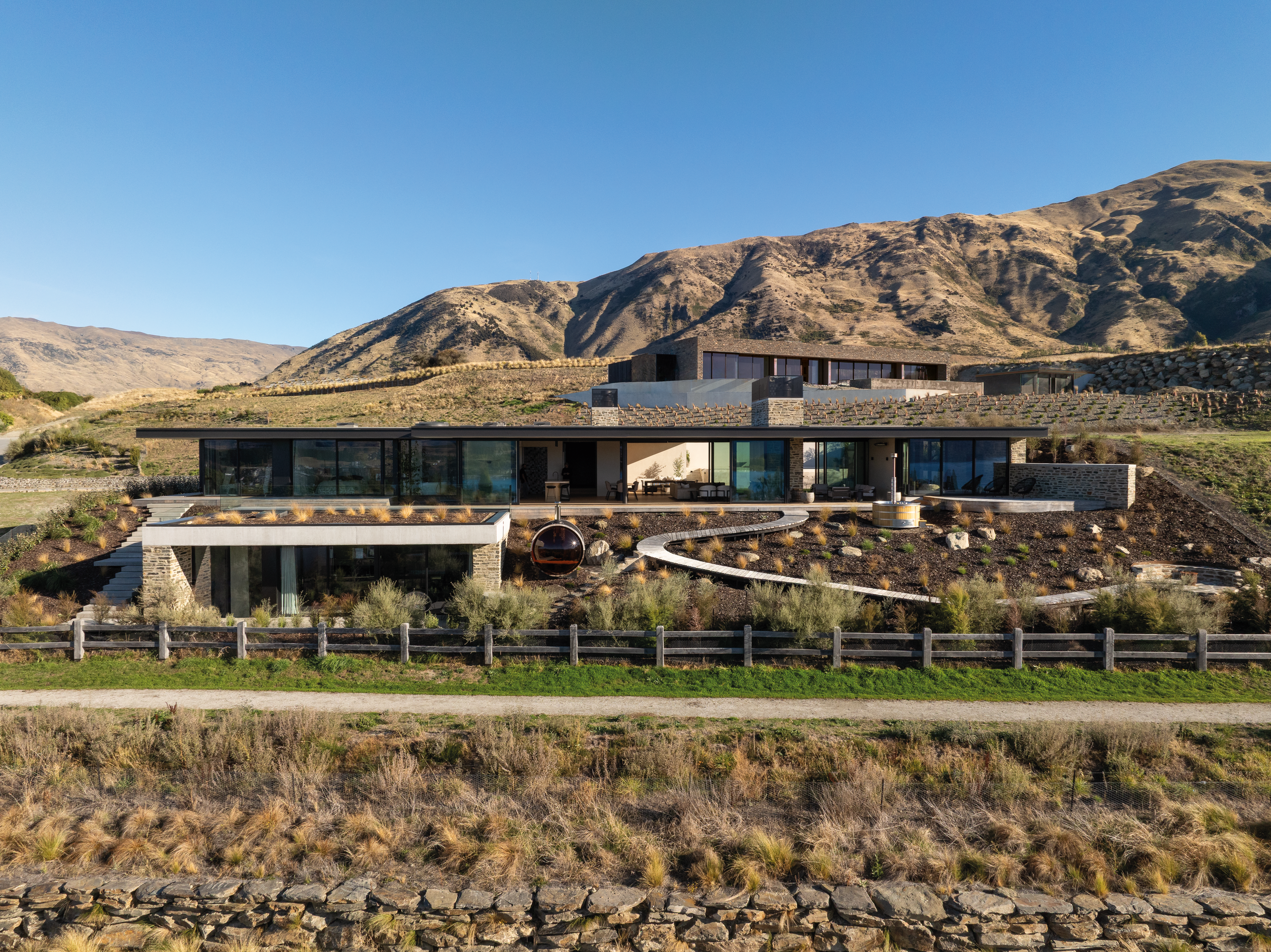
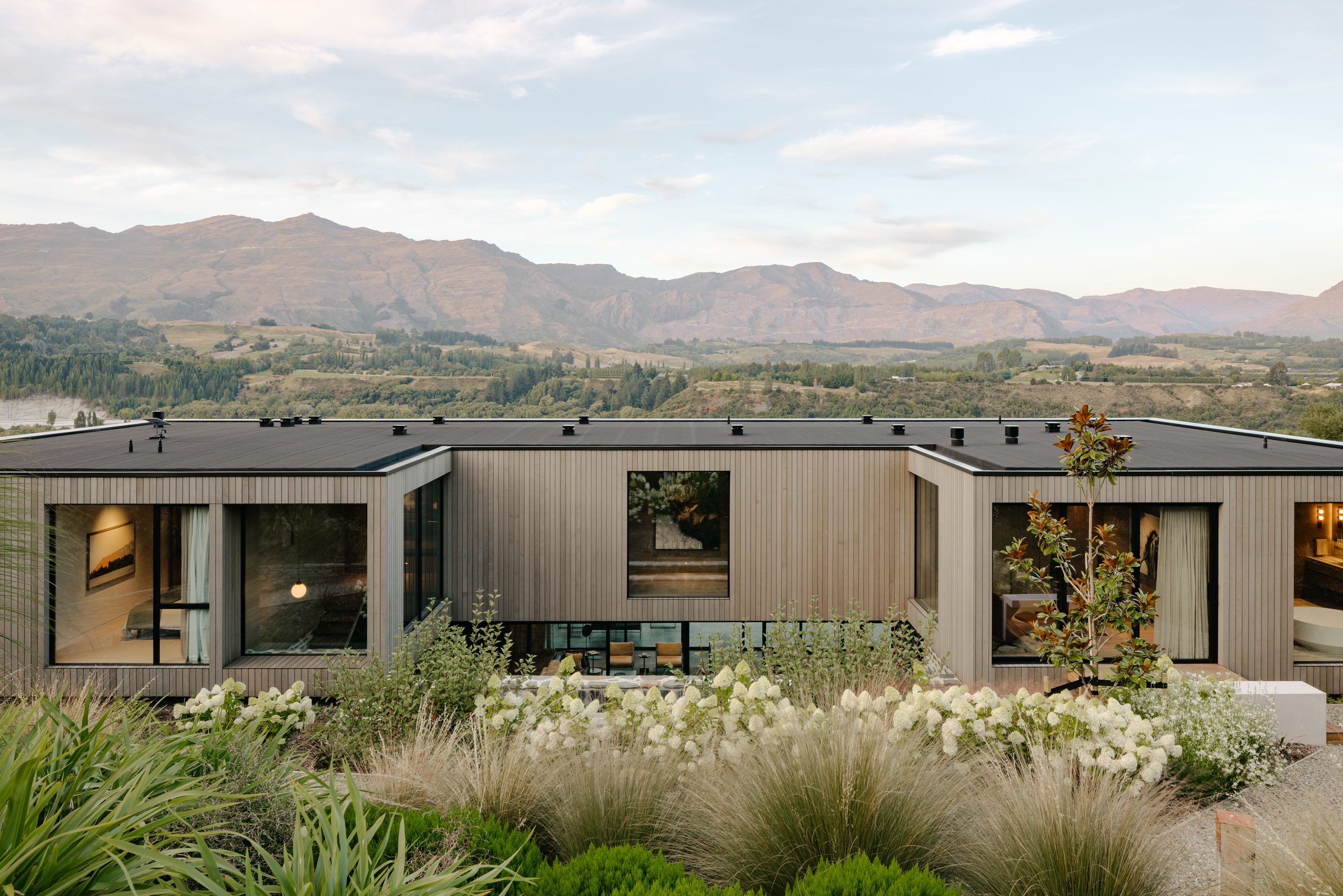
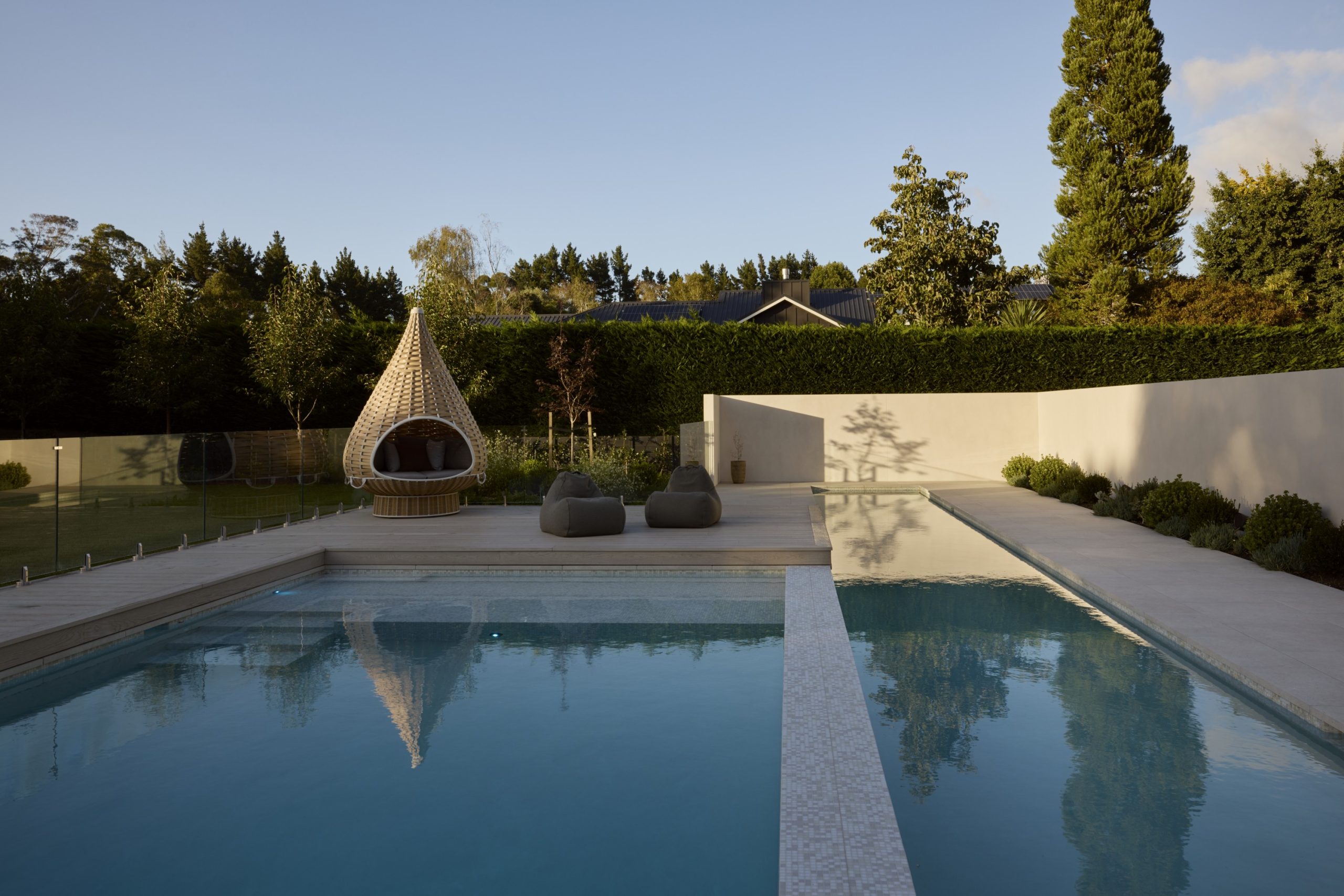
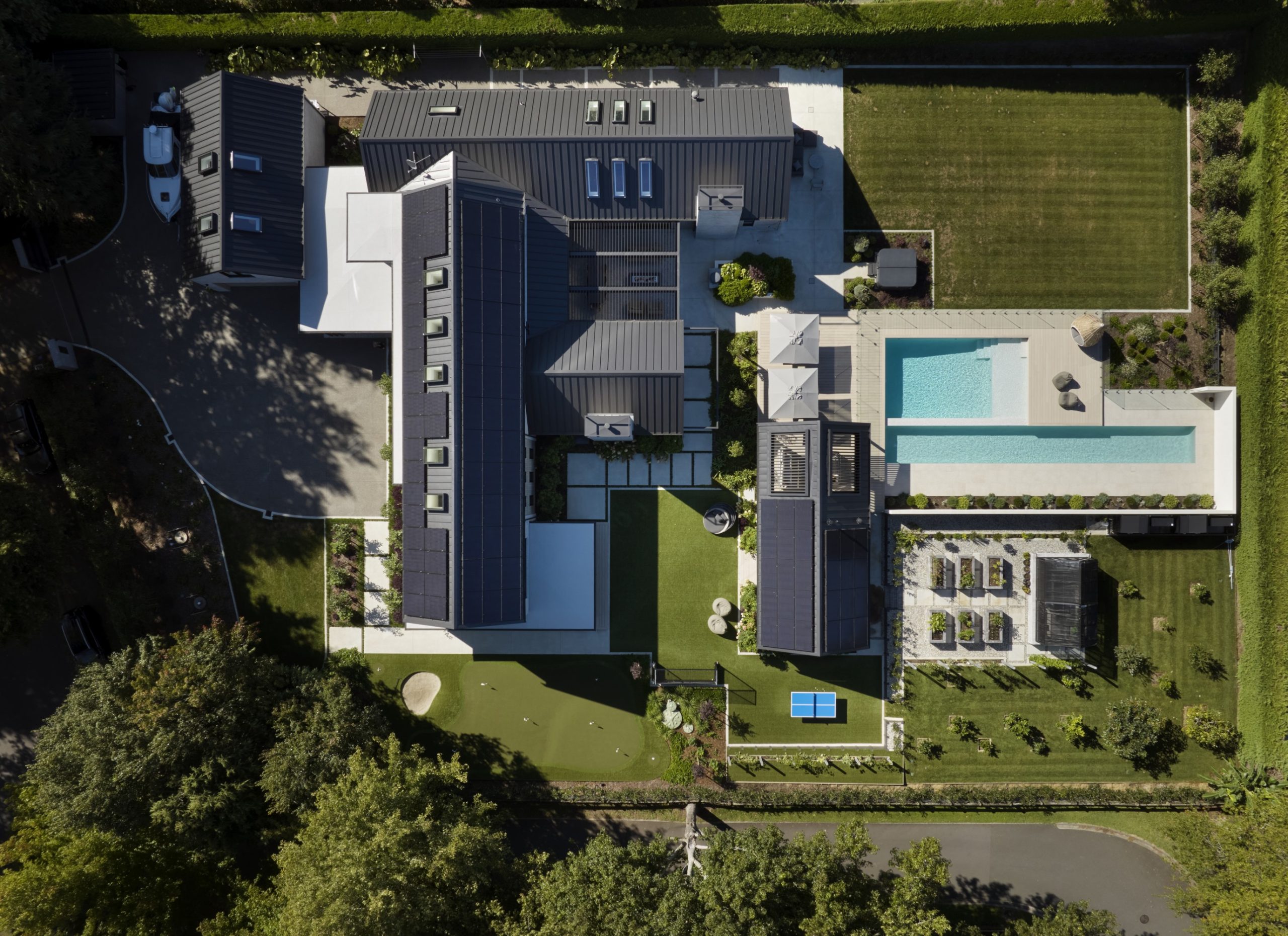
Outside, the landscape design by Michelle of Magnolia Design plays a major role in shaping that sense of grandeur and ease that visitors experience upon arrival. Planting softens bold lines and forms, while courtyards and layered greenery bring natural light and outlook deep into the floor plan. The landscaping feels connected to the house rather than added afterwards.
Trees, planting beds, and lawn areas are positioned carefully to frame views, provide privacy, and maintain openness at the same time. Even quieter spaces, such as hallways and stair landings, maintain a visual connection to greenery and natural light. The pool, constructed by Acacia Pools, and gym pavilion continue the same material language and detailing as the main residence, helping the wider site feel cohesive. These spaces create additional areas for retreat and recreation at the height of luxury.
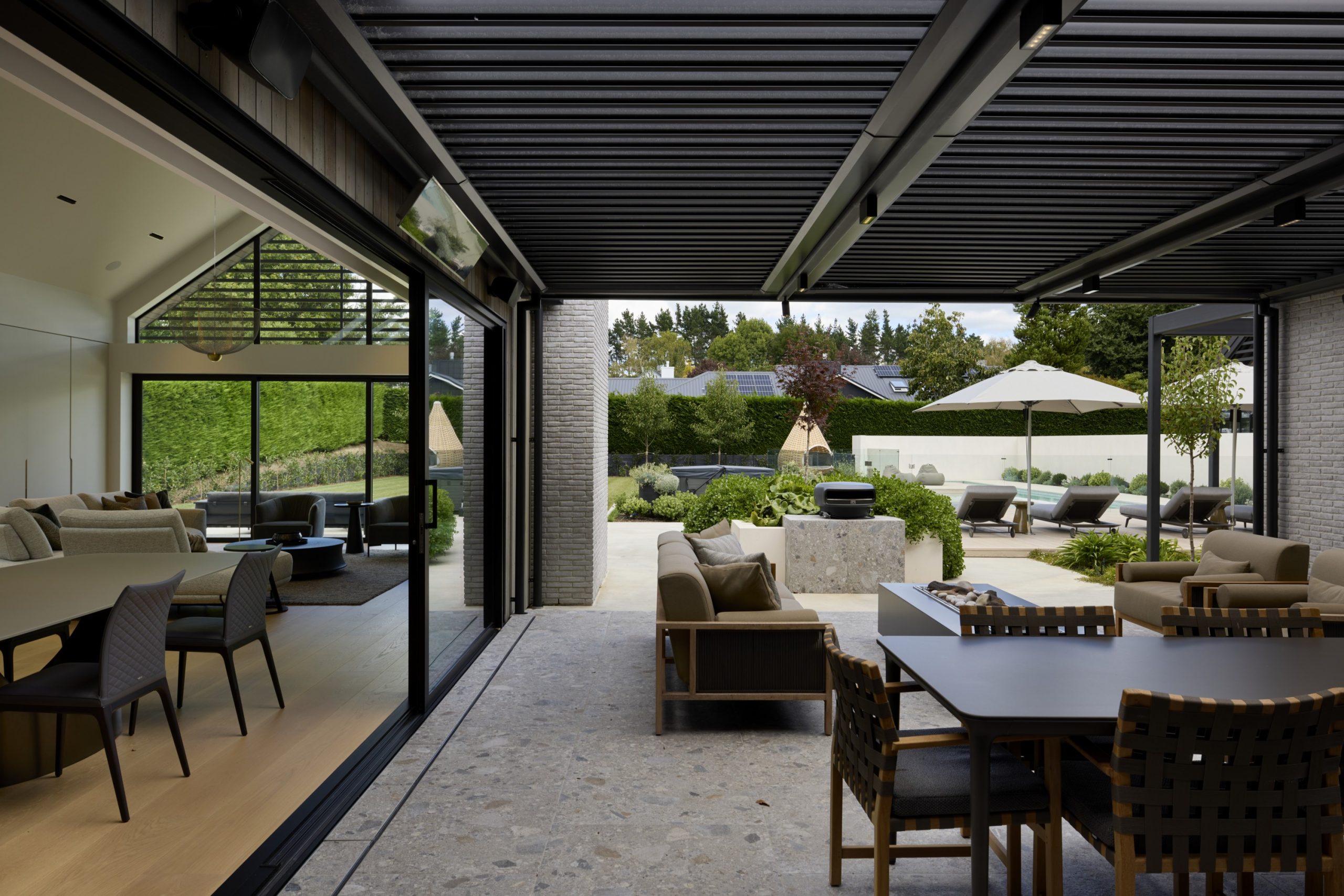
The experience of the home also shifts noticeably across the day and seasons. Morning light filters into the brick gallery, bringing texture into focus, while afternoons draw deeper connections to the garden as glazing frames changing light and movement outside. In the evenings, the interior takes on a quieter tone, with layered lighting and the fireplace introducing warmth and depth.
This sense of change is supported by the landscape, where Magnolia Design has shaped outdoor spaces to feel embedded rather than separate; courtyards, planting, and framed views ensure the building never feels closed off from its setting, but is constantly in conversation with it.
Importantly, despite the scale and level of finish, River Oaks still feels grounded as a home fit for a family.
The planning allows spaces to adapt over time, balancing open communal areas with quieter places to retreat. Concealed storage and flexible rooms support everyday living without compromising the overall sense of calm and order.
The home’s level of care and execution has been recognised through awards at the ADNZ Awards 2026 and the Master Builders Awards 2026, recognising both the design vision and the quality of craftsmanship behind it.
More than anything, River Oaks succeeds because everything works together cohesively. The outcome is a residence that feels steady and resolved. It holds a strong architectural presence, yet remains warm, practical, and deeply usable over time.
Contact details
Jon McAlpine Architecture
07 281 1052
office@jonmcalpine.com
Images by: Amanda Aitken - www.aaphotography.co.nz