The boulders
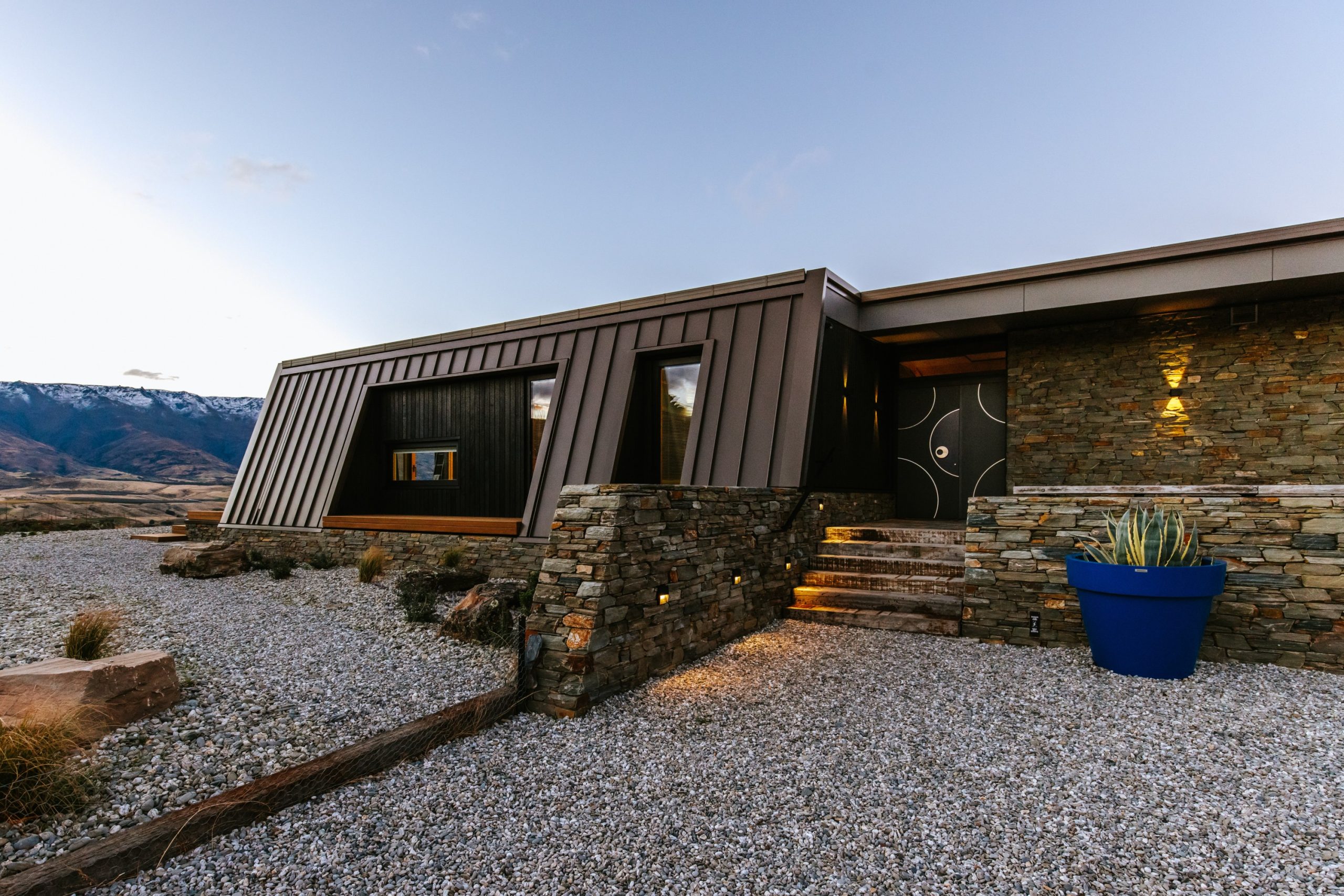
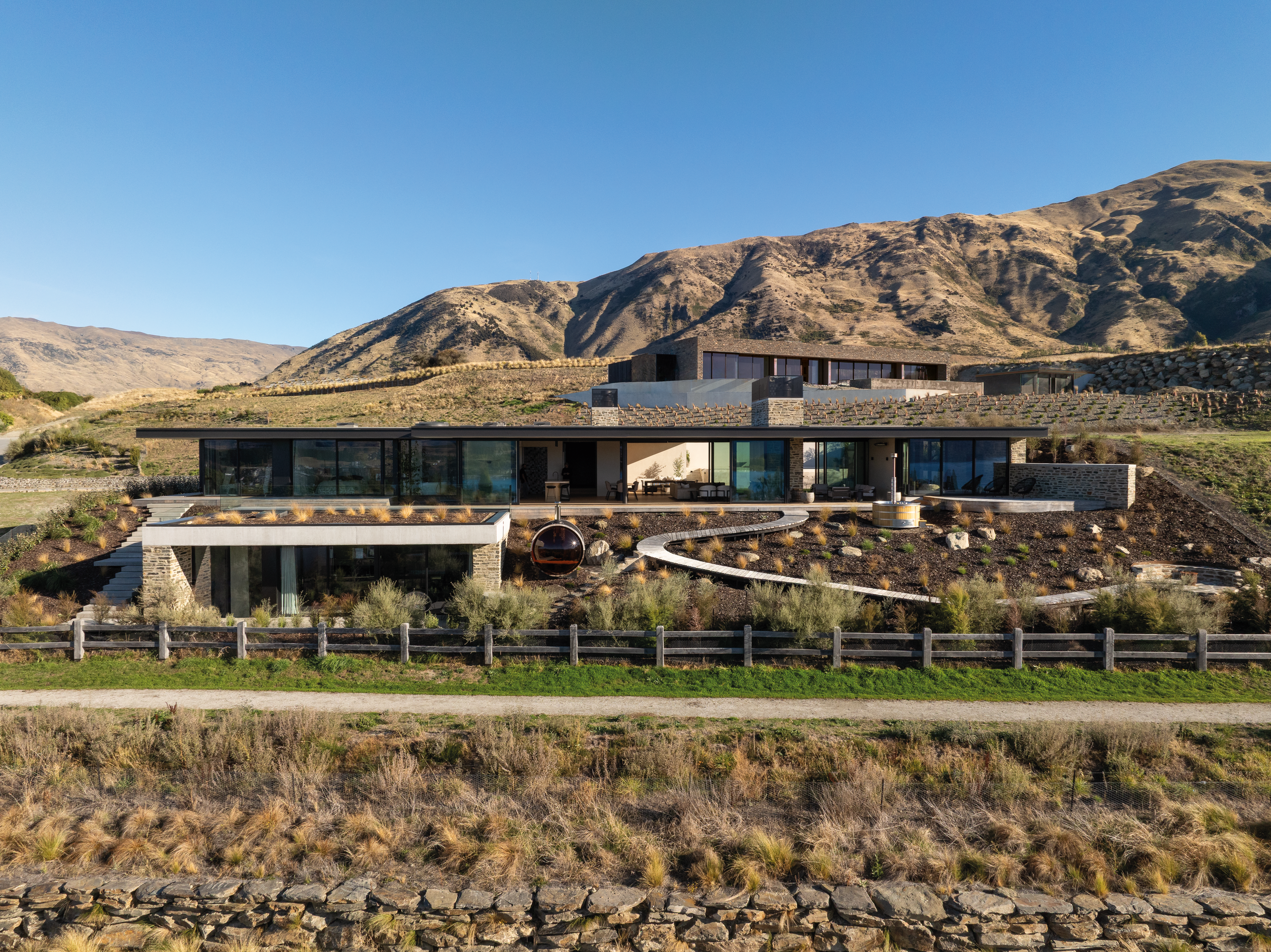
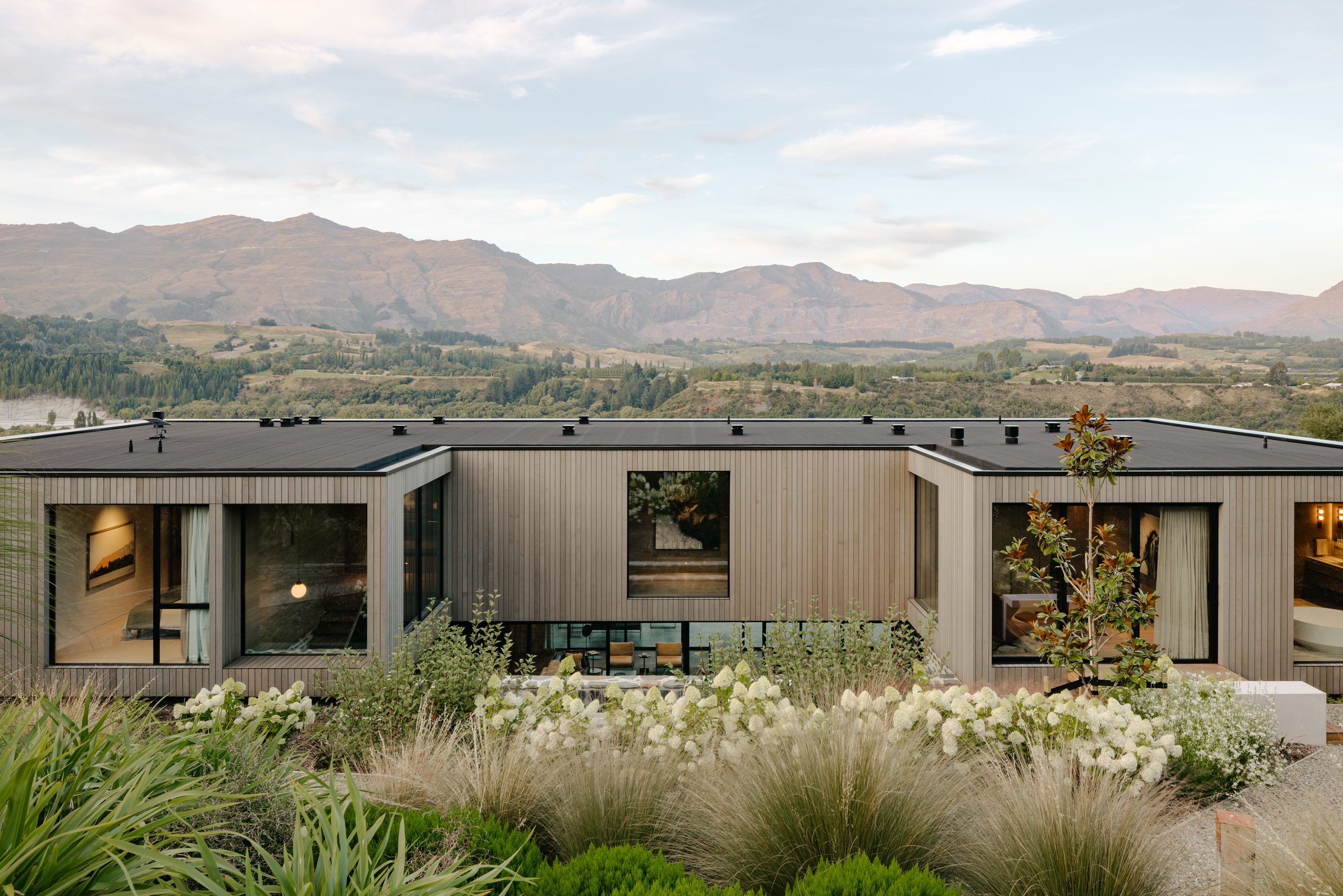
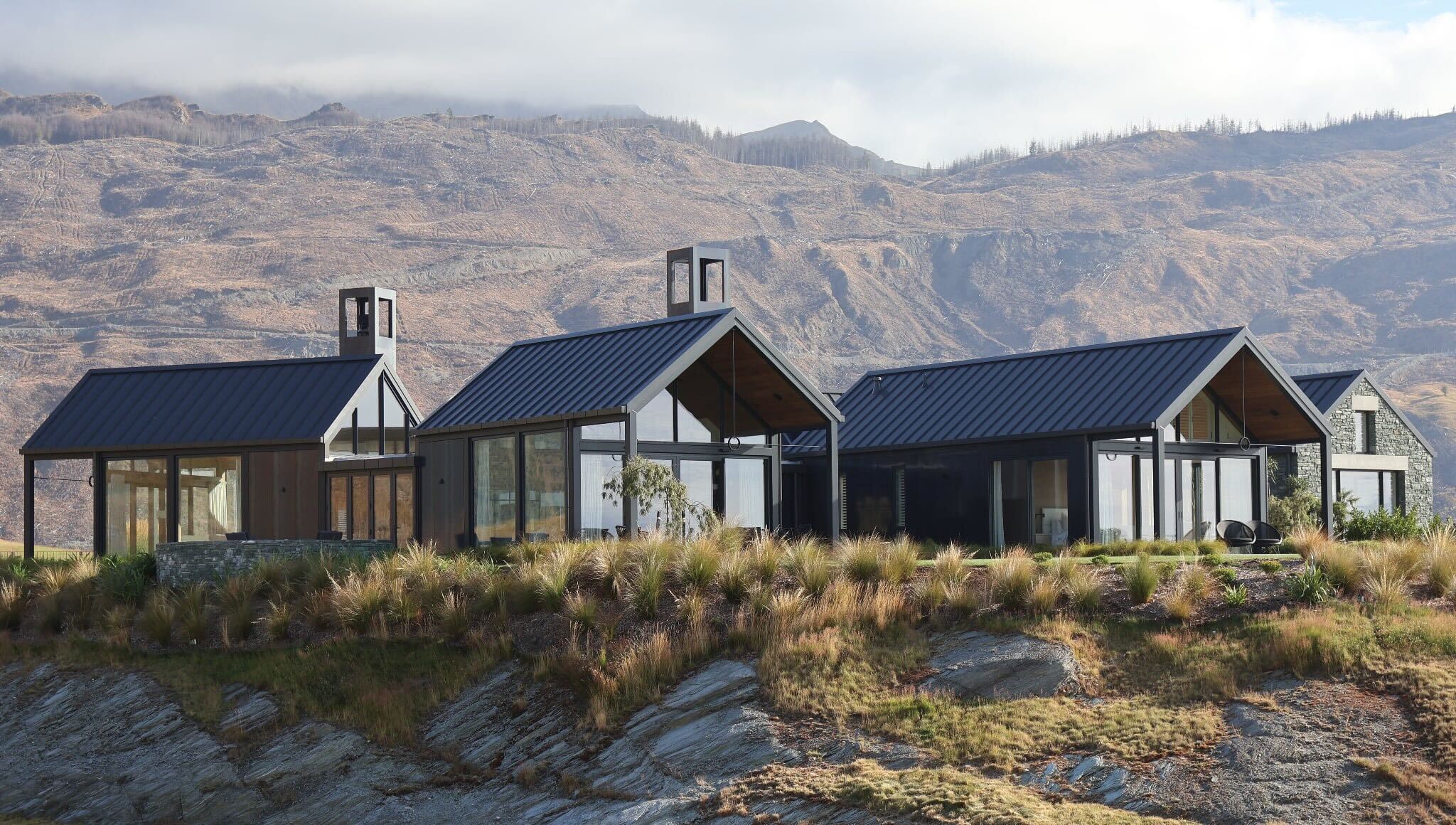
The Boulders residence is a summit in its own right, the pinnacle of site-responsive, sustainable architecture, of awe-inspiring ambition and ingenious biophilic design. It sits 480 metres above sea level on a challenging, steep slope between the mountain range and Lake Dunstan below. Completed in 2023, a lucky few have since had the pleasure of renting or staying at the Cromwell retreat and continue to feel the project’s lasting impact. And you can be next.
A showcase of refined aesthetics and energy efficiency, the building’s performance surpasses some aspects of Passivhaus and eHaus Euro standards. Black Pine Architects collaborated with eHaus and earned industry acclaim, including a 2025 NZIA Southern Architecture Awards shortlist. It was a design that required the utmost sensitivity, a keen awareness of the mana and prestige of the historic site.
“People have been coming to this area for hundreds of years,” Duncan Sinclair, founder of Black Pine Architects, says. “But the treasure – the taonga – that has drawn them changed over generations; Māori once came for quartz, miners came for gold, and now tourists come for the landscape itself.
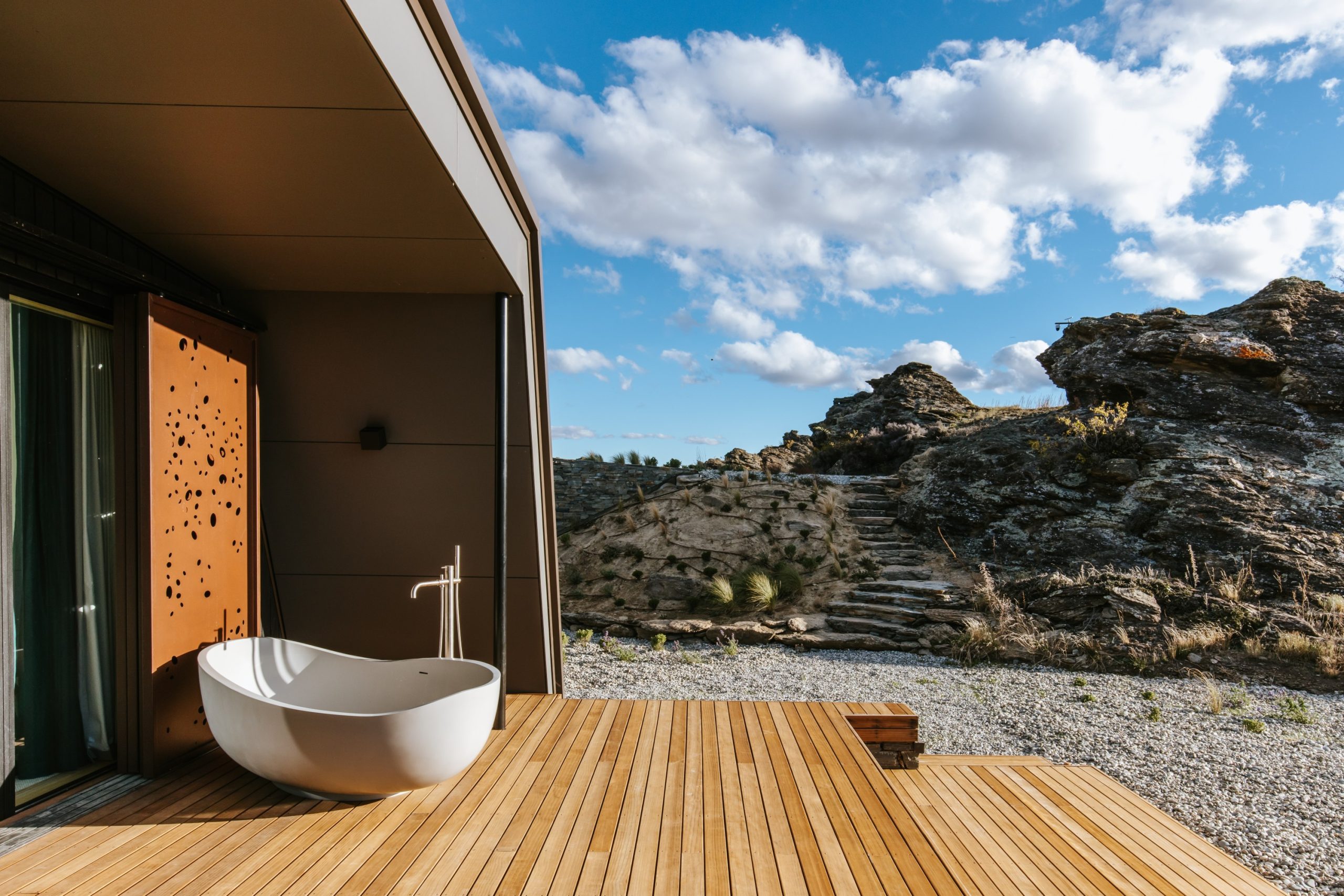
Just like the miners who once built their lodgings in and around nearby caves, it’s a home deeply informed by its setting. Every choice is a built response to the environment, from the timber ceilings to the stone aggregate in the concrete.
“An example of this is a schist wall forming the spine of the building, with the roof draping over to touch the ground. That’s a reinterpretation of the old miners’ digs, which were simple stone structures covered with canvas.”
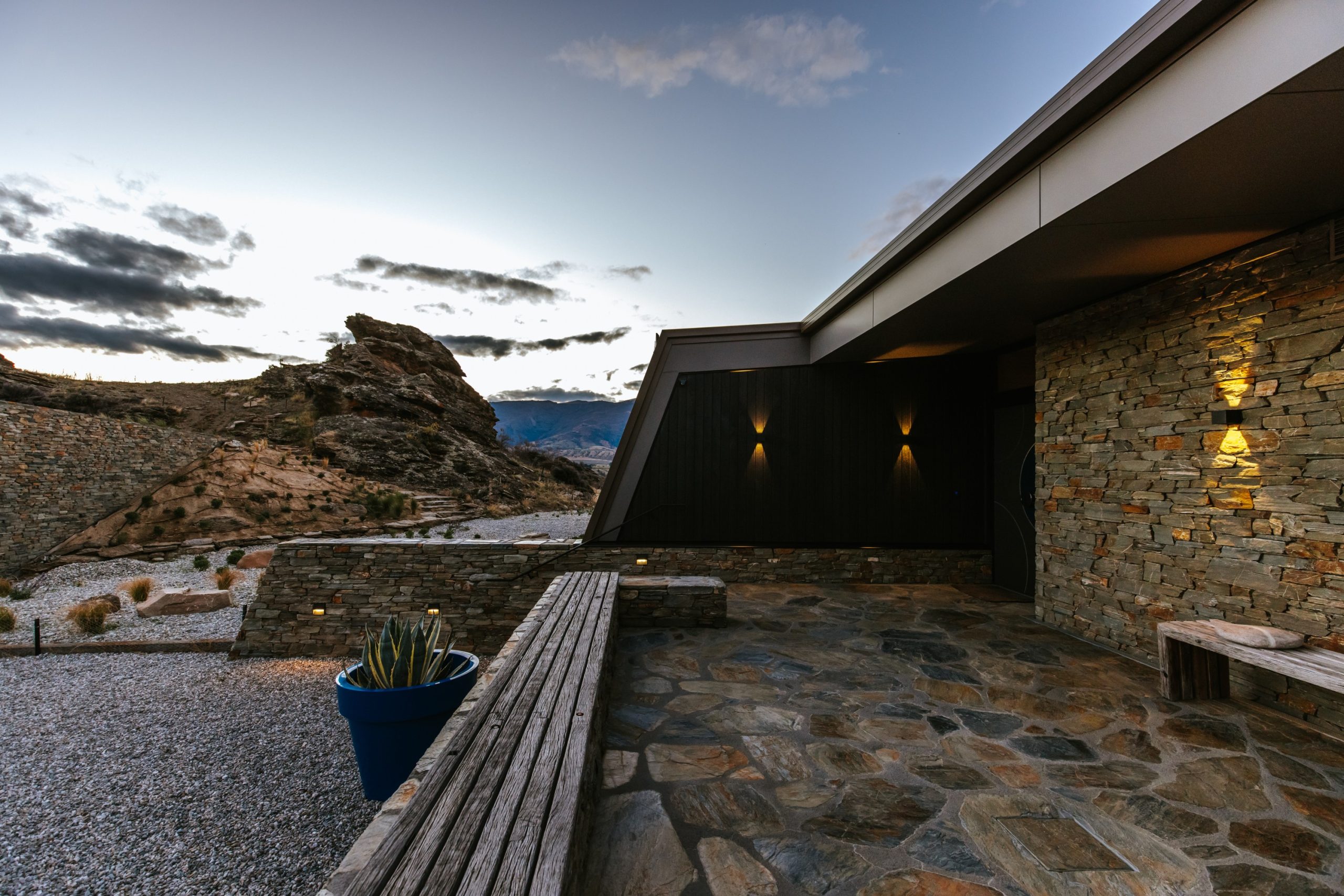
Local schist sourced from Cluden Stone Quarry is complemented by Abodo charred cladding and fine detailing, including bespoke powder-coated aluminium screens. Thanks to Wanaka Stone, the thoughtful use of local schist maintains the building’s tactile connection to its surroundings.
Wānaka Stone Director Lucy Middendorf says the use of schist helps bed the home into the expansive landscape. “It’s as if the home is sitting in the landscape, not on it. It feels truly anchored to its surroundings.”
She says the project presented significant technical challenges for the stonemasons. Many details required immense precision. “They had to blend different-sized stones, incorporating both traditional and lightweight veneer, yet the result is seamless.
We had to source specific stone pieces to achieve the owner’s vision. But it was worth it – the finish is both expertly executed and exceptionally beautiful.”
“It’s hard to describe just how good this house feels to be in,” Duncan says of the Otago oasis. “The alpine environment is incredibly harsh – the snow in winter, the brutally hot summers – but as soon as you step inside, it’s t-shirt and shorts weather, no matter the season. That’s the assurance of comfort you get from Passivhaus-informed design.”
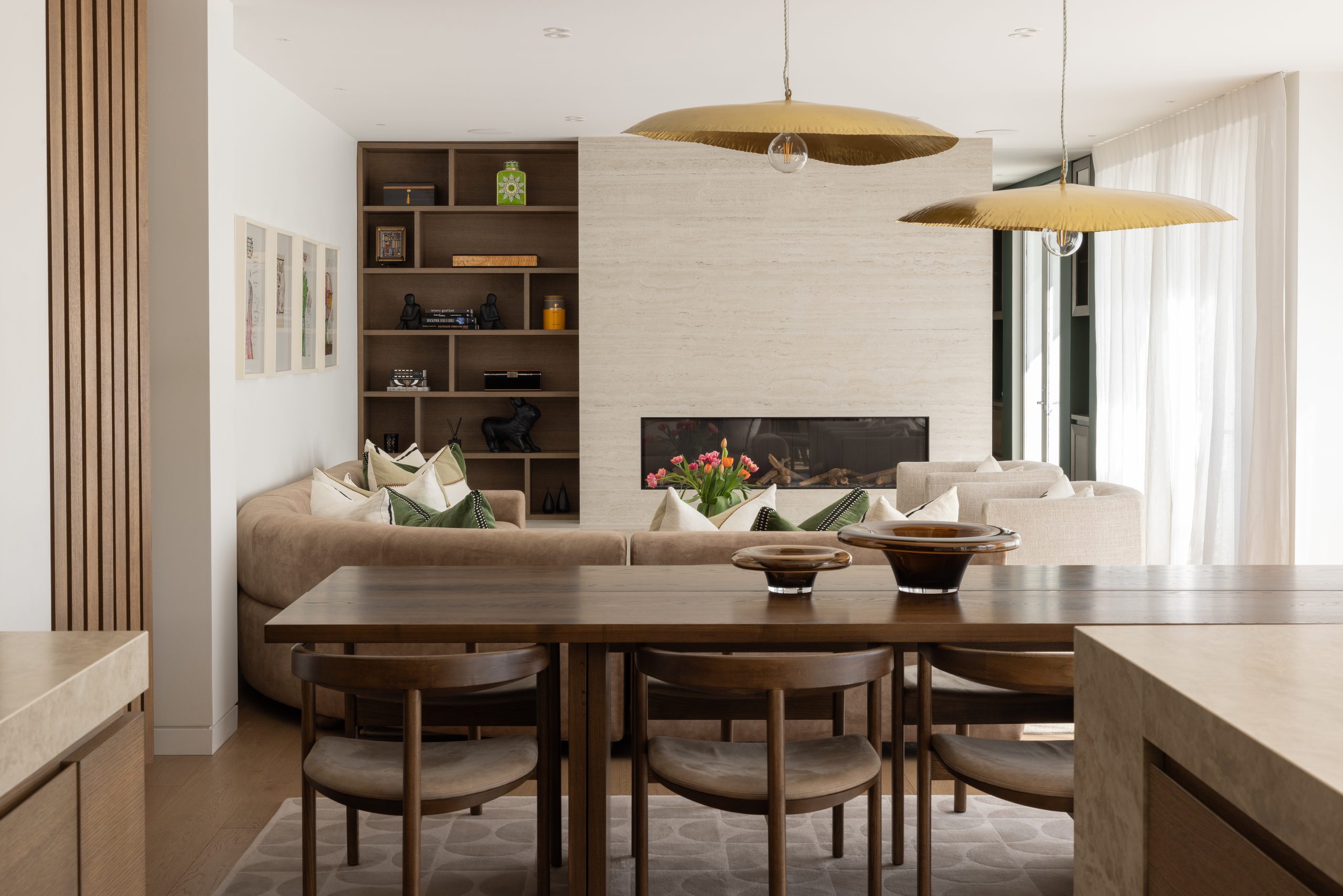
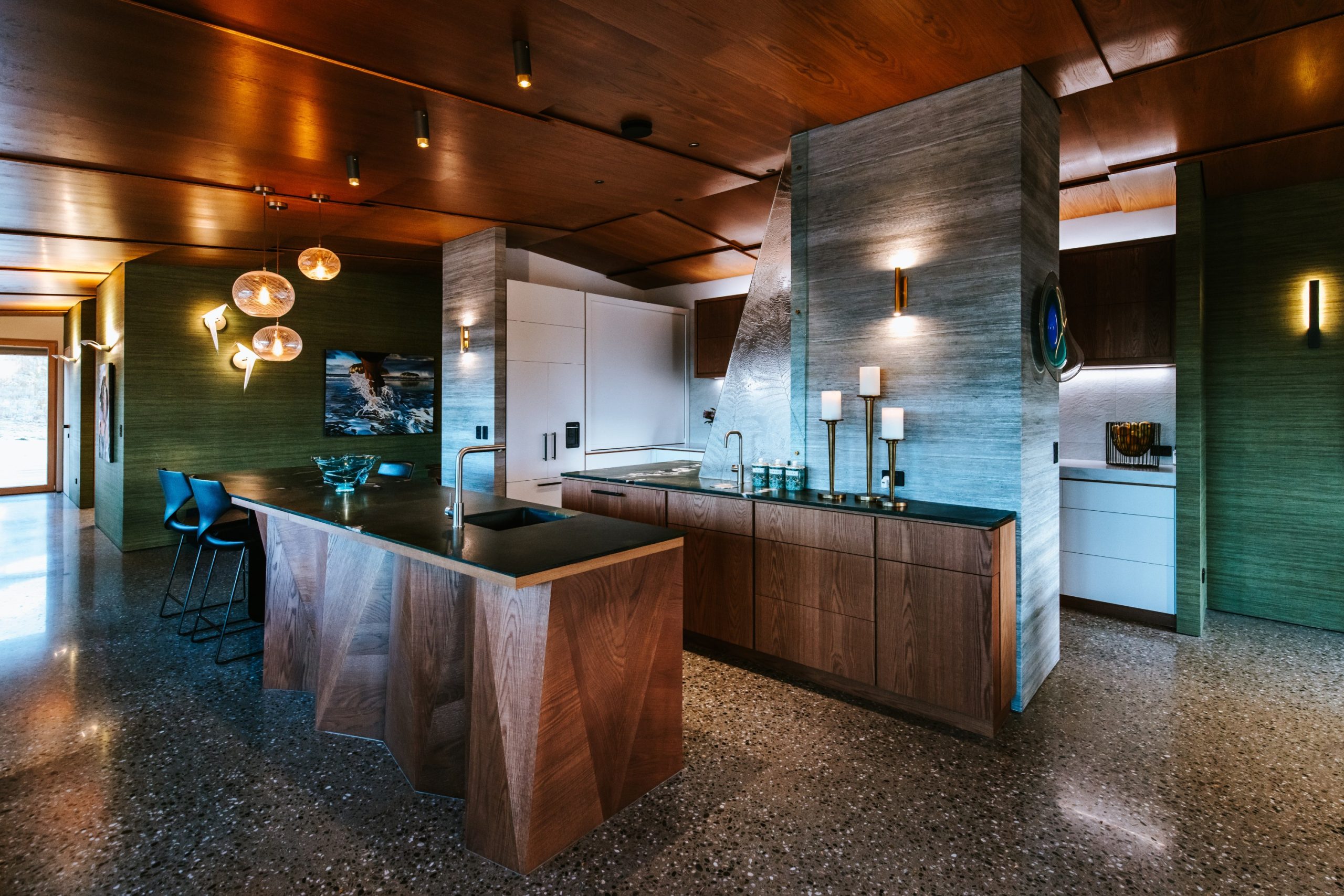
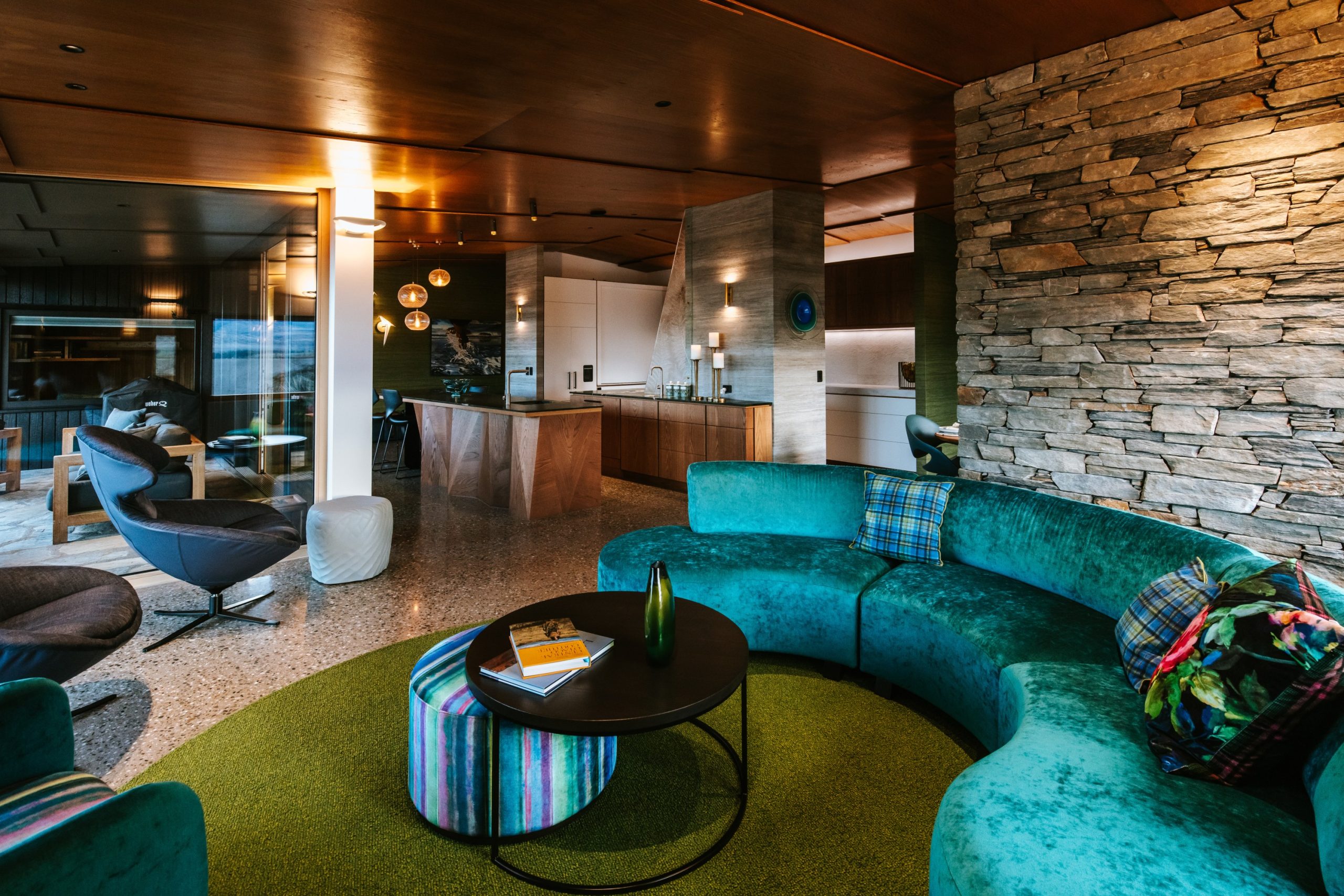
The home’s interior mirrors its bold yet considered architecture. Melanie Craig Design curated each space to reflect its connection to nature, including a striking double island anchoring the open-plan living. Basins, glass and rugs were especially selected and specified to complement the overall design vision.
Through meticulous detailing and rigorous air-sealing, the project achieved an outstanding airtightness test result of 0.32 ACH, demonstrating the construction team’s precision and dedication. The German made triple-glazed windows were installed to maximise thermal efficiency, solar control, and durability, further enhancing the building’s overall performance.
This architectural success shows the power of interdisciplinary partnerships in achieving high-performance design. Jason Wright offered his expertise under two hats: as eHaus construction manager and director of The Wright Fit. He ensured that insulation continuity, thermal-bridge mitigation, and ventilation design were executed to Passive House standards.
“It’s not just the location that is stunning, the house is stunning too, both from a visual sense, but also from an energy efficiency sense,” Damien McGill, director of the Healthy Home Cooperation and PHINZ local chapter lead. “It’s also structurally complex, with freestanding, stone-clad, four-metre-high wing walls that took a bit of detailing.”
Critical for the build in its unforgivingly cold environment, retaining walls extending beyond the edge of the fully insulated MAXRaft foundation reduce thermal bridging and heat loss. It’s one of many immaculate details. Negative detailing around interior doors, the kitchen fit-out courtesy of The Joinery Crew, and the suspended layered ceiling, which echoes schist, are three more.
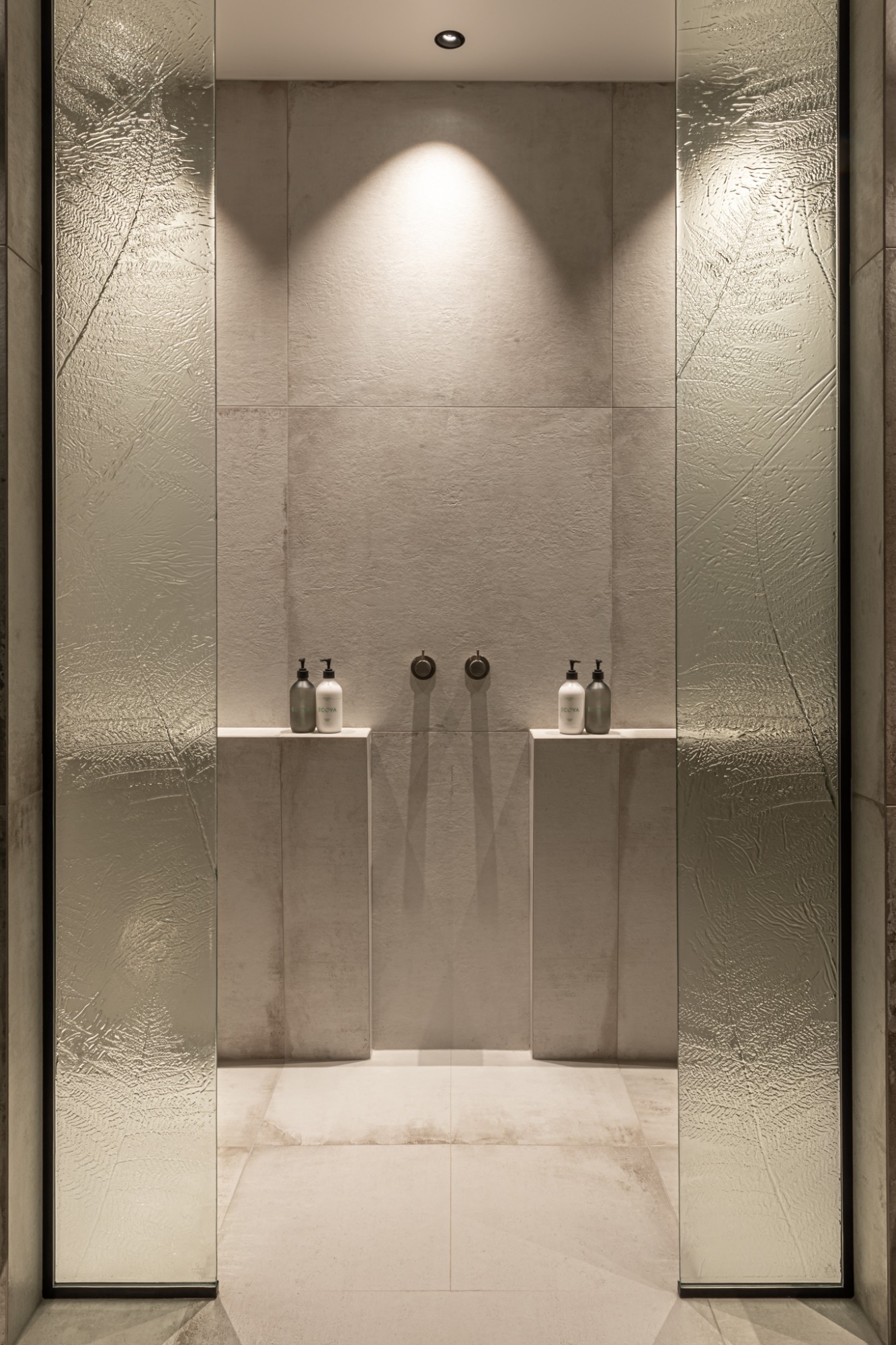
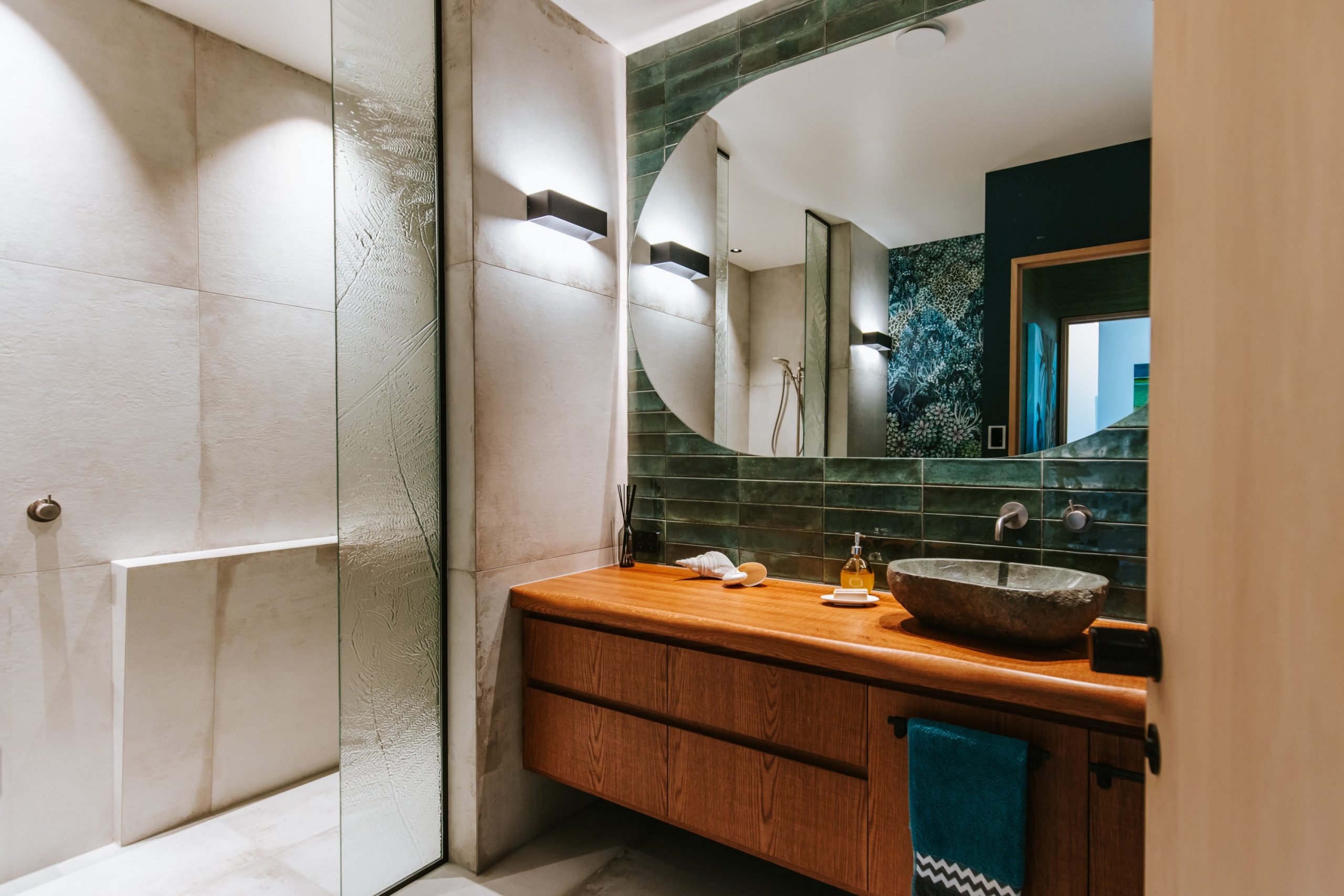
With three bedrooms, a master with a spacious walk-in robe and ensuite, and a separate snug and reading room, it’s impossible not to relax. Rustic stone basins and custom timber vanities continue this energy in the bathrooms. Melanie Craig Design softened these textures with careful furnishings that capture the animate zen of an intimate resort.
The kitchen is designed with two islands: a back zone with pantry storage and prep areas featuring integrated refrigeration and roller pantry storage to keep the space uncluttered, and a hero island with a multifaceted timber front inspired by exterior schist boulders, topped with leathered stone for its organic green and white tones. It wraps around a central pillar, finished in Elitis vinyl paper, which ties into the schist wall extending into the lounge and dining spaces.
Open-plan living puts panoramic views on centre stage. Duncan says the real challenge was how to frame them effectively. “Our preference was to steer away from floor-to-ceiling glass, where there’s a risk of the majestic scenery being reduced to background ‘wallpaper’.” The American White Oak Crown Cut ceiling accentuates the nature retreat vibe in the main living spaces with a distinctive, swirling grain and a warm, light brown hue.
“The approach we took was inspired by the way you move through an art gallery, where each space, each corner you turn, offers a curated view of the site’s natural beauty. All the built sightlines very carefully respond to and complement those offered by the topography.”
Duncan says Black Pine’s architectural approach is about being a good ancestor and leaving a positive legacy. “That thinking influenced this project hugely, from celebrating the site’s natural beauty to the careful choice of materials, and the energy efficiency modelling that minimises emissions,” he says. “The result is a healthy, high-performance building that will provide comfort for many generations to come.”
Contact details:
Blackpine Architects
0274 877 766
duncan@blackpine.co.nz
Images by: Jamie Cobel - www.jamiecobel.com Steve Caudwel - www.operaschool.org.nz/person/steve-caudwell