Built for generations
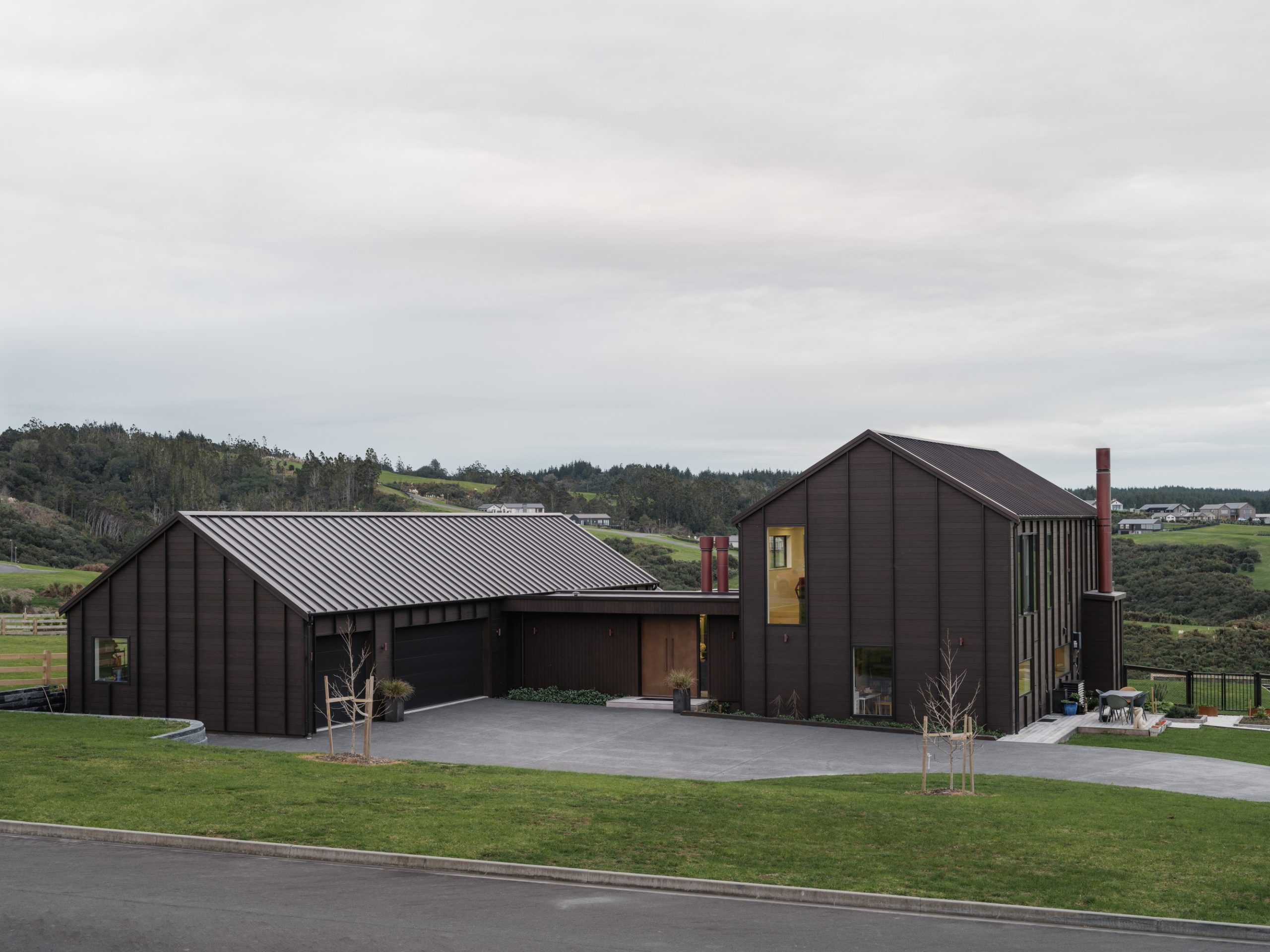
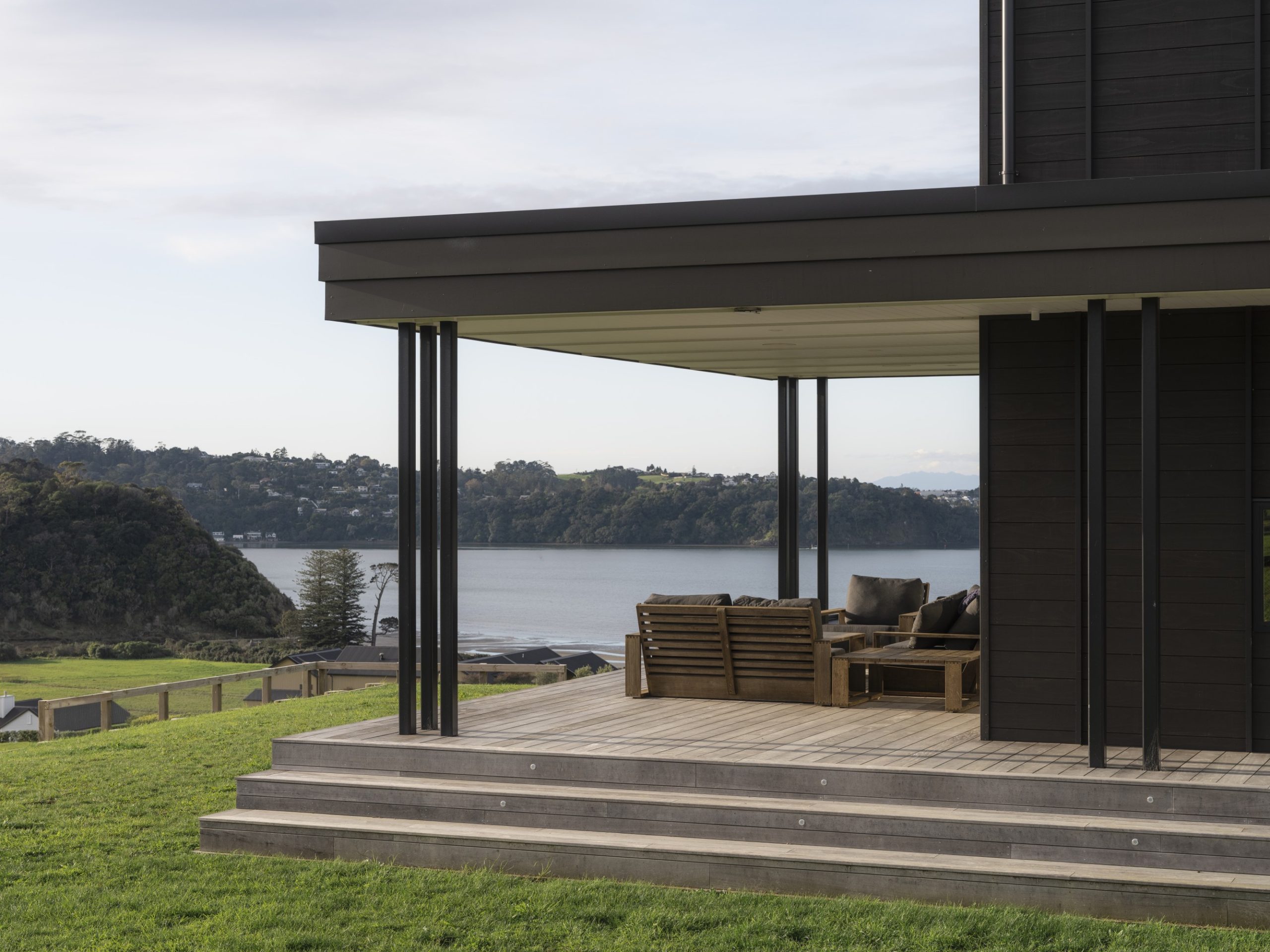
Vegetation cascades over rolling hills and spills towards the shoreline. Beyond, an exposed headland bears the full force of the salty easterly weather. It’s a site defined by both beauty and challenge, conditions that would come to shape a home designed equally around its surroundings and the family who call it their own.
The brief was straightforward: create a warm, practical home that could accommodate multiple generations under one roof. Shared spaces needed to encourage time together, while quieter areas offered privacy when required. Visibility between levels and thoughtful details, such as a peephole linking the grandchildren’s bunk room to the mezzanine below, foster interaction, play and memory-making.
“Given the exposed coastal setting, the architecture also needed to carefully balance openness with protection,” says Nick Rowe, director of Nick Rowe Architecture. “The result is a home that feels light-filled and expansive, but still grounded and sheltered when needed; a retreat that responds to both family life and environment.”
Those ambitions were tested by a complex set of site conditions. Before a single line was drawn, the design team faced a strict architectural code, hefty planning requirements, and the challenges of building within a sensitive coastal environment. Resource consent was required for earthworks, vehicle access variations, and development within the Weiti Precinct, successfully obtained by the Planning Studio. At the same time, the owners wanted to maximise both bush and ocean outlooks. The response balanced compliance, climate, and family living without compromising the intent of the project.
Ze Build carries the architectural intent through with precise junctions and careful detailing. Trinity Interior Design responds by aligning tone, texture, and scale with the architecture, reinforcing its rhythm and flow. Together, they work within a defined framework to create a home that feels cohesive, grounded, and shaped by its site.
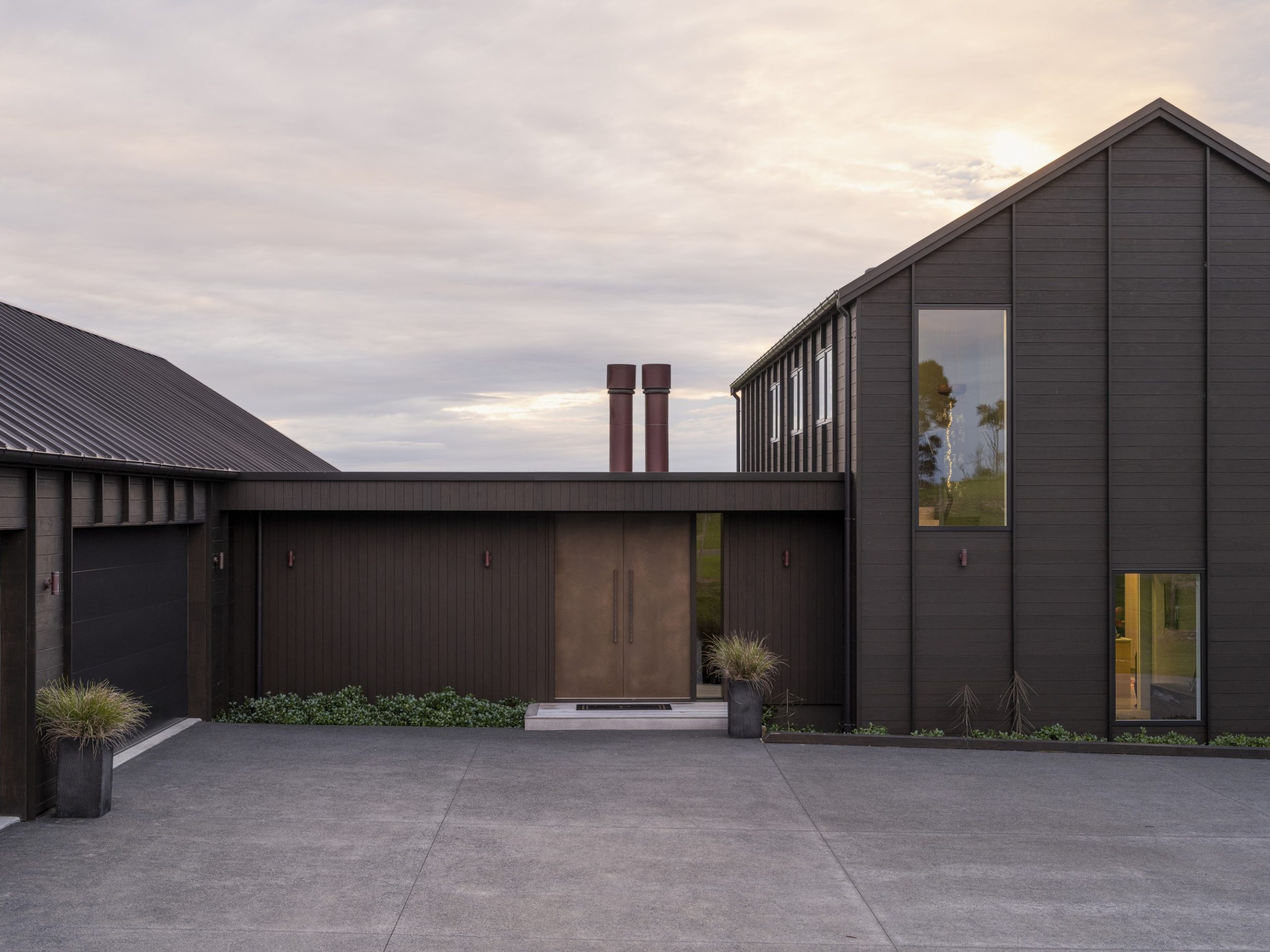
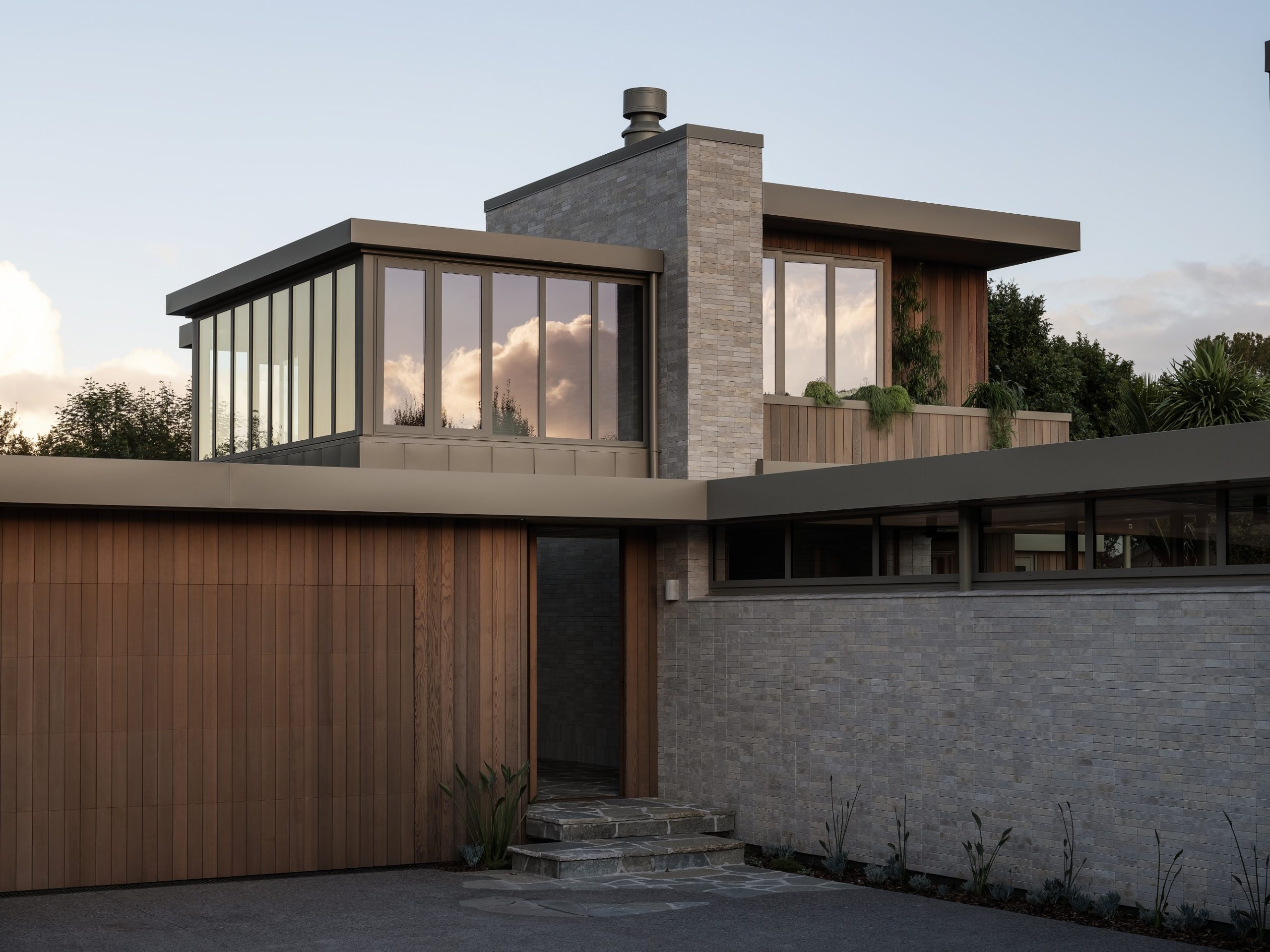
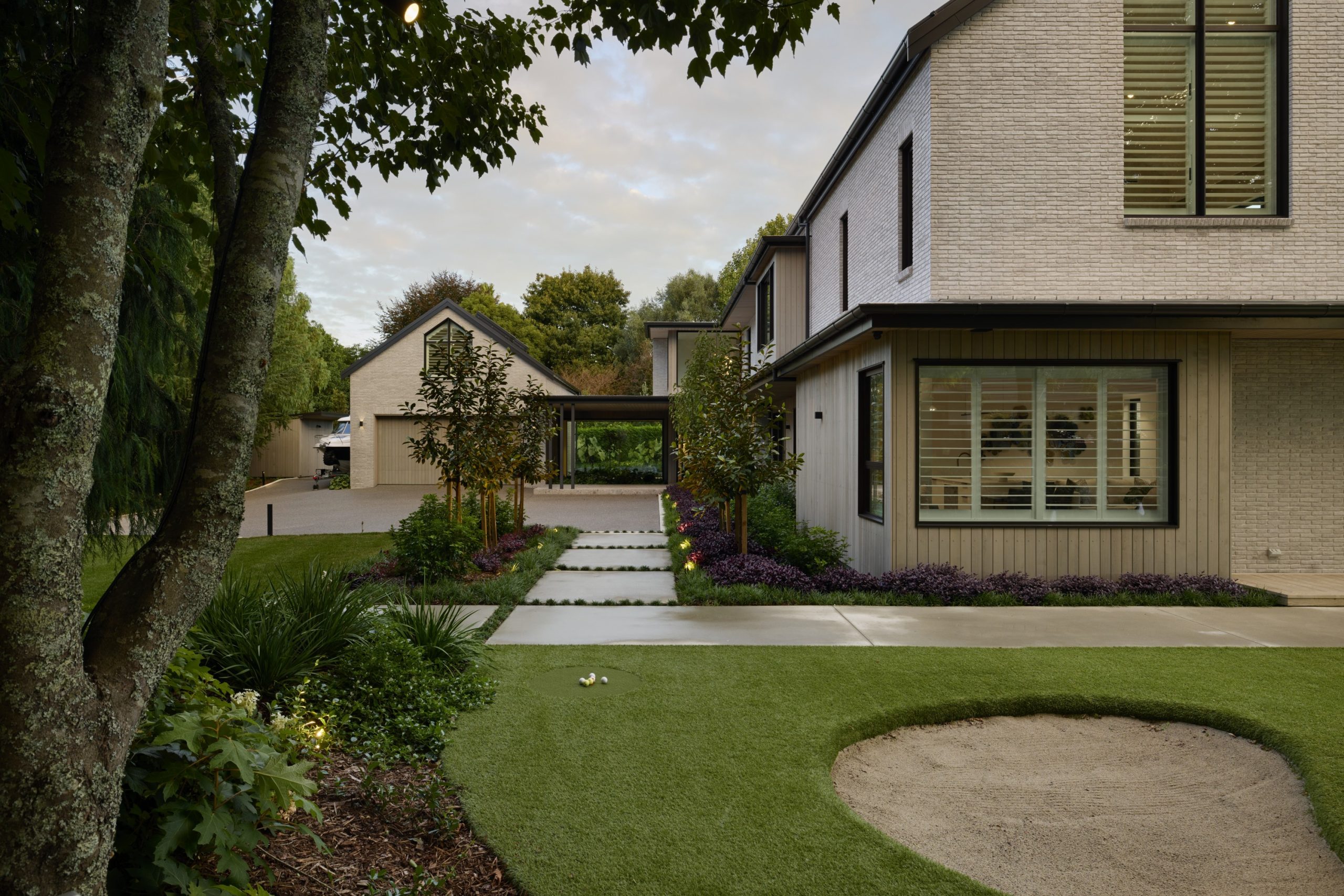
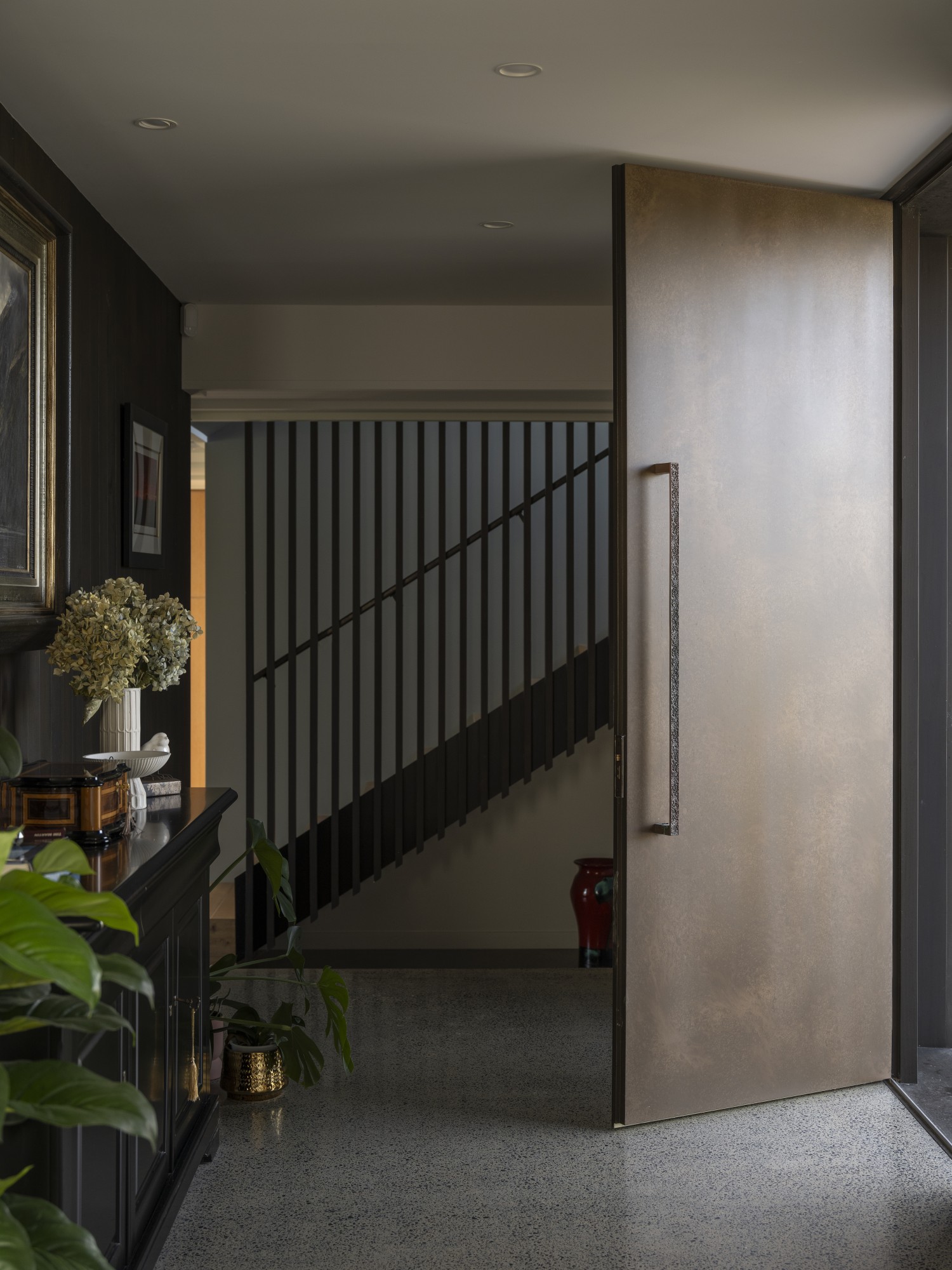
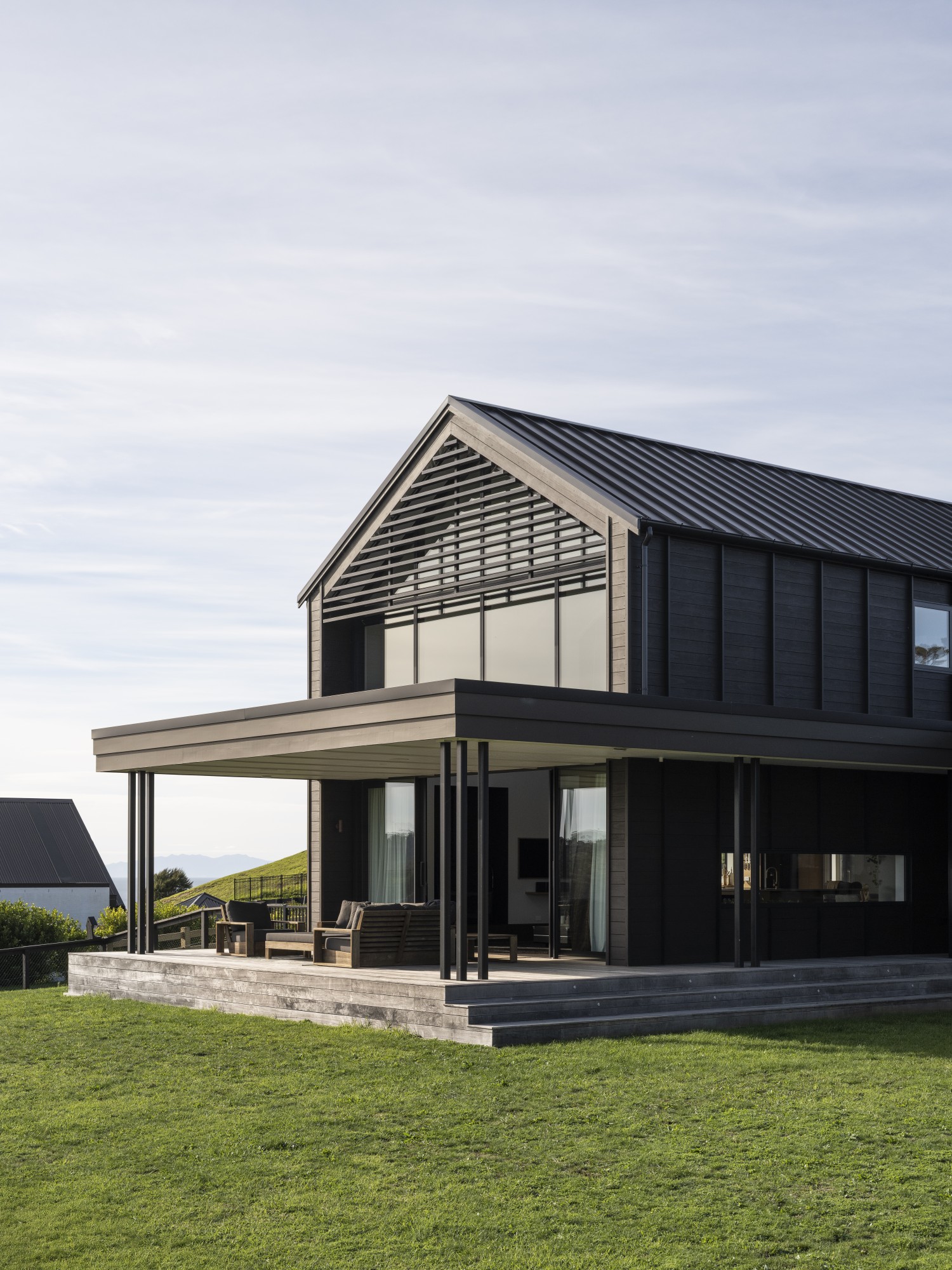
Arrival is understated, with a sheltered entry sequence that narrows before opening into the main living spaces. From here, the house reveals its outlook gradually as you move through it. Windows are carefully placed to frame key views and outdoor play areas while managing exposure. Deep roof overhangs provide shelter.
Stained Accoya timber and vertical battens define the exterior, adding texture and consistency across the façades. Details such as the sculptural front door hardware and concealed drainage within structural posts add precise flair.
The two-storey pavilion contains the primary living quarters, including the main bedroom and a bunk room for grandchildren. Above the main living spaces, a mezzanine level looks down into the double-height living area. “We wanted the home to feel effortless to move through, with open-plan living spaces that extend outward toward bush and ocean views,” Nick says.
A second, single-storey pavilion accommodates the garage, guest spaces, and service areas, separating everyday living from arrival and utility functions. Between the two forms, a lower-scale link provides entry and circulation, and extends outward to form covered outdoor areas that offer shelter in changing conditions. Spaces remain functionally usable no matter the weather.
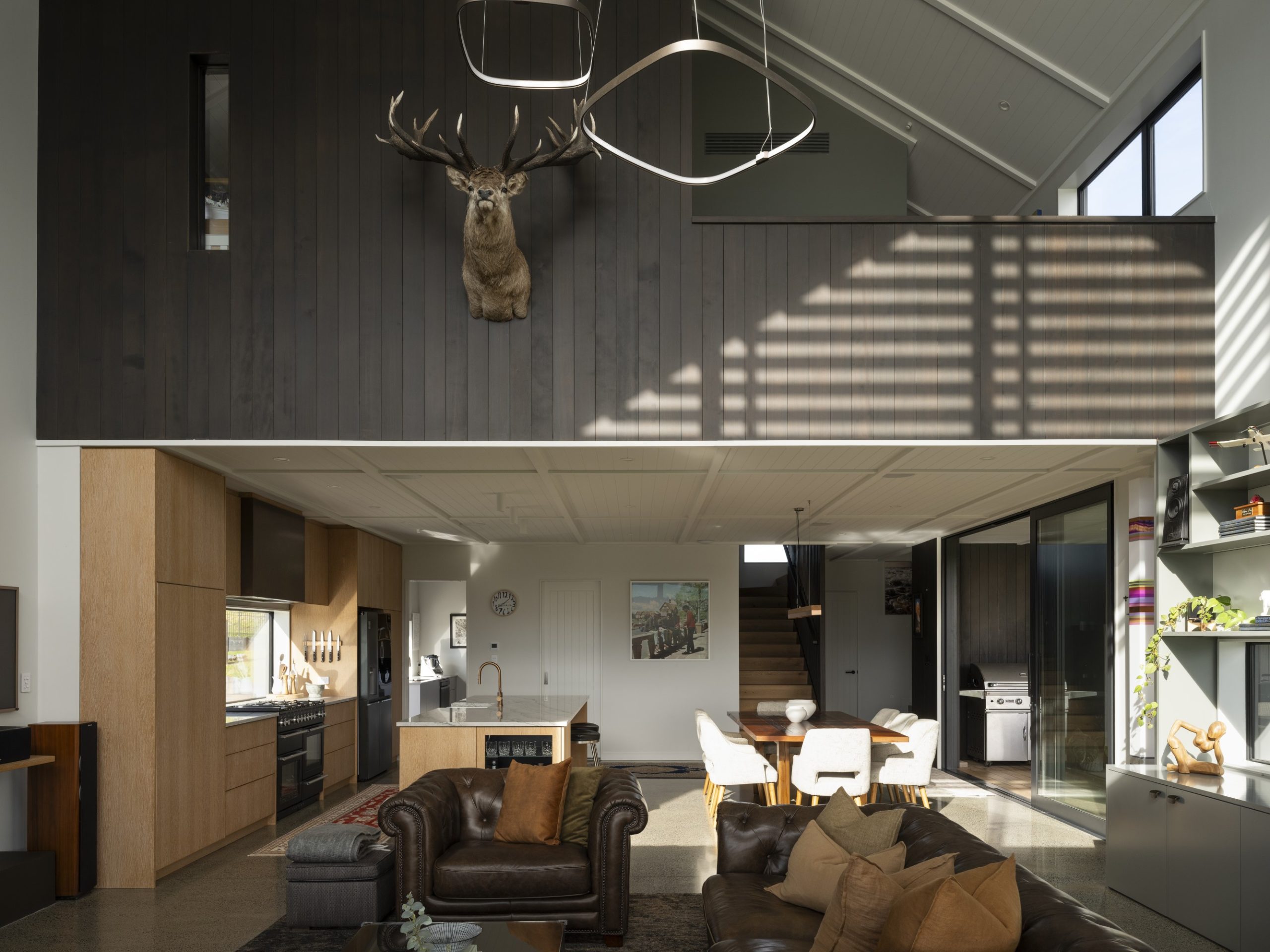
The heart of the home, physically and socially, the kitchen, dining and living areas are arranged as one continuous sequence, supporting easy movement between functions. External terraces expand the space when needed. The double-height volume brings light deep into the home.
Upstairs, the mezzanine provides a quieter layer for reading, work or retreat, with long views reinforcing orientation and elevation.
Private rooms are carefully separated. The main bedroom sits within the upper pavilion, while the bunk room for grandchildren is nearby. Elevated ocean views prove a natural separation strategy. Sightlines, framed openings and voids maintain connection between spaces. Utility and storage spaces ensure the house performs well during extended stays with multiple generations.
Bathrooms and secondary spaces are quietly refined, simple and durable, with soft tonal variation. Timber is the dominant material throughout, balanced with stone, warm metallics and neutral finishes. The kitchen pairs light-toned stone with timber cabinetry and subtle metallic detailing. The palette is intentionally restrained and designed to age well.
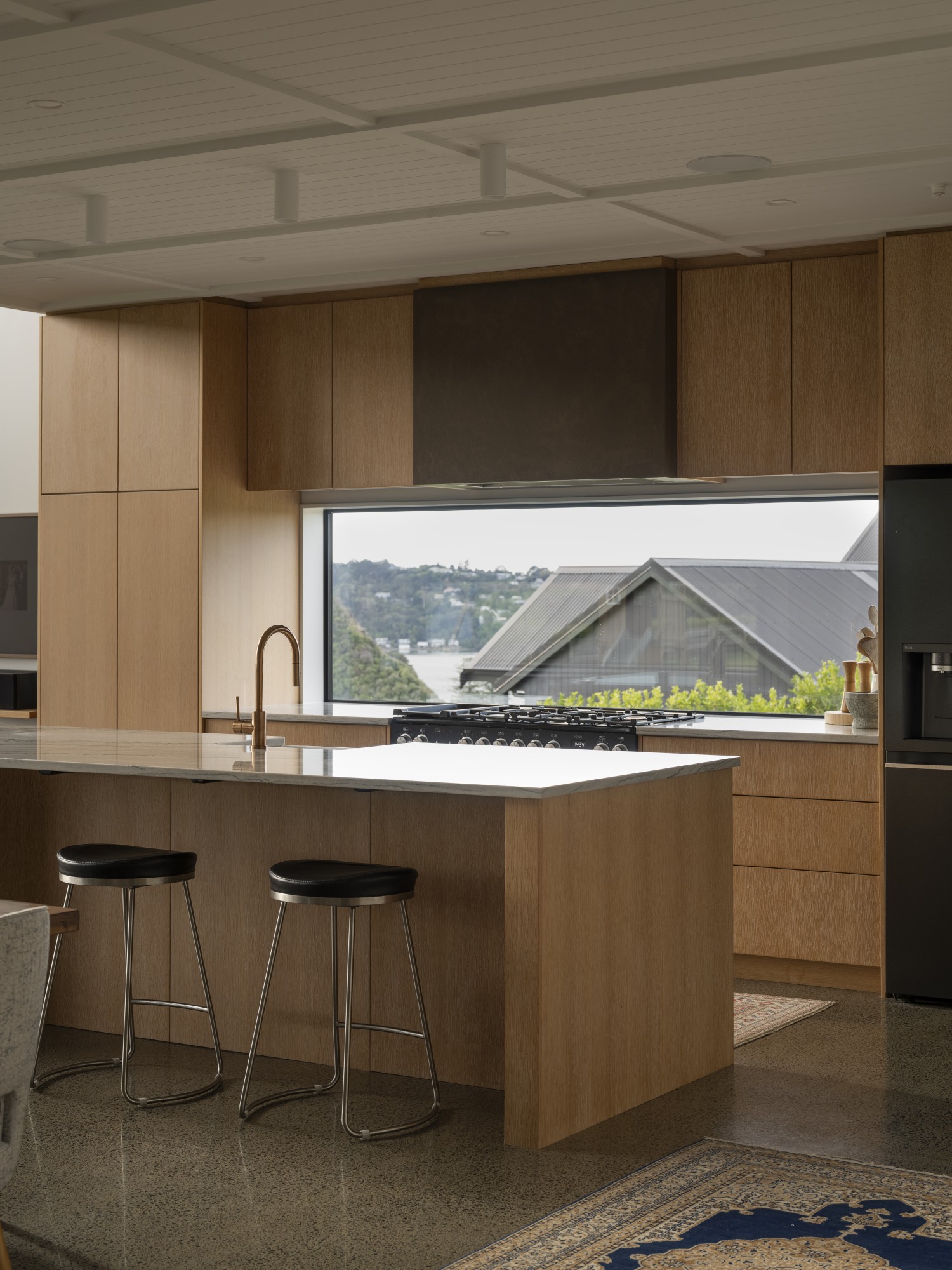
“We worked closely with both the architect and owner. This collaboration helped shape a home that seamlessly blends contemporary farmhouse character with crisp architectural detailing, resulting in an aesthetic that feels both timeless and effortlessly relaxed,” says Nicole from Trinity Interior Design. This was the third project Trinity Interior Design completed with the clients, building on an established understanding of their lifestyle and preferences.
“Carefully considered material selections, including natural oak detailing, bespoke joinery, and softly layered neutral finishes, came together to create an interior that feels warm, refined, and deeply connected to the surrounding landscape.”
Accurate setting out was critical to the two-pavilion layout, particularly at junctions where structure, glazing and cladding meet. Careful attention ensured the volumes read as one composition rather than separate parts. Accoya cladding provides stability in moisture, wind and salt exposure, allowing it to weather evenly over time.
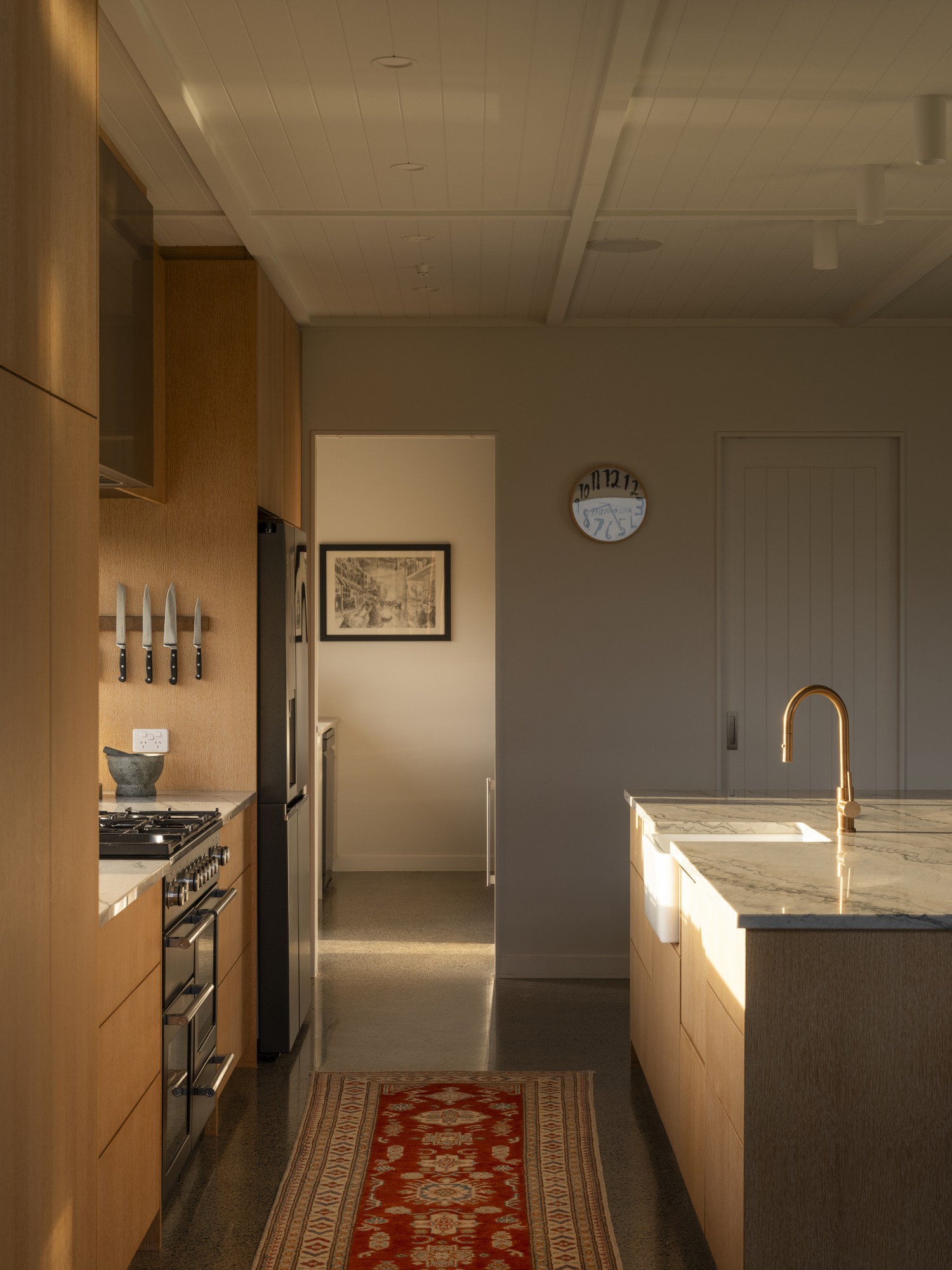
Copper elements are left to patina, while timber decking and external surfaces silver naturally. Bespoke detailing includes custom stair elements, oak transitions and integrated joinery, with precision evident in concealed drainage and resolved junctions.
Ze Build approached the delivery with a strong focus on sequencing and coordination on site, ensuring each trade worked to tight tolerances so the two-pavilion form, junctions, and material interfaces were executed with consistency and control from structure through to finish.
Rather than resisting change, this home embraces it. In response to strong coastal exposure, the design balances protection with ease of living in harsher conditions. The intention is aesthetic longevity, with materials and form designed to evolve rather than deteriorate over time.
The project resolves as a highly liveable family retreat, designed to support both large gatherings and the slower rhythm of day-to-day use. Grounded, resilient, considered and adaptive, this home proves that constraints can be design drivers rather than limitations.
Contact details
Nick Rowe Architecture
027 535 5658
nick@nickrowe.co.nz
Images by: David Straight - davidstraight.net
Architecture: Nick Rowe Architecture - www.nickrowe.co.nz