2026 Dulux Colour Award winners announced
Honouring four decades of awarding exceptional colour use in the built environment, the 40th Dulux Colour Awards were recently celebrated at a milestone gala event at the Sydney Opera House.
“Our long-running Dulux Colour Awards are regarded as a benchmark in the design industry, unique in recognising colour as an integral design tool,” says Dulux colour and design specialist Davina Harper. “For forty years, the awards have championed the transformative power of colour across New Zealand and Australia. Over the past fifteen years, New Zealand has also helped showcase how thoughtfully colour can elevate architecture and shape spatial experience.”
The Dulux Colour Awards constantly evolve, introducing new categories and attracting increasing numbers of entries as the significance and prestige of the programme has grown since its inception in 1986. “The calibre of the New Zealand projects continues to evolve, reflecting a growing confidence and sophistication in the way colour is being used,” says Harper.
This year, the programme reached a new milestone, receiving a record-breaking 540-plus entries from Australia and New Zealand. From this pool, a panel of five leading design and architecture professionals selected 94 finalists spanning eight categories.
“Across this year’s winners, we’re seeing colour applied with real intent – not as an overlay, but as a foundational design tool that shapes mood, identity and spatial experience,” Harper continues. These projects demonstrate a deep understanding of context, drawing from landscape, materiality and personal narrative to create outcomes that are both expressive and highly resolved.”
Judge Buster Caldwell adds, “Colour has the ability to completely shift how a space is experienced, especially when used with intent… The deeper reds we’re seeing — iron-rich, earthy tones — carry a sense of weight and grounding, bringing warmth and intimacy to interiors or connecting projects back to their surroundings.”
Waka Huia
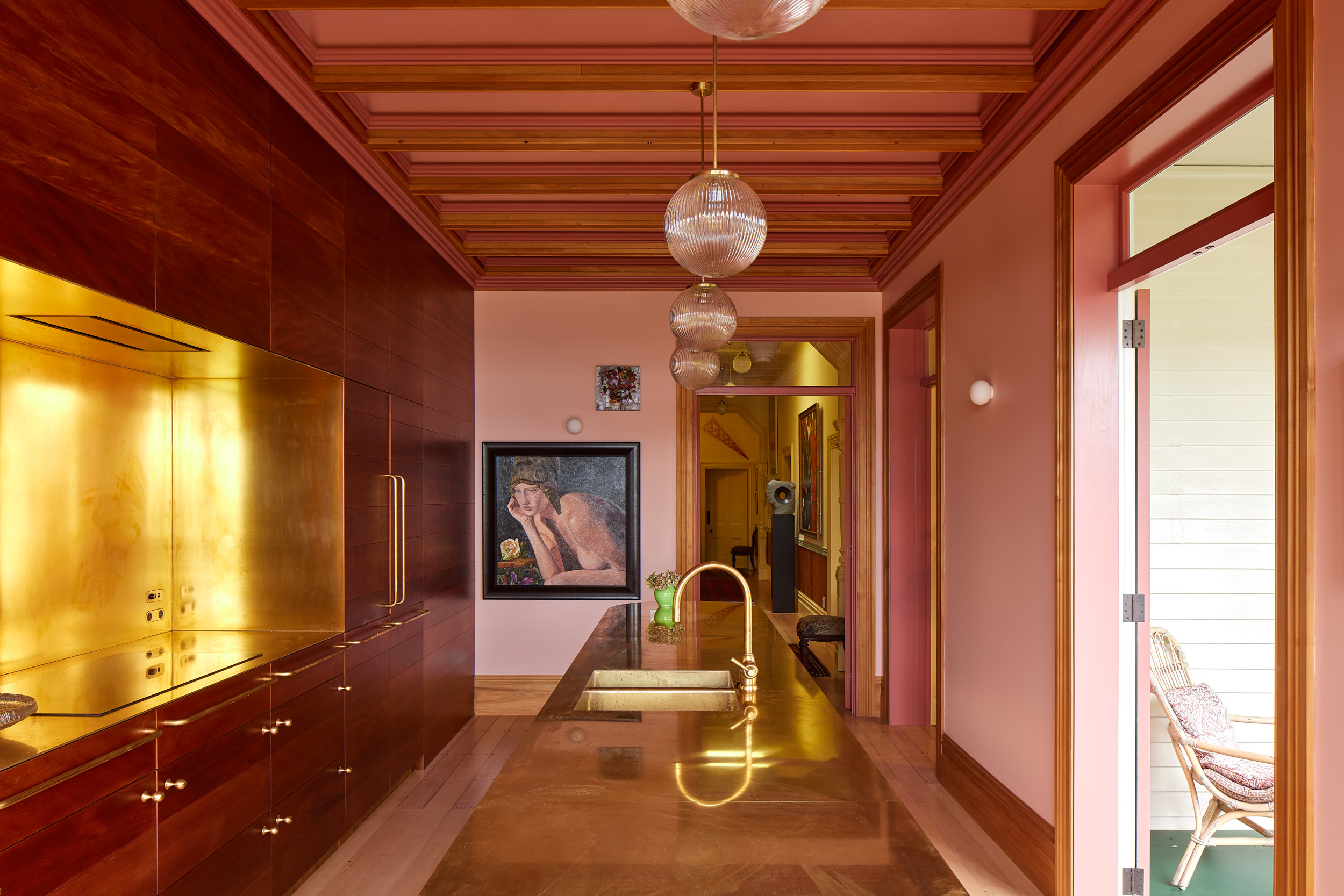
The New Zealand Grand Prix–winning Waka Huia by Pac Studio is a richly layered harbourside home where colour is applied with precision and intent, rather than as decoration. The result is a deeply personal interior that reflects the clients’ history, art collection and memories, unified through a considered architectural approach. It demonstrates a confident command of colour theory and a close collaboration with the clients to develop a cohesive, saturated palette that strengthens the architecture rather than sitting apart from it.
The completed home is an immediate standout, creating a genuine sense of awe. Colour is deployed with assurance and control, working in close dialogue with exceptional craftsmanship to achieve a highly resolved outcome across detail, materiality and finish. An ambitious palette is expressed through intricate applications, refined colour blocking and carefully considered tonal contrasts, highlighting both the collaborative design process and the architects’ clarity of intent and technical skill.
In the kitchen, walls and vaulted ceiling are enveloped in soft pink tones (Dulux Bluff Hill and Tokatoka), balanced by warm brass surfaces, while the hallway, functioning as a connective spine through the home, becomes a luminous yellow (Dulux Solar), framing an evolving collection of art. Within a New Zealand context, the project stands as a rare and accomplished example of colour operating alongside architecture as an equal contributor to spatial quality: contemporary, expressive, and grounded in memory and meaning.
Te Pākau Maru
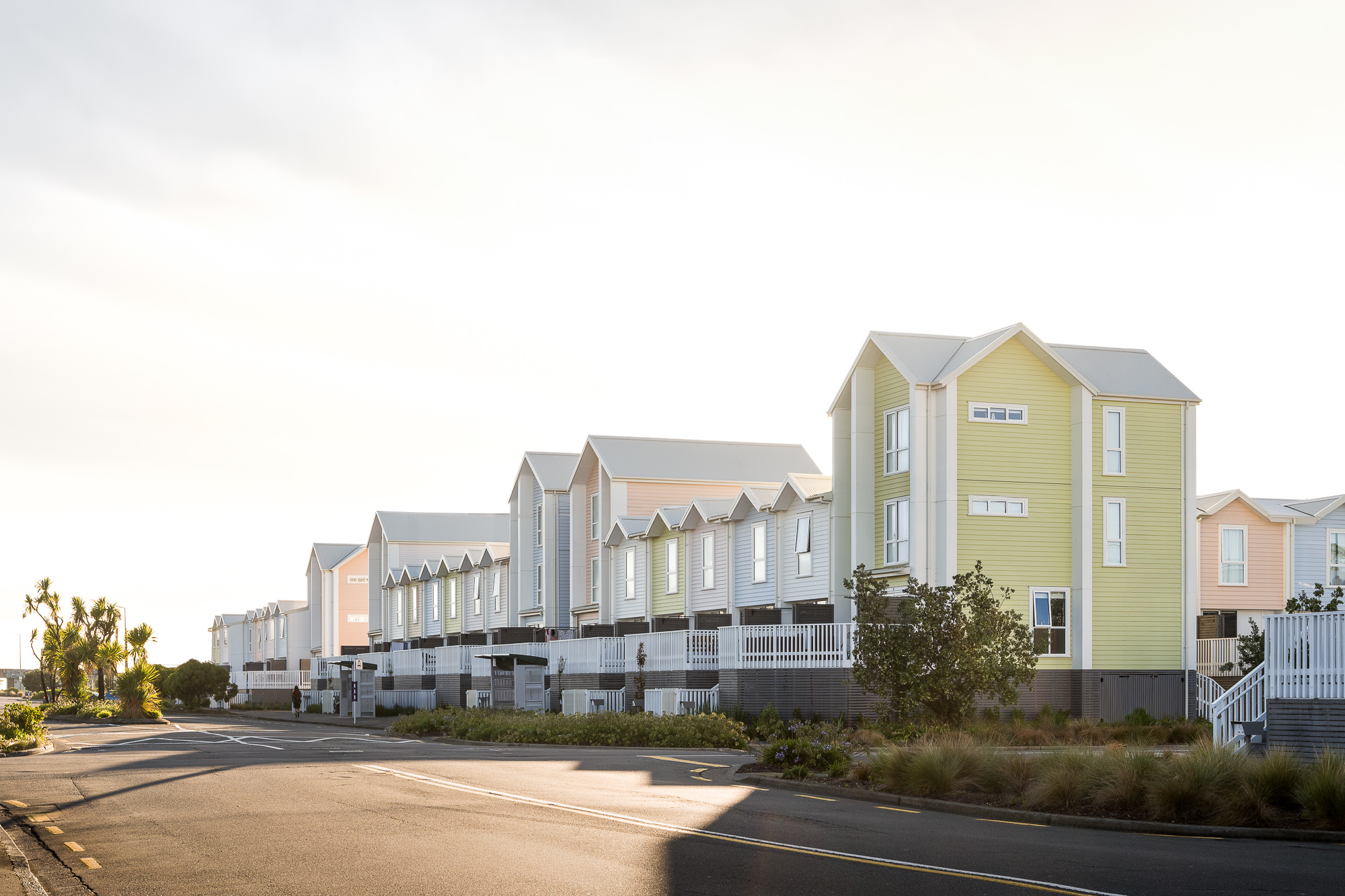
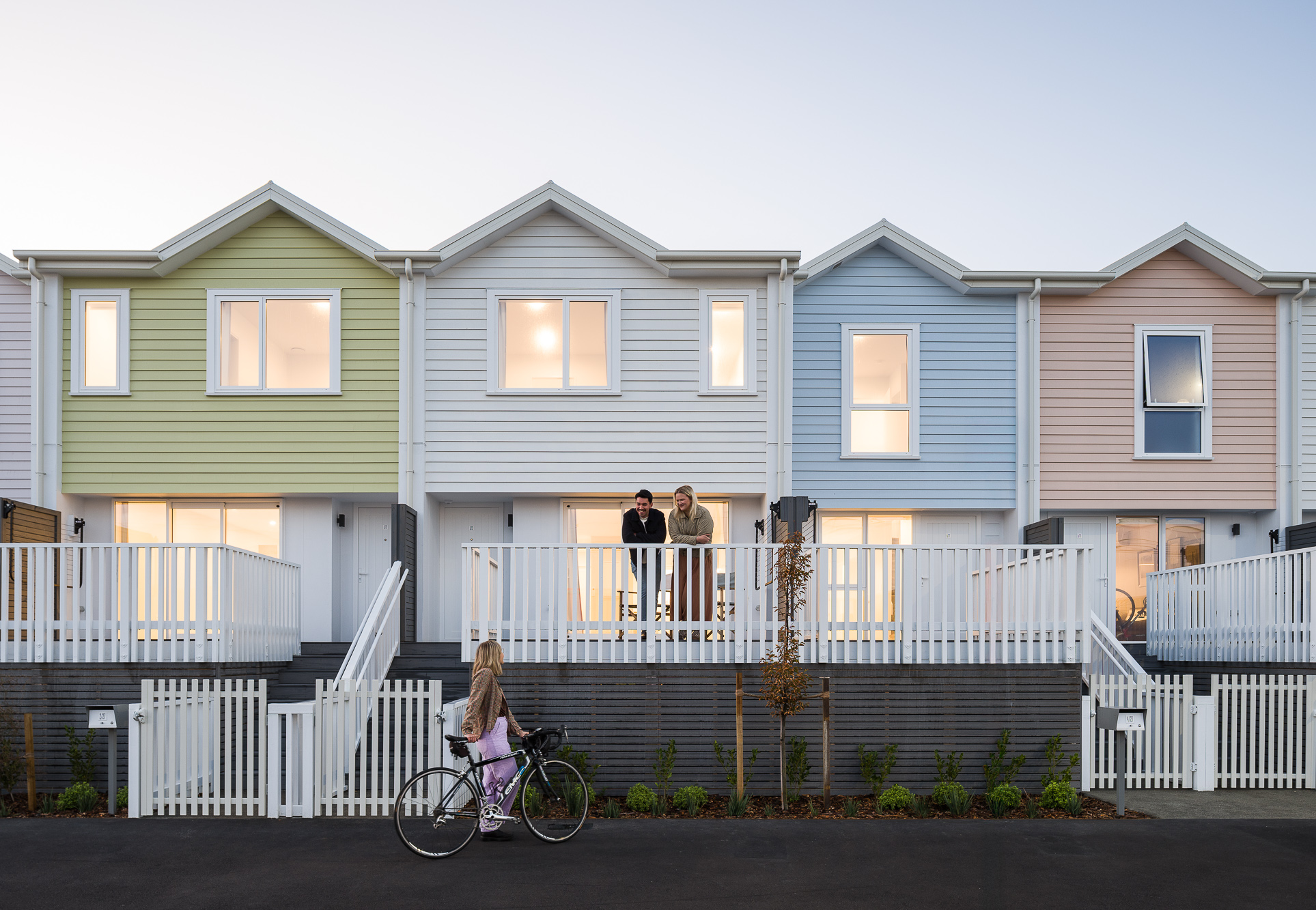
Winning a commendation in the 2026 Dulux Colour Awards, Te Pākau Maru demonstrates how colour can be used as a unifying architectural tool across a diverse residential community. The project, delivered through collaboration between community, not-for-profit and public sector partners, responds to a New Brighton site shaped by both coastal character and the long-term impacts of natural disaster and economic pressure.
“Te Pākau Maru, translating to ‘the sheltering wing’ or ‘place of joy’, is given tangible expression through the care applied to each colour decision,” says judge Alix Smith. “The resulting environment evokes warmth, protection and optimism, demonstrating colour’s capacity to contribute not only to architectural clarity but also to social wellbeing. The project sets an important benchmark for this housing typology, with relevance extending well beyond its immediate context.”
The colour strategy operates less as decoration and more as a form of spatial organisation, allowing each dwelling to retain individuality while still reading as part of a coherent whole. Small calibrations in hue and value are used to differentiate housing types (Dulux Tītahi Bay, Matauri Bay, Cardrona, Kumutoto Half, Oriental Bay) giving clarity to the streetscape without breaking its overall rhythm. This subtle modulation supports wayfinding and identity in a way that feels embedded rather than imposed.