Light, logical living
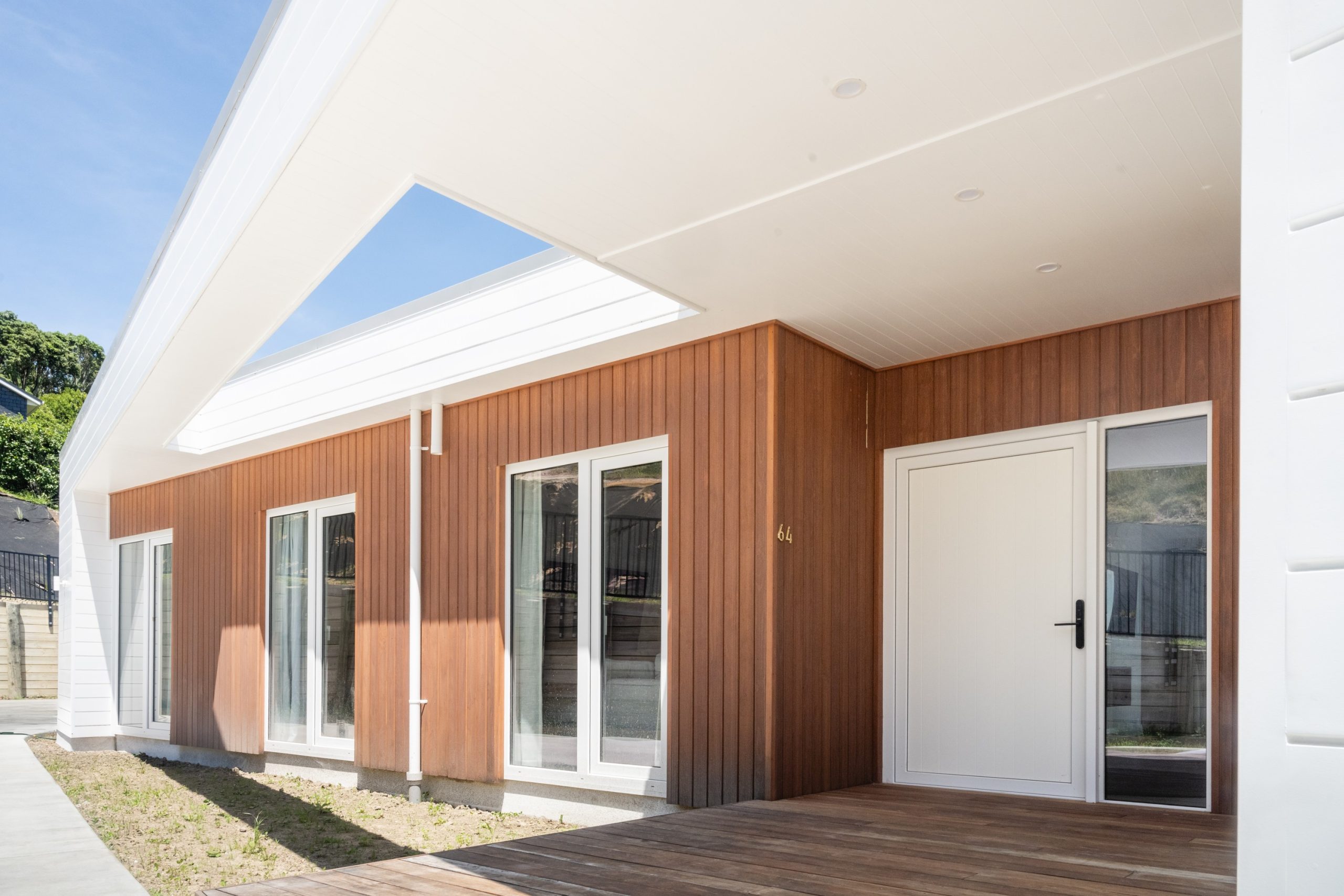
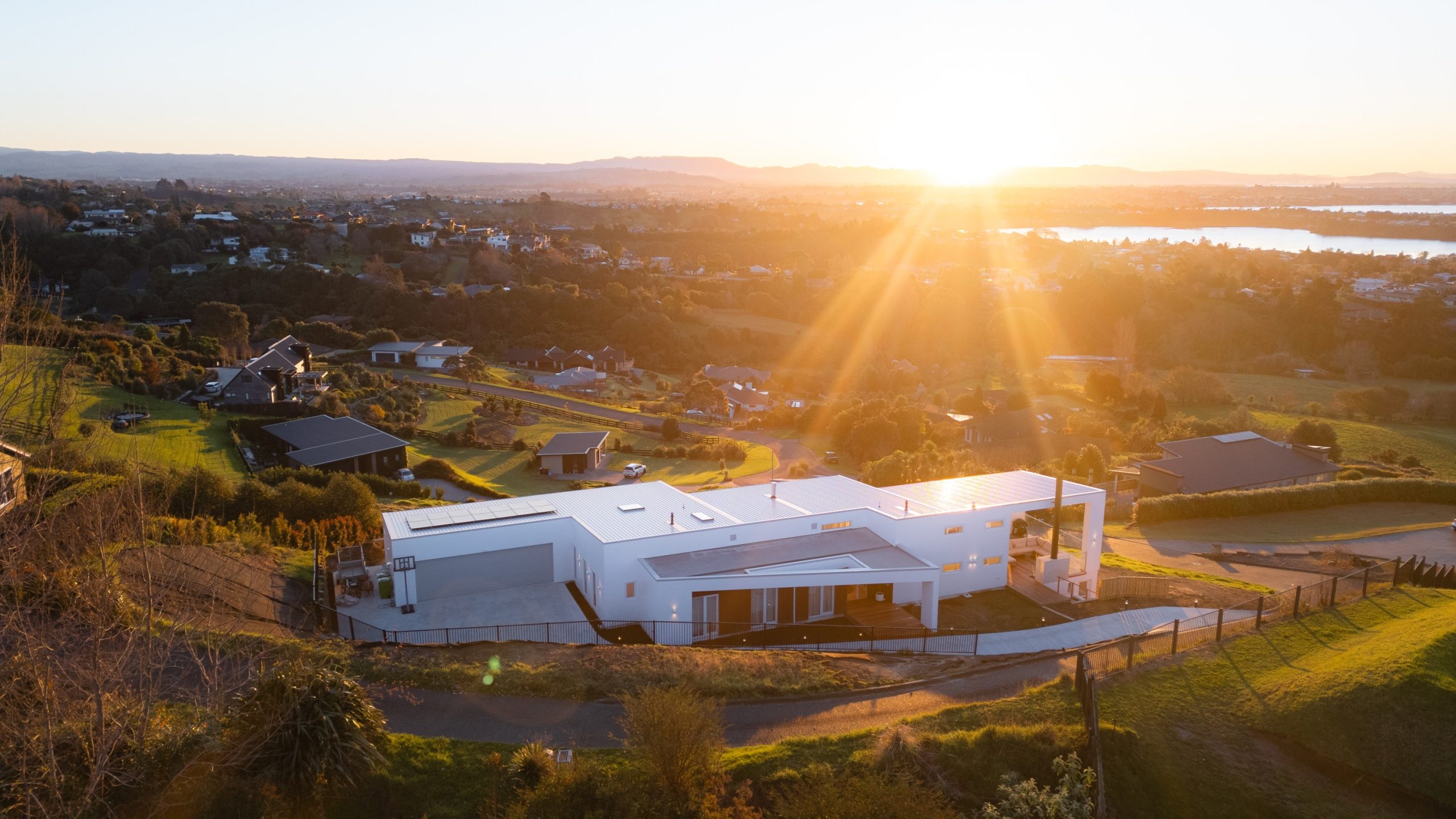
Crisp white weatherboards, warm timber accents and a dramatic roofline combine to create this sculptural, spacious single-level home that stands proudly above Tauranga Harbour.
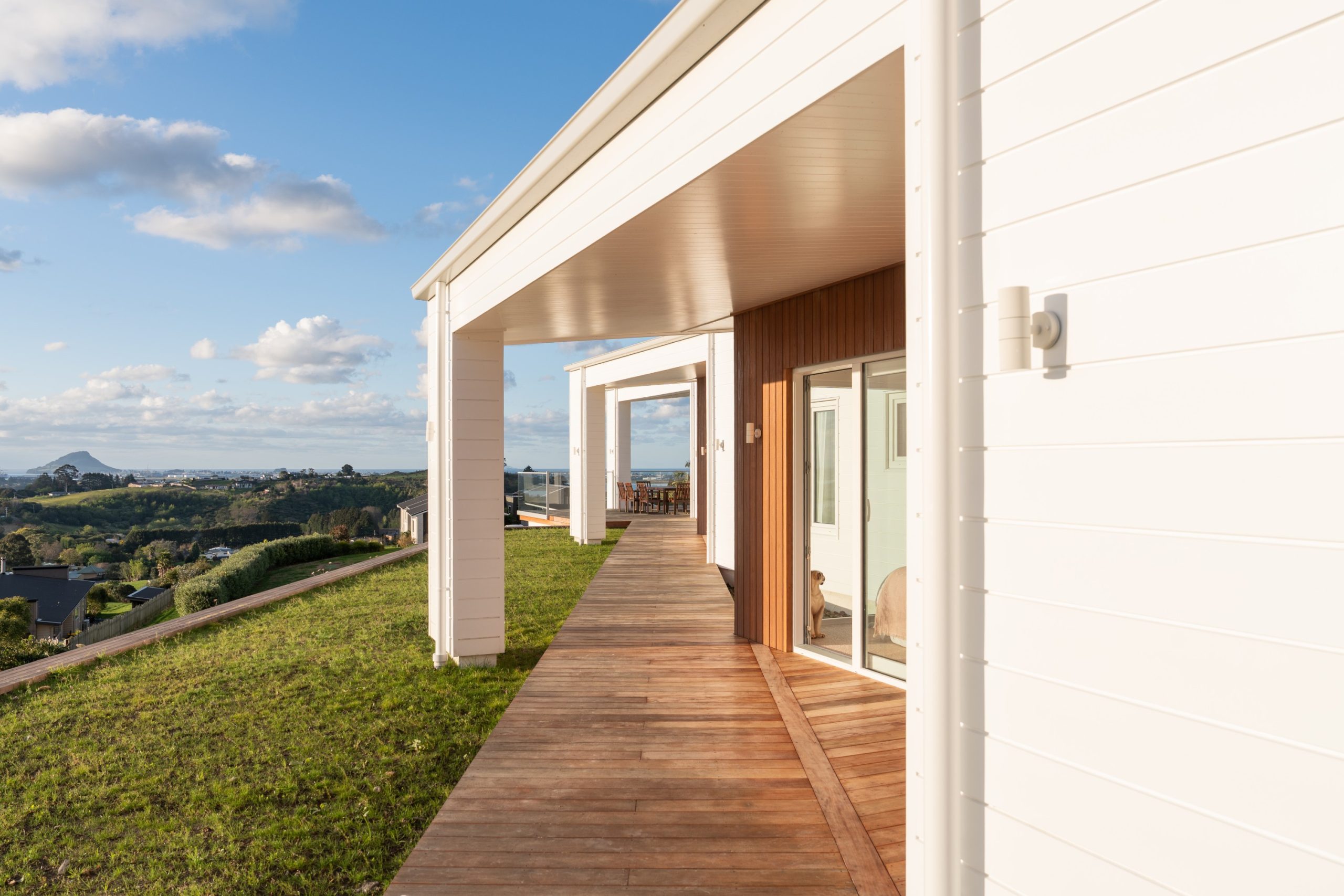
Instead of blending into the hillside, this Welcome Bay residence makes a confident architectural statement. Yet for all its visual presence, some of the home’s most impressive achievements are largely invisible. Behind the clean architectural lines sits a carefully engineered building envelope designed to deliver exceptional comfort, health and energy efficiency. Striking design and outstanding performance need not be mutually exclusive.
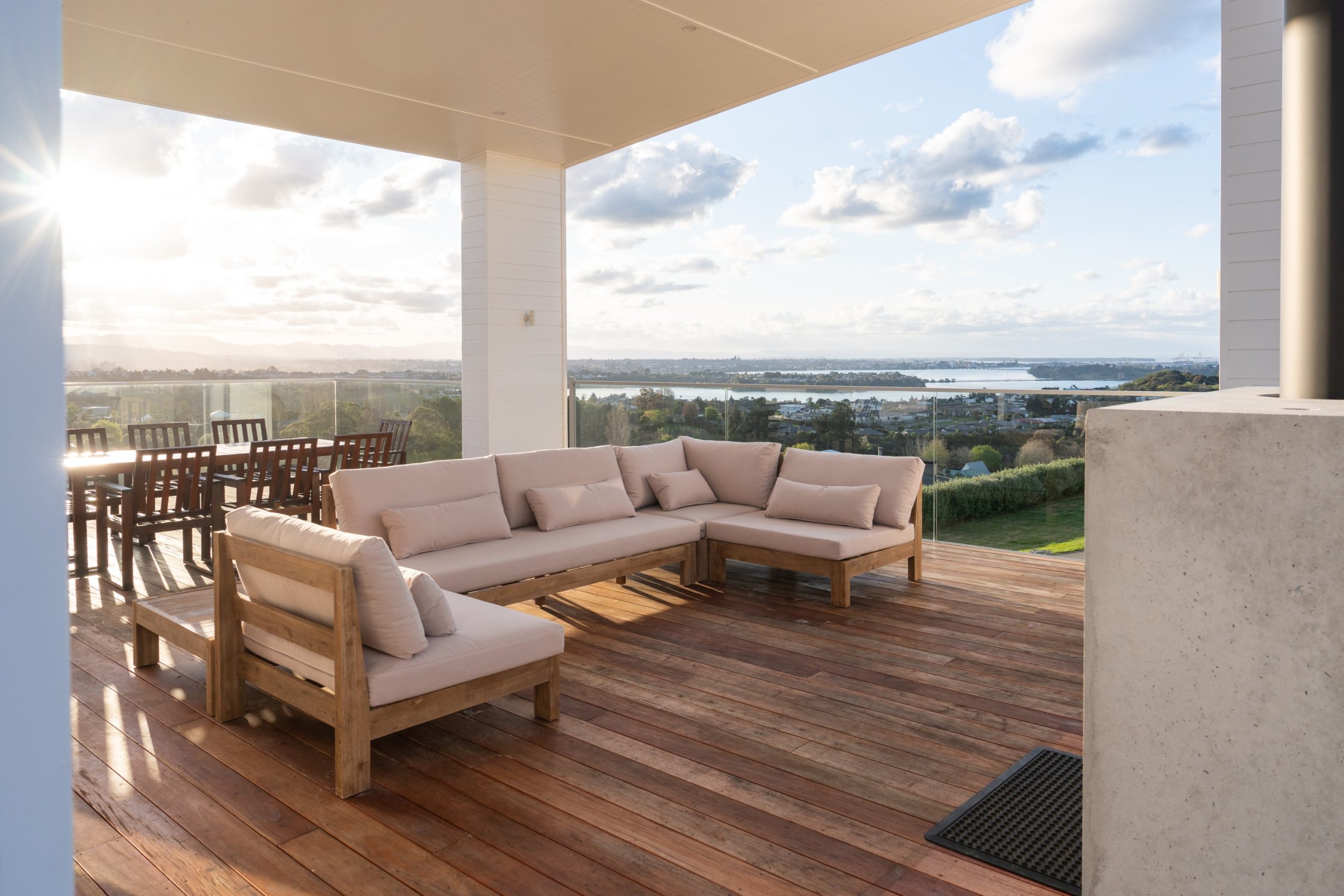
Positioned at the highest point of the site, the home was carefully oriented to capture both harbour views and sunlight. The building opens towards the north and northwest, maximising outlook while ensuring living spaces are filled with natural light throughout the day. A substantial deck extends from the main living areas, another key item on the clients’ wish list, offering seamless indoor-outdoor flow.
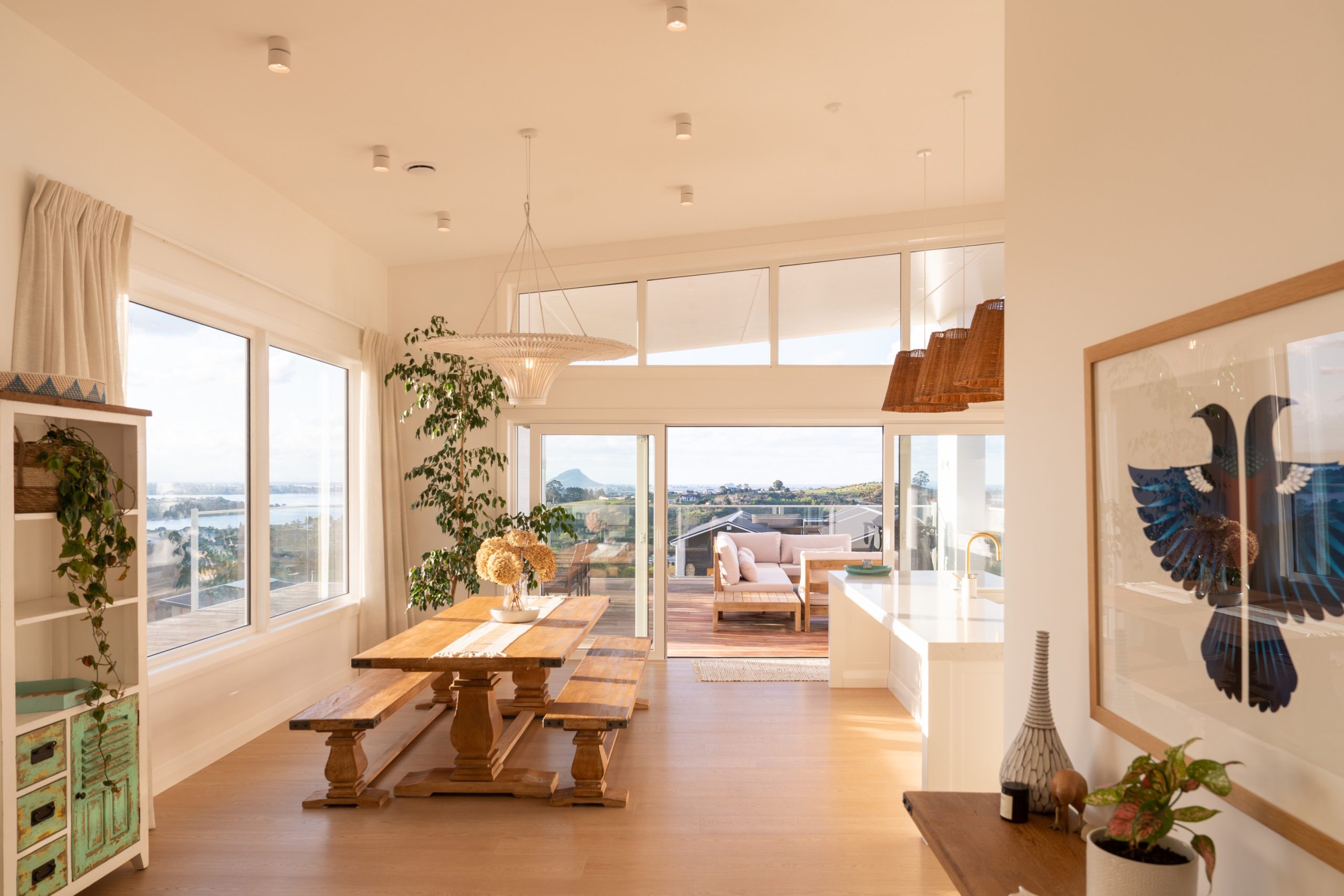
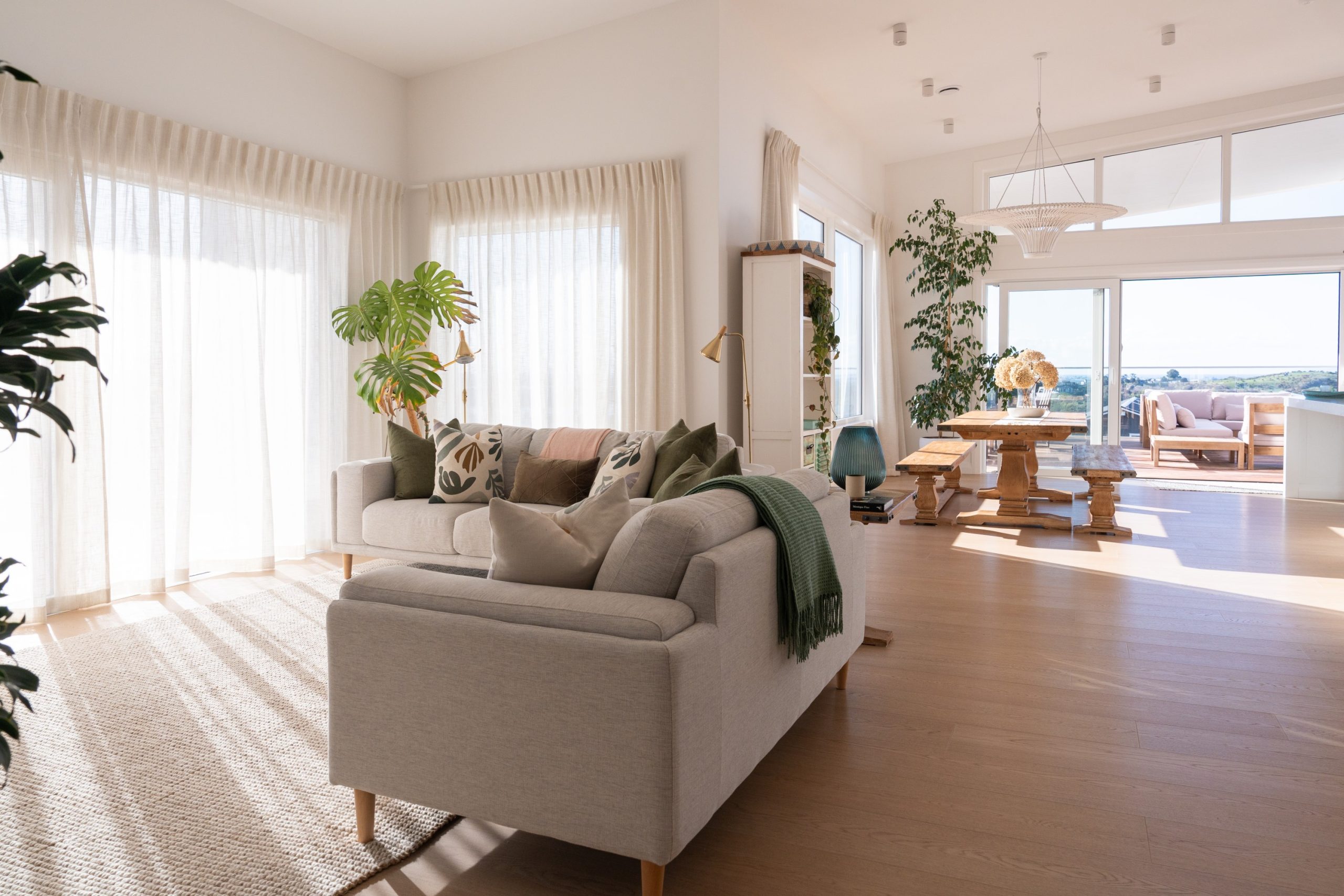
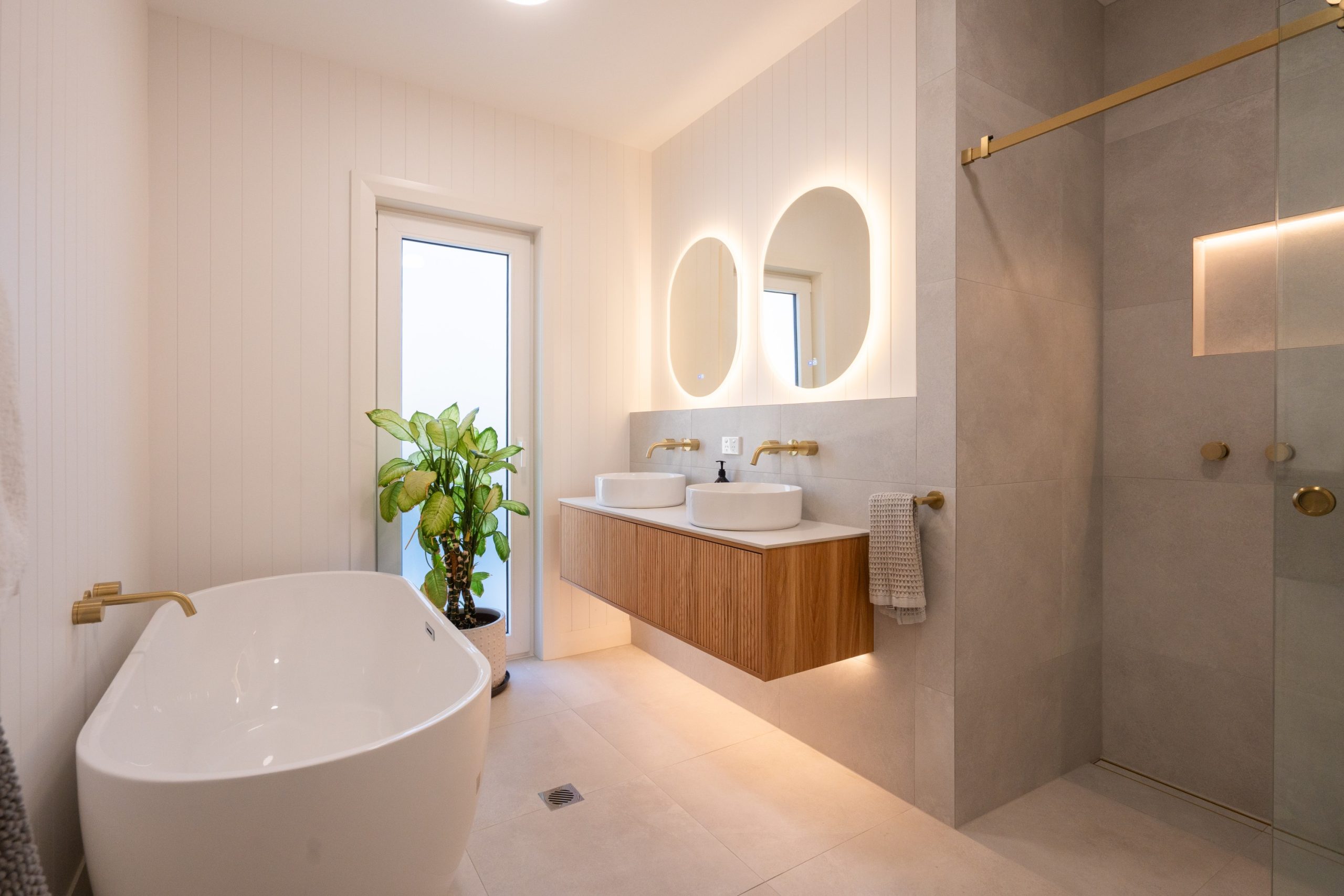
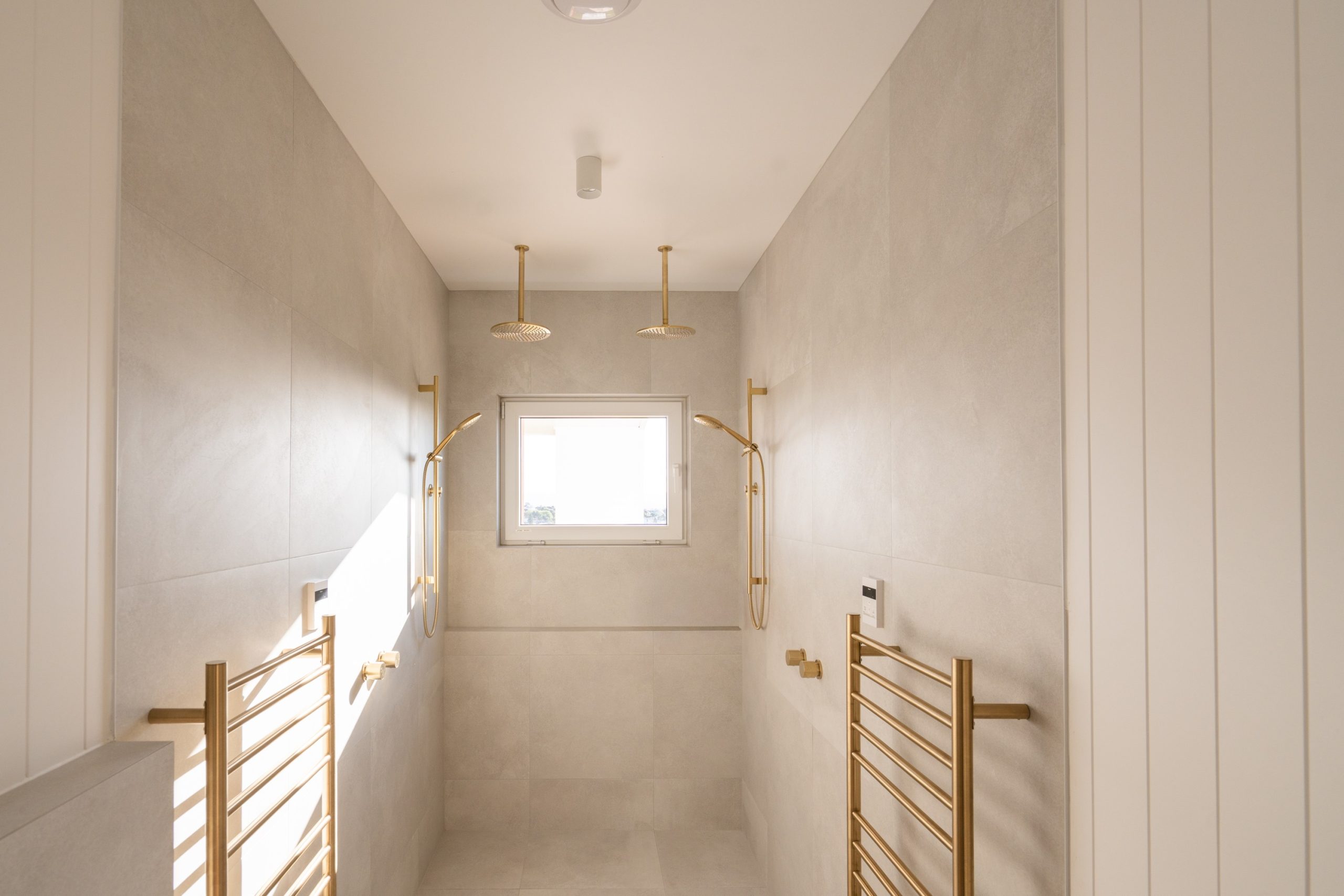
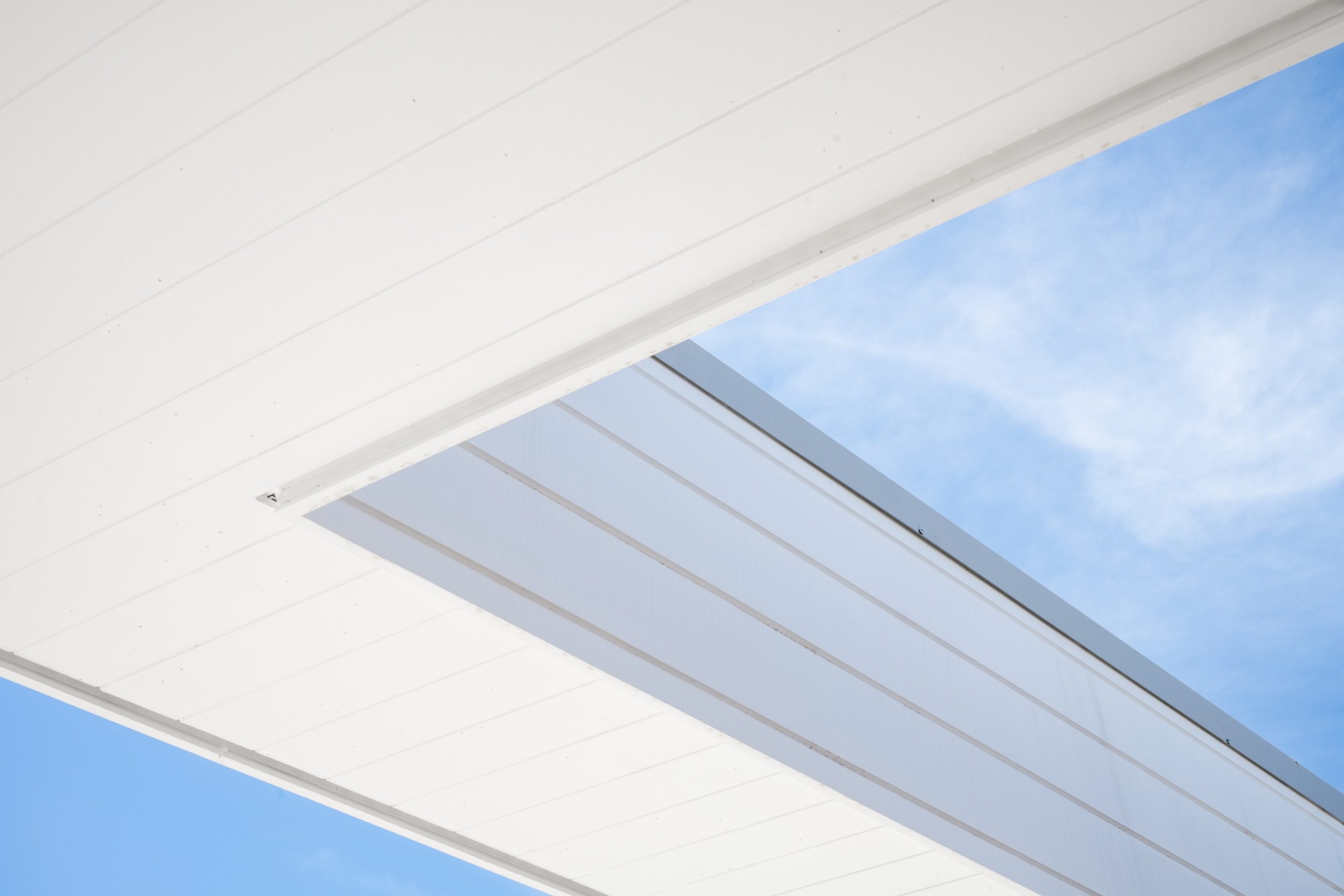
The predominantly white palette was a client non-negotiable. It’s complemented by warm brass fixtures and fittings in place of typical black and chrome finishes. The result is a strong visual identity that feels crisp and enduring yet avoids any sense of starkness. White rusticated weatherboards form the primary cladding, while vertical sections of Earthen Pine introduce contrast, warmth and texture. Above, the durable Colorsteel roof in Gull Grey by Coldrick Roofing caps the building and continues the restrained material language. Tile Gallery provided key surface finishes in bathrooms and utility spaces, where subtle texture and tonal variation support the wider palette of white, brass and timber.
The homeowners remained alongside Imagine Architecture director Tony Biesiek throughout the design process. That collaborative approach is central to his practice’s philosophy: client-centric and closely involved. “The best projects come from listening carefully to how people want to live and then shaping the architecture around those needs,” he says. “Being involved all the way through the build was key to achieving a great result.”
That thinking is evident throughout the home. Every major decision serves multiple purposes. Orientation captures views while improving solar gain. Generous outdoor living areas support entertaining while extending the sense of interior volume.
From the street, the architecture reads as bold and highly resolved, yet beneath this clarity sits a far more complex and carefully considered building system.
From the outset, the clients wanted a home that would be energy efficient, healthy and comfortable year-round. Achieving this required far more than exceeding minimum code requirements. Instead, the project drew on many of the principles associated with Passive House design, carefully addressing insulation, glazing performance, airtightness and ventilation from the earliest stages.
High-performance uPVC windows fitted with argon-filled double glazing deliver strong thermal performance.
Importantly, they are positioned in line with the insulation layer rather than forward within the cladding cavity, a detail commonly used overseas but still relatively rare in New Zealand residential construction. While subtle, this significantly reduces thermal bridging and enhances overall envelope efficiency.
Wall construction was equally resolved, with timber-framed wall panels prefabricated off-site and delivered complete with rigid air barriers, building wrap, window tapes and cavity battens already installed. Fully integrated within the architecture, Hiko Electrical delivered the electrical systems throughout the home, executing the lighting design vision of the Imagine team to work at their most effective while remaining visually discreet.
Beneath the home, a fully insulated concrete slab with continuous edge insulation further reduces heat loss. Fresh air is supplied continuously through a mechanical heat recovery ventilation system which silently maintains balance while retaining valuable heat during cooler months. Combined with insulation levels well above code minimums, the result is a highly stable thermal envelope requiring far less energy to maintain comfort.
The success of that approach was confirmed during blower door testing, which measured how airtight the home is. The result was just 0.87 air changes per hour. In comparison, many standard New Zealand homes measure between eight and nine. “Our target was less than 1.5 air changes per hour,” Tony says. Passive Homes require a score under 0.6. “Achieving 0.87 was an outstanding result and a huge credit to Sarich Design & Build, who fully embraced the construction methods required to make it happen.”
Delivering a home of this performance required a builder willing to fully commit to the design intent. Sarich Design & Build played a central role in translating the detailing into reality on site, particularly where airtightness, prefabrication and sequencing demanded precision. Their willingness to adopt non-standard construction methods, and to work closely with the design team throughout, was critical in achieving the final result.
With the building envelope complete, the architecture settles into a softer register indoors, where the emphasis shifts from construction logic to lived experience.
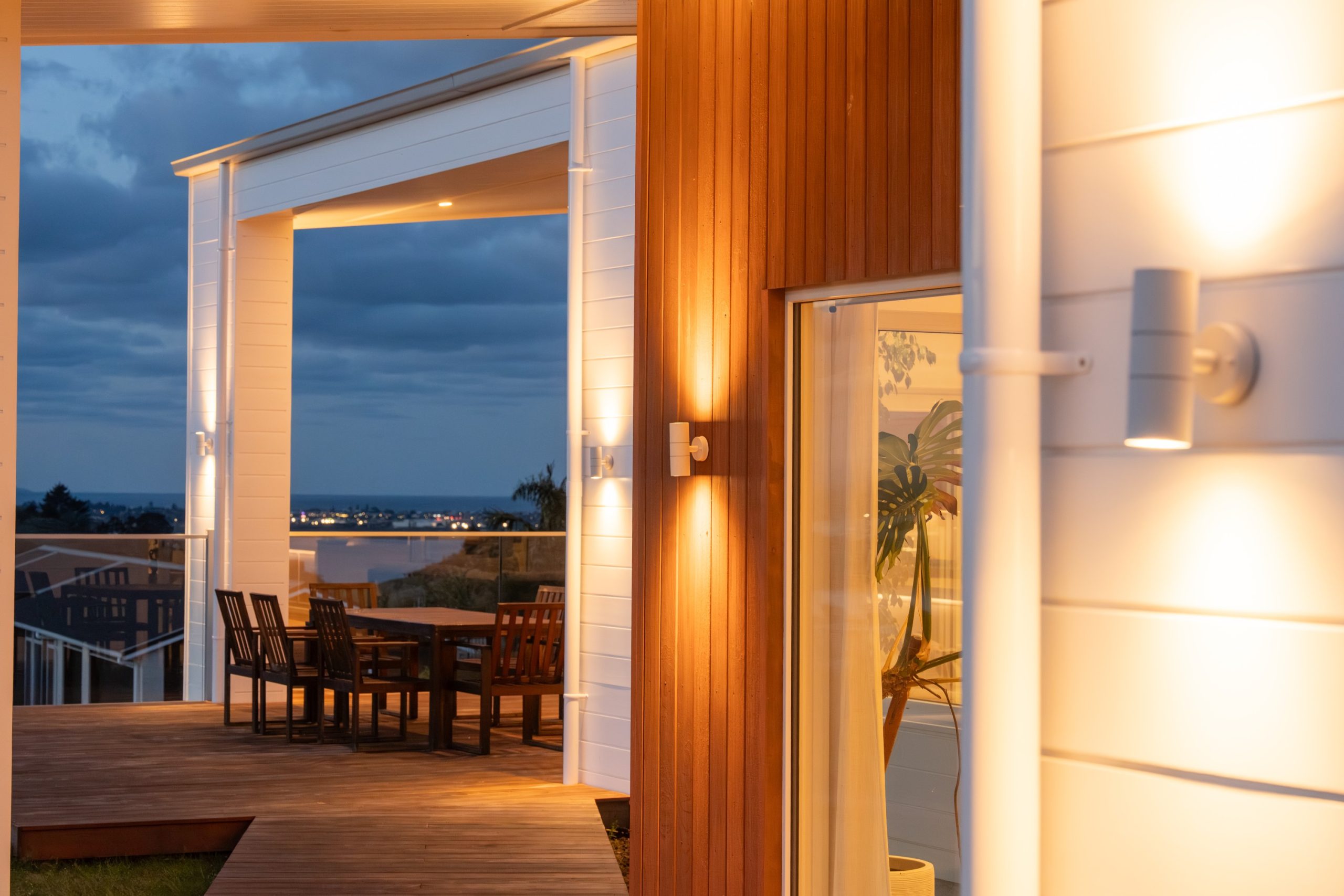
Light becomes the defining material, moving across crisp white surfaces and drawing attention outward to the harbour beyond. High ceilings amplify the sense of volume in the main living spaces, while glazing is carefully positioned to maintain uninterrupted connection to the view without overwhelming the interior.
The kitchen anchors this central zone, designed as a calm, highly functional space that supports everyday family life. Clean-lined joinery and concealed storage keep visual noise to a minimum, while brass detailing adds subtle warmth against the predominantly white palette.
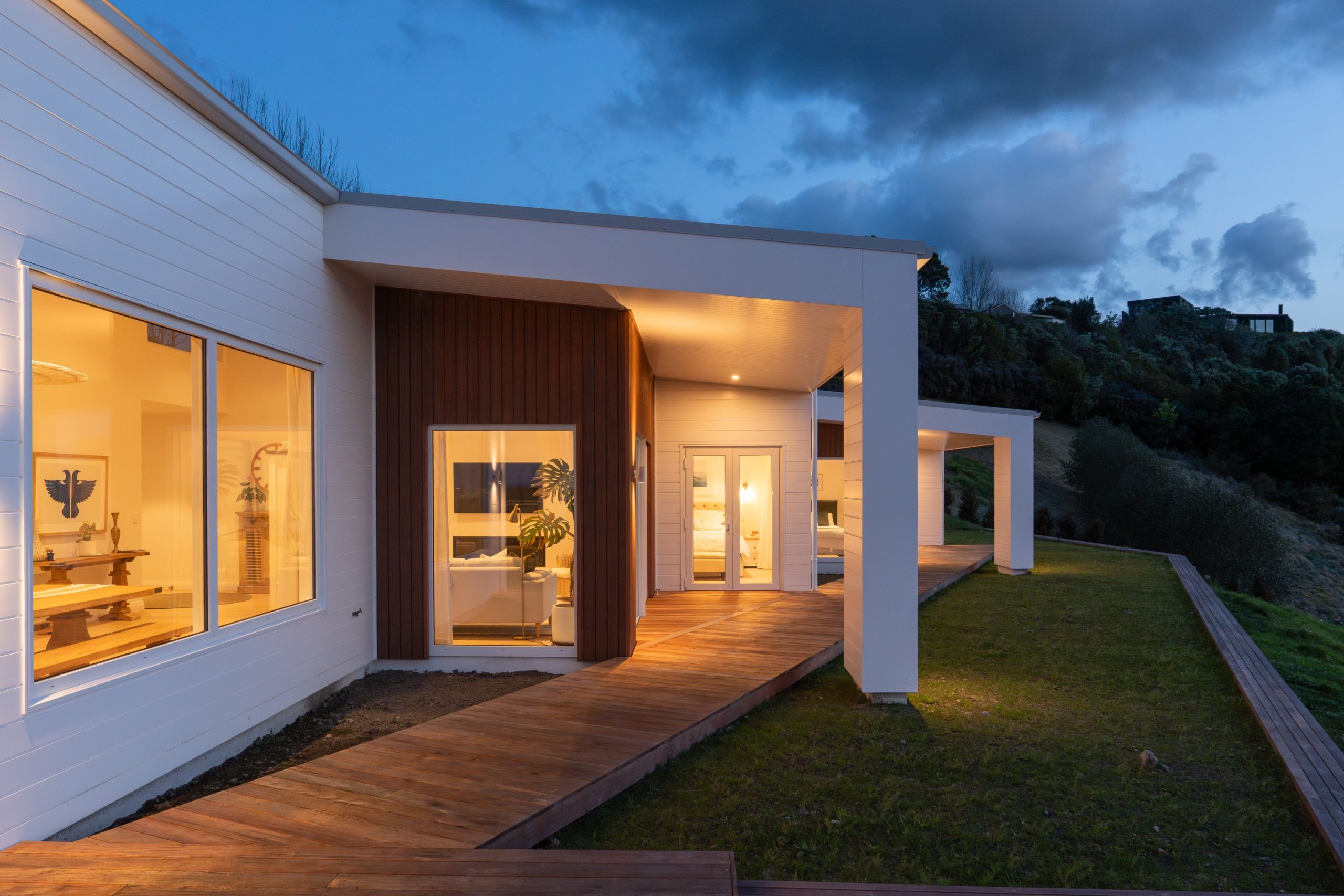
It remains intentionally understated, allowing the rhythm of daily use and the outlook beyond to take precedence.
A separate office is positioned away from the main living areas, providing a quieter zone for focus and concentration, while maintaining visual connection to the broader home. In the private wing, bedrooms are pared back and restful, designed to absorb light gently and support a slower pace at the end of the day.
As the day progresses, the atmosphere of the home shifts naturally. Morning light streams clarity indoors, while afternoon tones soften the white surfaces and deepen the warmth of timber accents. By evening, the house settles into a more intimate mood, where layered lighting and material texture in tune with its surroundings create a sense of calm enclosure above the harbour.
What remains consistent is the sense of comfort. Behind the sculptural exterior and refined interior palette is a home that performs with ease, maintaining stable temperatures and fresh air year-round. Open, balanced and intuitively aligned, this balance between architectural clarity and environmental intelligence that defines the Welcome Bay residence.
Contact details
Imagine Architecture
0800 999404
info@imaginenz.com
Images by: Maea Media - www.midsummer.co.nz